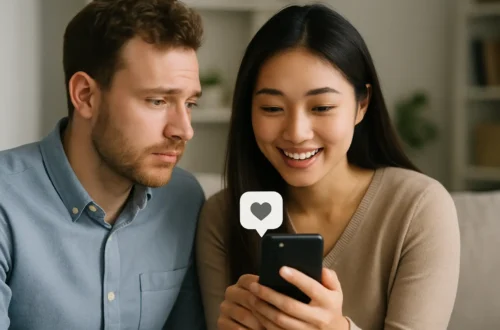
You see them in third period, you share a lab table, you keep “accidentally” showing up to the same club meetings – and you still can’t tell if they like you back.
That’s the whole pain point an anonymous crush app for classmates is supposed to fix: send a signal without setting your social life on fire. But not all “anonymous” apps are built the same, and at school, the difference matters. A lot.
What people actually mean by “anonymous” at school
When someone says they want an anonymous crush app for classmates, they usually mean: “I want to shoot my shot without becoming a hallway headline.” They want plausible deniability, no screenshots traveling through group chats, and no awkward energy if the crush doesn’t hit back.
Real anonymity in a school setting isn’t just a hidden username. It’s a setup where your identity stays masked until there’s reciprocity. If your name can be revealed by a guess, a search, a public profile, or a friend-of-a-friend browsing around, it’s not anonymous in the way you need.
There’s also a second layer people forget: anonymity from the person you like is only half the deal. You also need privacy from everyone else. Classmates are curious. Friends are messy. And one “who do you think sent it?” thread can turn a tiny crush into a whole situation.
The hard truth: school is a closed social system
Dating at school is different from dating online because you can’t just unmatch and disappear. You still have to sit in the same class, show up to the same practice, or walk past each other every day.
That’s why the cost of a bad “anonymous” feature is higher in school than anywhere else. A small leak can become a rumor. A vague hint can become a guessing game. And a public profile can become a scoreboard.
So the best anonymous crush app for classmates is the one that doesn’t create content for people to gossip about in the first place.
What to look for in an anonymous crush app for classmates
If you’re evaluating apps, ignore the hype words and look at the mechanics. How does it handle identity, visibility, and outcomes?
1) Mutual-only reveal (no exceptions)
This is the non-negotiable. If an app reveals who sent a crush without a mutual match, it’s basically a digital rejection machine – and at school, that’s brutal.
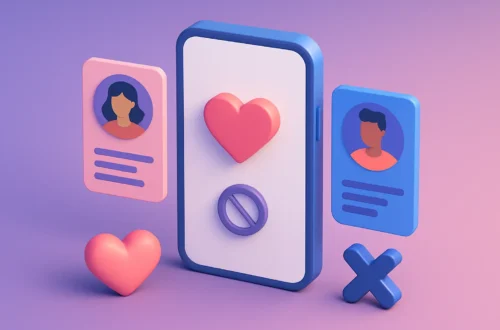
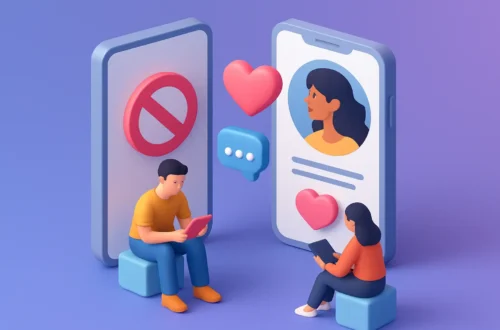
Mutual-only reveal means you can express interest, but identities stay masked until the other person returns the same energy. No match, no reveal. That single rule kills most of the drama.
2) No public profiles, no discovery feed
A lot of apps pretend they’re about “crushes,” but they still run on discovery mechanics: swiping, browsing, suggested users, profile photos, and public visibility.
For classmates, discovery features turn your crush into a performance. Suddenly it’s about who looks best, who’s “available,” who’s getting attention. That’s the exact vibe you’re trying to avoid.
If you already know who you like, you don’t need a catalog of randoms. You need a discreet signal.
3) Private by default (not “privacy settings”)
If an app makes you toggle five settings to be safe, most people won’t do it. Privacy that depends on perfect user behavior is basically not privacy.
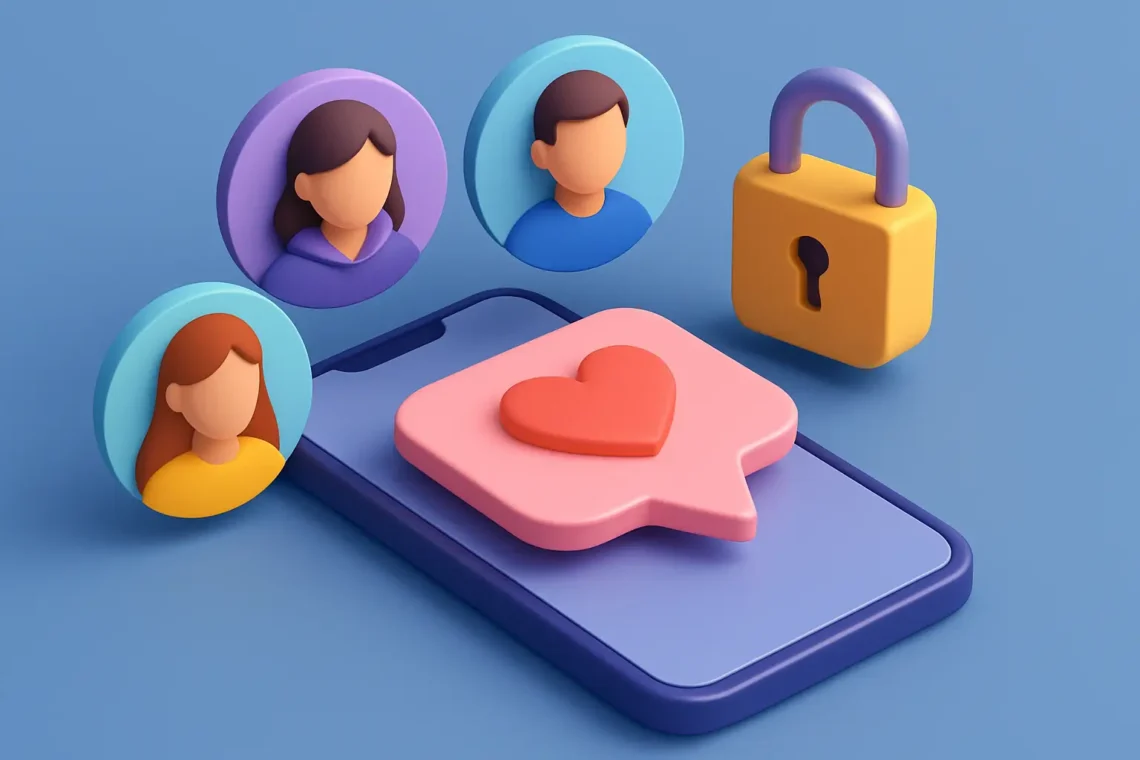
The safest apps are built so that accounts aren’t searchable, crush activity isn’t visible, and you can’t be casually “found” by someone who’s bored in study hall.
4) Minimal chat, fast offline
This one is underrated. When an app turns into endless messaging, it creates more opportunities for screenshots, misreads, and weird energy.
For classmates, the best flow is simple: signal interest, confirm mutual, exchange a few messages, then take it offline. The longer you stay in-app, the more the crush turns into content.
5) Clear limits that prevent chaos
School social circles overlap. People date in the same friend groups. Sometimes people test the app like it’s a game.
Good guardrails keep things from spiraling. That can look like message limits, credit systems, or other friction that discourages spam and “let me message everyone in my grade” behavior. A little friction can protect the whole vibe.
What can go wrong (and how to avoid it)
Even with a solid app, school dynamics are still school dynamics. Here are the trade-offs people don’t always talk about.
“Anonymous” can turn into a guessing sport
If the app gives clues, hints, or public posts, people will treat it like a mystery to solve. The recipient starts interrogating friends. Friends start comparing notes. Suddenly your private crush is a group project.
Avoid apps that encourage guessing. The only good reveal is a mutual one.
People use anonymity to be messy
Anonymity without rules can invite trolling. That’s why moderation, reporting, and anti-harassment controls matter – even if you’re “just” using it for a crush.
If an app doesn’t feel protective, don’t trust it with your feelings.
Notifications can expose you at the worst time
This is so real: you’re in class, your phone lights up, your friend sees the notification preview, and now you’re explaining yourself.
Look for apps that keep notifications discreet and don’t display sensitive content on lock screens by default. And yes, you should still control your phone settings – but the app should help you, not sabotage you.
The “match” is only the beginning
Mutual interest doesn’t automatically mean compatibility, and it definitely doesn’t mean you’re ready to go public. You might match, chat, then realize it’s not a fit.
The best apps treat a match as a permission slip to talk, not a forced relationship announcement.
The healthy way to use an anonymous crush app at school
If you want 0% awkwardness, you need more than anonymity. You need timing and intention.
Start with one person you genuinely like – not five people you’re “kind of curious” about. Curiosity-spamming is how you end up with accidental chaos. When you focus, you keep your emotions cleaner and your reputation safer.
Be honest with yourself about what you want. Do you want a real date, a hallway flirt, or just confirmation you’re not delusional? All valid. But clarity keeps you from over-investing in the outcome.
And if you match, keep the first messages light. Classmates will see each other in real life fast, so you don’t need a 3-hour texting audition. A simple vibe-check and a plan works better than turning it into a therapy session.
Why “no randoms” matters more than you think
A lot of dating apps are built around strangers. That’s fine for people who want discovery. But if your whole point is “someone I already know,” strangers are noise – and noise creates risk.
When strangers are in the mix, the app has to solve a different problem: getting you seen. That usually means profiles, photos, and visibility. And visibility is exactly what most students don’t want when they’re trying to keep their crush private.
The classmates use case is simpler and more protective: you already have the target in mind. The app should just help you communicate interest safely.
One app that’s explicitly built around that warm-network idea (friends, classmates, coworkers) is wadaCrush, with encrypted crush messages and identities masked until you pair – no swiping, no public profiles, no photo sharing, no randoms.
Costs, credits, and the quiet psychology of “paying”
People sometimes get weird about apps that use credits or subscriptions. But at school, a small cost or limit can actually be a feature, not a bug.
When sending a crush takes at least a little intention, it cuts down on spam and prank behavior. It also reduces the “I sent one to everyone in my class” effect, which is how anonymity gets destroyed by volume.
That said, the trade-off is accessibility. Free options feel easier, especially for teens. The best balance is a freemium model that lets you try it, but keeps enough structure to protect users from mass messaging.
Quick reality checks before you hit send
If you’re about to send a crush to a classmate, pause for ten seconds and ask yourself: if this matches, am I prepared to talk to them in real life? If the answer is no, wait. Not because it’s wrong to be nervous, but because the whole purpose of a mutual reveal is to create a real conversation, not a permanent limbo.
Also ask: is this person safe for me to like? If someone has a history of being cruel, showing off private messages, or making people look stupid, don’t hand them access to your feelings. An app can reduce social risk, but it can’t change someone’s character.
The point isn’t secrecy – it’s control
The best anonymous crush app for classmates isn’t about hiding forever. It’s about controlling the moment of reveal so you don’t have to gamble your reputation for a simple yes-or-no.
If you pick an app with mutual-only reveals, private-by-default design, and zero interest in turning your school into a swipe market, you’re not being dramatic. You’re being smart.
And when you’re ready, send the signal, let the system do its job, then go back to real life – because nothing beats seeing their face when they’re actually happy you took the chance.