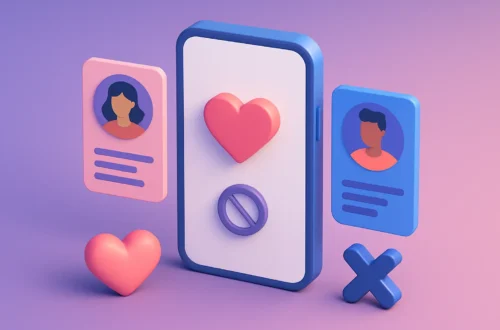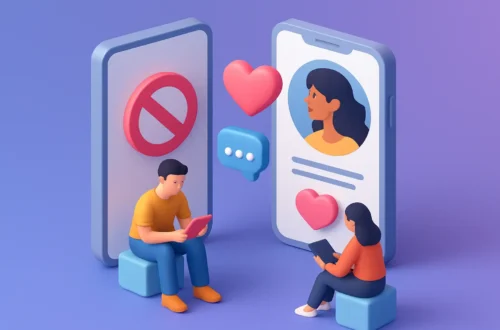

You know that moment when you’ve basically written the confession in your head 40 times – and then you see them in the hallway, the break room, or at the party and your brain hard-resets? That’s crush anxiety. It’s not a lack of confidence. It’s risk math.
Because if you shoot your shot the classic way and it doesn’t land, you’re not just dealing with rejection. You’re dealing with vibes. Friend group ripple effects. A weird shared commute. A lab partner situation. A “did you hear what happened” situation. That’s why the idea of an app to confess to your crush safely hits different – the goal isn’t hiding forever, it’s lowering the social blast radius.
What “safely” actually means when you confess
Let’s be real: “safe” isn’t just about data security. It’s about protecting your real life.
Emotional safety is the first layer. You need a way to express interest without turning your daily routine into a reality show if it’s not mutual. Social safety is the second layer. If you share a campus, a workplace, or a friend group, you want minimal gossip fuel. And privacy safety is the third layer: you don’t want your confession tied to a public profile, screenshot-able chat thread, or searchable account.
A truly safe setup does one thing better than everything else: it keeps identities masked until there’s reciprocity. Not “anonymous forever,” not “send a message and hope they don’t post it,” but mutual-only reveal. If it’s not a match, it stays quiet.
The problem with “just text them” advice
People love to say “just be direct.” Cool in theory. In practice, texting your crush is basically attaching your name to a high-stakes message with zero guardrails.
Texts can be forwarded. DMs can be screenshotted. Even if your crush is a decent human, your message can still escape the chat in a moment of chaos – roommates, friends, and group chats have seen things.
And the awkwardness doesn’t end after you hit send. It sits there. If they don’t respond for hours (or ever), you’re left spiraling in the “what did that mean” zone. That’s not romance. That’s emotional whiplash.
If your goal is clarity with 0% drama, “direct” needs structure. That’s where the right kind of app comes in.
What to look for in an app to confess to your crush safely
Most apps that claim to help with crushes still borrow the worst habits from dating apps: public profiles, discovery mechanics, and endless chatting with randoms. If you already have a specific person in mind, you don’t need swiping culture. You need a discreet signal.
Here’s what actually matters.
Identity masking until it’s mutual
This is the non-negotiable. If your identity is visible before they reciprocate, the app is basically just messaging with extra steps.
Masking protects both people. You get to express interest without public rejection. They get to consider it without pressure, especially if you share space every day.
No public profiles, no search, no “people nearby”
A safe crush app should be private by default. If someone can browse profiles, that’s not a crush tool – that’s a social platform. And social platforms turn feelings into content.
If the app lets strangers find you, it invites the exact situation you’re trying to avoid: random attention, random messages, and random drama.
Encryption and tight message rules
Encryption isn’t a magic word, but it’s the baseline. If you’re trusting an app with something vulnerable, you want strong protection in transit and at rest.
You also want clear rules around messaging. The safest apps don’t encourage long, blurry, “what are we” chats inside the app. They help you confirm mutual interest, then push you to take it offline like normal people.
A design that respects real life
Your crush might be your coworker, classmate, or friend-of-a-friend. That means you need features that understand timing, boundaries, and plausible deniability.
A good app isn’t trying to trap you in an endless loop. It’s trying to get you to a clean outcome: either it’s mutual and you both know, or it’s not and nobody has to perform about it.
How a safe confession flow should work (without getting cringe)
The best confession flow is simple, because complicated flows create mistakes. Think three beats.
First, you send a crush signal without exposing yourself.
Second, the other person gets a private nudge that someone they know is interested, and they can respond without social pressure.
Third, only if it’s mutual, the app reveals both identities and lets you exchange a small amount of chat – just enough to set the tone and move the conversation into real life.
That’s it. No swiping. No “optimize your profile.” No pretending you’re not talking to someone you see every week.
If you want a product built specifically around that loop, wadaCrush is designed for discreet, encrypted crush messages with identities masked until you pair – no randoms, no public profiles, and no photo or video sharing.
Trade-offs: anonymity can’t be the whole plan
Some people hear “safe confession app” and immediately want full anonymity forever. That sounds comforting, but it comes with baggage.
If nobody ever has to stand behind anything, you invite trolling, spam, and weird behavior. And if a “confession” can’t ever become a real conversation, then what are you building – a feelings suggestion box?
Mutual-only reveal is the sweet spot. It keeps you protected until there’s a reason to step forward. And when it is mutual, it gives you a clean, normal next step.
That’s the point: safety should help you be braver in real life, not keep you stuck in hiding.
Real scenarios where safety matters most
If you’re in high school or college, your social world is basically one big shared environment. A confession that goes sideways can turn into a nickname by lunch.
If you’re a young professional, it’s even trickier. Workplace crushes are common and also high-risk. You don’t want to create discomfort for them, and you definitely don’t want to create a reputation problem for yourself. A safe app approach gives you a way to test interest without forcing an in-person moment that could feel cornering.
If you’re older and re-entering dating after a breakup or divorce, the “dating app mess” can feel exhausting. Swiping on strangers isn’t the vibe. But warm-network attraction is real – the neighbor, the parent at your kid’s school, the friend you’ve known forever. Safety here is less about popularity and more about dignity. You want clarity without making your life messy.
Different life stage, same need: private signal first, mutual confirmation second, real-life conversation third.
How to use an app to confess without self-sabotaging
Even with the right app, your approach matters.
Keep the energy simple. You’re not proposing. You’re checking mutual interest. The safest confessions are low-pressure: “I’m into you, if you’re into me.” That’s it.
Don’t over-message in the app if you match. A little banter is fine, but long, late-night, paragraph conversations create fake intimacy and confusion. If you pair, set a clear next step quickly: coffee, a walk, lunch between classes, a quick hang after work. You want real-world chemistry, not infinite typing.
And be honest with yourself about timing. If you’re doing this purely because you need closure, that’s valid – but know the difference between seeking clarity and seeking a dopamine hit. Safety tools are best when your goal is a grounded outcome.
The privacy check nobody talks about
Before you use any app for something personal, do a quick gut-check on how it handles identity and visibility.
If it asks you to build a public-facing profile, that’s a red flag for this use case. If it encourages you to upload a bunch of photos, that’s a red flag. If it suggests random people to message, that’s not a crush confession tool – it’s trying to turn you into a “user” instead of helping you solve your one specific situation.
A safe crush app should feel almost boring by design. Minimal surface area. Minimal exposure. Maximum control.
When you should not confess through an app
“It depends” moments matter.
If there’s a power imbalance – manager to direct report, teacher to student, coach to athlete – don’t do it. No app can make that clean, and the right move is to protect both people by not going there.
If you already know they’re in a relationship, don’t send a crush signal as a “just so you know.” That’s not romantic, it’s disruptive.
And if you’re chasing someone who’s repeatedly shown disinterest in real life, an app shouldn’t be used as a workaround to ignore that boundary. Safety is not a loophole.
The whole point: clarity without collateral damage
An app to confess to your crush safely isn’t about being scared. It’s about being smart in the environments we actually live in – shared spaces, shared friends, shared reputations.
When the setup is right, you get to be bold without being reckless. If it’s mutual, you’re not stuck wondering. If it’s not, you don’t have to wear it on your face for the next six months.
Closing thought: the best confession is the one that respects both people – your feelings, their comfort, and the reality that you’ll both still have a life after the answer.