Excerpt: If you like someone you already know, privacy works differently than it does on swipe apps. Here’s where a crush app protects you better – and where the trade-offs still matter.
You can tell a lot about an app by one simple question: Who gets to see you before you choose them? That is basically the whole game in crush app vs dating app privacy.
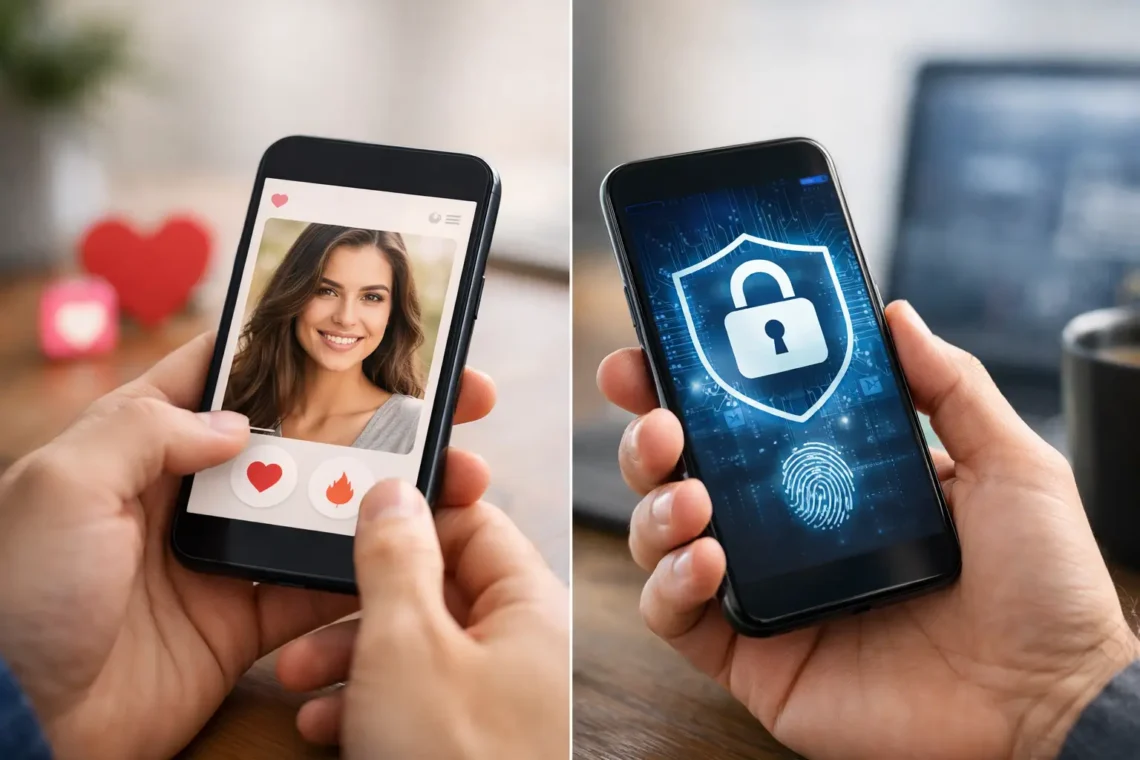
On a typical dating app, visibility is the product. Your photos, age, location, prompts, and activity are meant to be discoverable by strangers. On a crush app built for real-life connections, privacy usually starts from the opposite idea: keep identities masked, keep profiles private by default, and only reveal anything meaningful if interest goes both ways. That difference is not small. It changes the emotional risk, the social risk, and the kind of connection the app is actually built for.
TL;DR
- Dating apps optimize discovery. That usually means more profile exposure, more strangers, and more privacy trade-offs.
- Crush apps optimize discretion. That usually means fewer public surfaces, less browsing, and mutual-only reveals.
- The better choice depends on your goal. If you want to meet random people, use a dating app. If you want to test the waters with someone you already know, privacy-first crush apps make a lot more sense.
Table of Contents
- The real difference in crush app vs dating app privacy
- What dating app privacy usually looks like
- What crush app privacy usually looks like
- Where the trade-offs show up
- A quick example from real life
- How to choose the right privacy setup
- FAQ
The real difference in crush app vs dating app privacy
Here’s the clean definition.
> Crush app vs dating app privacy is the difference between an app designed to help you discreetly express interest in someone you already know, and an app designed to make you discoverable to strangers at scale.
That affects almost everything: who can find you, what information is visible, when identity is revealed, and how much social fallout happens if the answer is no.
A traditional dating app is often built around profile browsing, swiping, searchable traits, suggested matches, location-based surfacing, and active presence. Even if the app has safety controls, the default experience still involves being seen by people you did not personally choose.
A privacy-first crush app flips that. Instead of public browsing and random discovery, the flow is closer to a discreet mutual-intent message. The point is not to attract attention. The point is to remove cringe.
That is why apps like wadaCrush feel different right away. The setup is built for people who already know each other in real life, with identities masked until both sides opt in. No randoms. No public profile parade. And yes, someone can receive the signal even if they are not already on the app, which matters more than people think.
What dating app privacy usually looks like
Dating app privacy is rarely fake. It is just often narrower than users expect.
Most dating apps let you control some things, like who can message you, whether your distance is shown, or whether certain photos are visible. That helps. But the core model still depends on exposure. If the app needs strangers to find you, your profile has to exist in a discoverable system.
That creates a few privacy realities.
First, your profile is often semi-public inside the app. Not public like a social feed on the open web, but public enough that many people can view your face, bio, preferences, and sometimes your rough location.
Second, dating apps can create social overlap in weird ways. You may be shown to classmates, coworkers, mutuals, an ex’s friend, or someone who recognizes you from your gym. If you are cool with that, fine. If not, that can get awkward fast.
Third, rejection is often visible in a soft way. Nobody gets a formal announcement, but the interaction design can still feel exposing. Read receipts, repeated surfacing, one-sided likes, and profile activity all create little data trails of interest.
This does not mean dating apps are bad. They are just solving a different problem. They are for meeting people you do not know yet. Privacy is managed around discovery, not built to avoid it.
What crush app privacy usually looks like
A crush app should feel less like broadcasting and more like a vibe-check with guardrails.
The strongest version of that model is private by default. No public profile browsing. No global search. No random swiping. No one casually scrolling your face because they are bored in line for coffee.
In a true mutual-only setup, one person sends interest discreetly using a known identifier, usually a phone number or email. The sender stays hidden unless the other person expresses interest back. If the feeling is not mutual, identities stay masked and the social blast radius stays tiny.
That is a very different privacy promise from a standard dating app. It protects against public rejection, yes, but it also protects context. If the person is a friend, classmate, coworker, or someone in your circle, context is the whole thing.
This is also where wadaCrush has a clear lane. It is not trying to be a stranger-discovery app with a “private” sticker on top. It is built around discreet signaling, mutual pairing only, and no public profiles unless future visibility features are specifically opted into.
Where the trade-offs show up
Privacy-first does not automatically mean perfect. It means the trade-offs are different.
If you use a crush app, your pool is naturally smaller because it is based on people you already know. That is the point, but it still matters. You are choosing emotional safety and social precision over endless browsing.
There is also a practical trade-off around identifiers. A crush app may rely on phone numbers or email addresses so the app can route a private signal to the right person. For some users, that feels more intentional and secure. For others, it can feel like more personal data is involved. Whether that is a dealbreaker depends on trust, verification, and how clearly the app explains what is stored, how notifications work, and when identity is actually revealed.
Optional features like GPS or Bluetooth-based suggestions can also complicate things. If those tools are opt-in and transparent, they can be useful. If they are vague or always on, that is a red flag. Privacy is not just about what the app can do. It is about whether you are asked first.
A quick example from real life
Say you like someone from your grad program.
On a dating app, the best-case scenario is that you both happen to be on the same platform, both find each other, and both swipe right before one of you sees the other and pretends not to. Possible? Sure. Clean? Not always.
On a privacy-first crush app, the flow is more controlled. You send a discreet signal. If they are into you too, identities unlock. If not, no dramatic scene, no profile lingering in their stack, no accidental screenshot bait.
If your friend says, “Should I just DM them?” a fair reply is: “You can, but if you want 0% awkwardness first, use a mutual-only setup and see if the vibe is there.”
That is the core privacy win. It protects you from unnecessary exposure before there is shared intent.
How to choose the right privacy setup
If your goal is to meet new people outside your current life, a dating app still makes sense. Discovery requires visibility, and visibility always costs some privacy.
If your goal is to shoot your shot with someone you already know, the better question is not “Which app has more features?” It is “Which app keeps the risk proportional to the situation?” Friends, coworkers, classmates, and mutuals need more discretion, not more reach.
5 things to check before you trust any app with your feelings
- Are profiles public by default or private by default?
- Can strangers browse or search you?
- Does identity stay hidden until mutual interest?
- Are location and notification settings opt-in?
- Does the app clearly explain what data is used and why?
If an app is fuzzy on those answers, that is your answer.
You can also read more context on the brand’s blog hub at blog.wadacrush.com, plus related reads like how anonymous crush apps work, how to confess a crush without making it weird, and dating apps for people who already know each other.
FAQ
Is a crush app more private than a dating app?
Usually, yes – if it is built around masked identities, mutual-only reveals, and no public profile browsing. But it depends on the app’s actual defaults, not just the marketing.
Are dating apps unsafe for privacy?
Not automatically. They just involve more exposure because they are designed for discovery. That is a feature for some people and a downside for others.
What matters more: anonymity or control?
Control. Full anonymity can sound great, but what really protects users is clear consent, private defaults, and identity revealed only when both people opt in.
If I know the person already, should I avoid dating apps?
Not always. But if the person is in your real-life circle and you want to avoid awkwardness, a private crush flow is usually the cleaner move.
Privacy is not just a settings page. It is the social design of the whole app. If an app makes you visible before you are ready, that is not a bug – that is the model. If you want to test the waters without making your feelings everyone’s business, pick the setup that protects the moment before it becomes a story.