You’ve got a crush and a phone in your hand. The question is not “should I message them?” It’s “how do I message them without turning my life into a group chat subplot?”
That’s why people search for encrypted messaging for crushes in the first place. Not because you’re plotting anything shady – because you want 0% unnecessary drama. You want the words to land with the right person, at the right time, without your friends, coworkers, or random app notifications turning it into a spectacle.
Encryption can help. It can also give a false sense of safety if you’re using it for the wrong part of the problem.
What “encrypted” actually protects (and what it doesn’t)
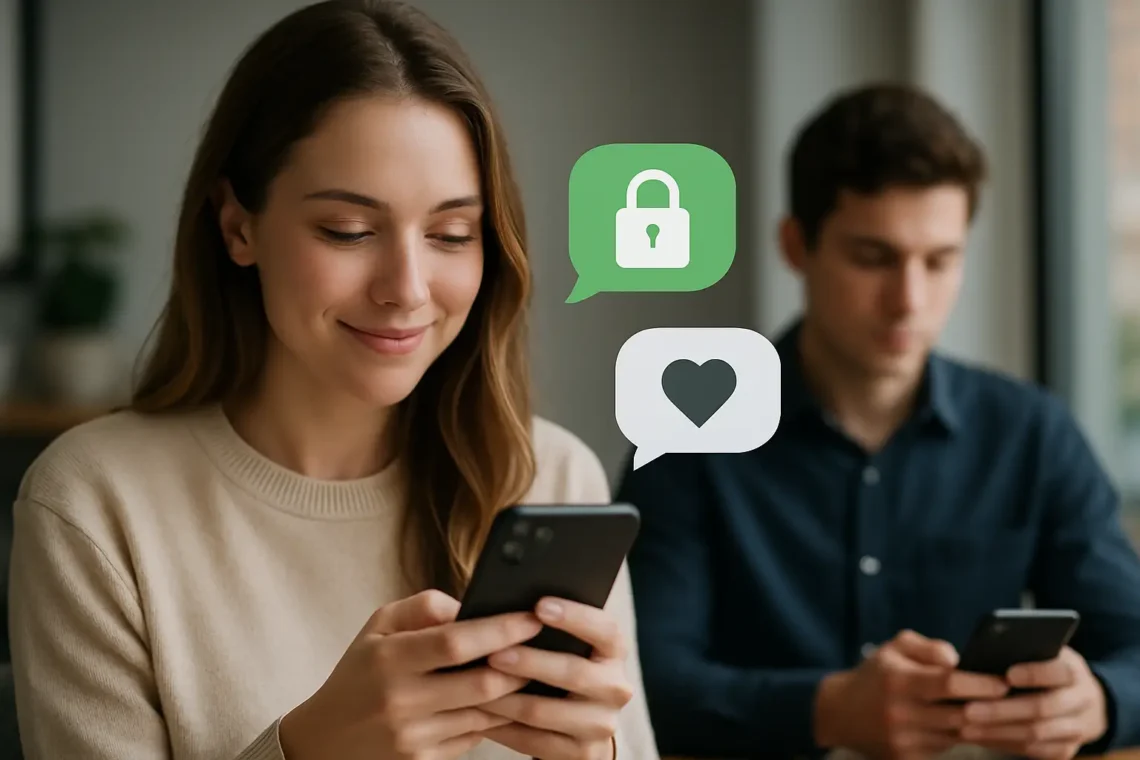
Encryption is about what happens in transit. End-to-end encryption means the message content is scrambled on your device, stays scrambled while it travels, and only gets unscrambled on the recipient’s device. In a clean setup, even the company running the service can’t read your message text.
That’s a real layer of privacy – but it’s only one layer.
Here’s the part people miss: encryption doesn’t automatically protect you from screenshots, lock-screen previews, someone glancing at their phone, backups, or the social fallout of a message that hits wrong. If your main fear is “what if they show someone,” encryption can’t stop that. And if your main fear is “what if they don’t feel the same and it gets weird,” encryption definitely can’t stop that.
So the right move is to separate two different risks:
Privacy risk: who can technically access the content while it’s being delivered and stored.
Social risk: what happens to your reputation, your friend group, your workplace vibe, or your day-to-day interactions if the message is unwanted.
Encrypted messaging helps with privacy risk. It doesn’t solve social risk. Most crush situations are more about social risk than hacker-level privacy.
When encrypted messaging for crushes is actually a good idea
There are plenty of moments where encryption is a legit upgrade, even if you’re not doing anything “serious.” You’re just trying to keep your personal life personal.
If you’re messaging on public Wi‑Fi, encryption is table stakes. If you’re sharing anything sensitive (personal context, mental health stuff, family drama, intimate photos – anything that could harm you if leaked), encryption isn’t optional.
It also matters if you live in a situation where devices get checked, accounts get monitored, or privacy isn’t fully yours. Not everyone has the luxury of assuming their phone is their own.
And yes, it can matter in workplace-adjacent crushes. Not because you’re doing something wrong, but because workplaces have long memories and short attention spans. You don’t want your “hey, I think you’re cute” living forever in some searchable system.
So encrypted messaging for crushes is useful when your real goal is to reduce digital exposure.
But if your goal is to reduce embarrassment exposure, encryption is the wrong tool.
The hidden “privacy leak” most people forget: metadata
Even with end-to-end encryption, most messaging apps still generate metadata. That can include who you messaged, when, how often, and sometimes device or location signals. The content is private, but the pattern can still be visible to the service – and potentially to anyone with access to that account or device.
For crushes, metadata is how you get caught without anyone reading a single word.
If you’re trying to keep things low-key, the frequency and timing of messages can tell a story all by itself. Late-night bursts. Daily check-ins. The “good morning” streak. That’s basically a neon sign.
Encryption doesn’t stop that.
The bigger issue: encryption doesn’t prevent awkwardness
Let’s say you use an encrypted app and you send: “I’ve kinda liked you for a while.”
If they’re into you, congrats. If they’re not, encryption did nothing to protect you from the worst part – the future.
Now you’ve got:
The hallway pass-by.
The “are we still friends?” tension.
The group hang where everyone acts normal but nobody is normal.
The coworker dynamic that suddenly feels like a badly timed sitcom.
That’s the real reason people hesitate. It’s not fear of surveillance. It’s fear of fallout.
So if you’re thinking about encrypted messaging for crushes, ask yourself one honest question: am I trying to protect my data, or protect my social life?
If it’s social life, you need a different kind of design.
What to look for instead: mutual-intent by design
The cleanest crush messaging setup isn’t “more secret.” It’s “mutual-only.”
Mutual-only systems work like this: you can express interest without putting your identity fully on the table. The other person only sees who you are if they also choose you back.
This flips the pressure.
Instead of you publicly risking rejection in someone’s inbox, you’re doing a private vibe-check where the reveal only happens on a match. It’s not about playing games. It’s about avoiding unnecessary cringe when the interest is one-sided.
Encryption can protect messages. Mutual-intent protects people.
If you’re trying to keep your real-life circles calm – friends, classmates, coworkers, the gym crew – mutual-only is the feature that actually changes the outcome.
One example built specifically around that “known person, no randoms” flow is wadaCrush. The whole point is that identities stay masked until you pair, so you’re not stuck living inside your own confession if the feeling isn’t mutual.
If you still want to message directly, do it without setting yourself on fire
Sometimes you don’t want an app flow. You just want to send the text. Fair.
If you’re going to do direct messaging (encrypted or not), the winning move is not a grand confession. It’s a low-pressure invitation that leaves everyone’s dignity intact.
Think “small, specific, easy to answer.”
Instead of “I’ve been in love with you since sophomore year,” you go with something like: “You’ve been on my mind. Want to grab coffee this week?”
It’s still a shot. But it doesn’t force them to manage your emotions in real time. It doesn’t demand a dramatic response. It gives them an exit that doesn’t humiliate either of you.
And yes, if you’re using an encrypted messenger, turn off lock-screen previews. That one setting prevents an absurd amount of accidental exposure.
Trade-offs: privacy tools can add friction, and friction can kill momentum
This is where it gets real. Some encrypted apps add steps: usernames, codes, keys, extra prompts, contact syncing issues. That friction is fine when you’re coordinating something serious. For a crush, friction can become a vibe killer.
If it takes ten minutes to get them into the same app, you’re not flirting anymore. You’re doing IT support.
Also, “download this encrypted app so I can tell you something” can come off intense. Not always – but sometimes it reads like you’re about to drop a bomb. A crush should feel light, not like a legal deposition.
So it depends.
If you already both use the same encrypted messenger, great. Keep it simple.
If you don’t, and the main goal is emotional safety, a mutual-intent approach is usually cleaner than asking them to migrate apps.
Quick reality check: screenshots beat encryption every time
This isn’t paranoia. It’s just the rules.
If someone wants to share what you said, they can. Screenshots, screen recordings, camera photos, even copying text. Encryption can’t stop a recipient from being messy.
That’s why your best protection is not “stronger encryption.” It’s choosing wording you can stand behind, even if it got out. Keep it respectful. Keep it human. Don’t write anything you’d be ashamed to hear read back to you.
If that feels too limiting, that’s a sign you’re not ready to send it as a direct message. Use a mutual-only signal instead.
The safest “crush message” is the one that doesn’t trap anyone
When people say they want encrypted messaging for crushes, what they usually mean is: “I want to be brave without being punished for it.”
That’s valid.
So here’s the standard: your approach should protect three things at once.
Your privacy: strangers, companies, and random systems shouldn’t get a front-row seat.
Your dignity: if it’s not mutual, you shouldn’t be stuck reliving it every time you see them.
Their comfort: they shouldn’t feel cornered, pressured, or obligated to perform a reaction.
Encryption helps with the first one. Mutual-intent helps with the second. Good messaging helps with the third.
If you can line up all three, you’re not just “being careful.” You’re being emotionally smart.
Closing thought: if you’re waiting for a perfectly safe moment, you’ll wait forever. Don’t aim for fearless. Aim for low-pressure and respectful – then take the shot while the connection still has a pulse. Try wadaCrush for free.