Intent: how-to / explainer
Primary keyword: send anonymous crush message safely Secondary keywords: anonymous crush message, private crush message, discreet crush message, mutual crush app, anonymous confession app, tell your crush anonymously, crush message privacy, safe anonymous messaging
Excerpt: If you want to test the waters without turning your group chat into a crisis, there is a smart way to do it. Here’s how to send an anonymous crush message safely without being creepy, careless, or painfully obvious.
send anonymous crush message safely
You like someone you already know. Friend, classmate, coworker, maybe that person who always ends up next to you at group hangs. The problem is not the feeling. The problem is the social blast radius if it goes badly.
Good news – you can shoot your shot without making it weird. If you want to send anonymous crush message safely, the goal is simple: protect your identity, respect their boundaries, and only use a setup built for mutual interest, not random anonymous lurking.
TL;DR
- The safest anonymous crush message is one that reveals identities only if interest is mutual.
- Never use fake numbers, burner accounts, or public confession pages.
- Keep the message light, respectful, and easy to ignore without pressure.
Table of contents
- What “safe” actually means here
- The 5 safest rules before you send anything
- How to send an anonymous crush message safely
- What to write in an anonymous crush message
- What not to do if you want 0% awkwardness
- A better option for known-person crushes
- FAQ
What “safe” actually means here
A lot of people hear “anonymous” and think hidden = safe. Not really.
Safe anonymous messaging means a few things at once. Your identity should stay protected. Their privacy should stay protected too. The message should not pressure them into replying. And the method should not create screenshots, rumors, or public mess if the feeling is one-sided.
That is why random anonymous confession forms, fake Instagram accounts, and prank-friendly apps are usually terrible for this. They hide your name, sure, but they do nothing to protect the social aftermath.
If you’re trying to tell your crush anonymously, the safest setup is one where identities stay masked unless both people are interested. That one guardrail changes everything.
The 5 safest rules before you send anything
Here’s the short version most people actually need.
- Only message someone you know in real life. Anonymous messaging gets weird fast with strangers. If you’ve never met, do not do this.
- Use a private-by-default tool. No public walls, no searchable profile, no open inbox from randoms.
- Make mutual interest the trigger. If they’re not into it, your identity should stay hidden.
- Keep the message low-pressure. No guilt, no “please respond,” no intense confession paragraphs.
- Respect context. A coworker, close friend, or person in a complicated social circle may need extra care – or a full stop.
That’s the core vibe-check. If your method breaks any of those rules, it’s probably not the safe route.
How to send an anonymous crush message safely
If you want a clean, low-drama process, use this simple flow.
1. Check whether this is a good idea
Ask yourself one honest question: if they are not interested, can this stay private and calm?
If the answer is no because of work dynamics, a power imbalance, a friend group landmine, or their relationship status, pause. “Safe” is not just about tech. It is also about timing and context.
2. Choose the right channel
This is where people mess up.
A fake account feels clever until it gets traced, screenshotted, or mistaken for spam. Anonymous Q&A tools can turn into public chaos. Sending through a mutual friend is not anonymous – it is outsourced awkwardness.
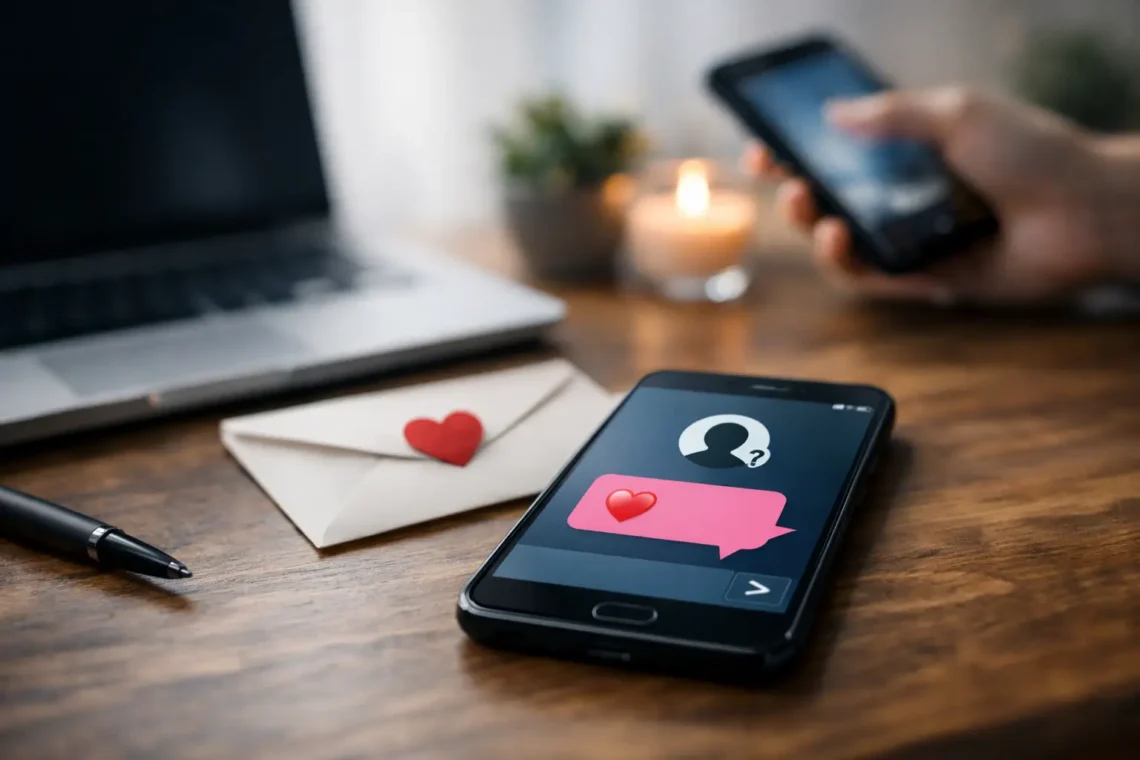
A safer route is a mutual crush app designed for known people, where identities are masked until both sides opt in. wadaCrush is built around exactly that idea: you send a discreet crush using a phone number or email, the other person can be notified even if they are not already on the app, and identities stay hidden unless they crush back too. No randoms. No public profiles unless someone explicitly opts into future visibility features.
3. Keep the message short and kind
An anonymous crush message should feel like a soft tap, not an emotional hostage situation.
Good anonymous messages are simple. They say interest exists. They leave room. They do not demand action.
For example:
> Hey, someone in your orbit thinks you’re pretty great. No pressure at all – just a quiet vibe-check in case the feeling is mutual.
That works because it is warm, not intense. It gives them space to ignore it if they want.
4. Protect your own details
If you are using any platform for a private crush message, check the basics first. Does it expose your username? Your profile photo? Your contact info? Can people search your account publicly? Can messages be forwarded or posted somewhere else?
If you cannot clearly answer those questions, do not use it.
Real privacy means private by default. It also means your identity is not one accidental tap away from being revealed.
5. Accept that no response is still a response
This part matters.
Safe anonymous messaging is not a trick to force clarity. It is a lower-risk way to express interest. That means the other person gets a real choice, including silence.
If they do not respond or opt in, leave it there. No follow-up from another account. No “just checking.” No detective work.
That is how you keep it respectful instead of creepy.
What to write in an anonymous crush message
If you freeze when it is time to actually type, use this formula: light interest + zero pressure + easy exit.
A few examples:
- “Someone you know has a crush on you and wanted to test the waters privately. No pressure if not.”
- “Quiet confession: someone in your circle likes your vibe. Only matters if you feel it too.”
- “This is a discreet crush message from someone who knows you offline. You only need to respond if you’re curious too.”
Notice what these all avoid. No guilt. No oversharing. No dramatic “I’ve loved you forever.” A discreet crush message should lower pressure, not raise it.
Mini example: if they say X, reply Y
If the system reveals a mutual match and they say, “Wait, was this you?” a good reply is:
“Yeah, I wanted to vibe-check privately instead of making it awkward. Glad I did.”
Short. Honest. Not cringe.
What not to do if you want 0% awkwardness
Do not use your friend’s phone. Do not make a burner Gmail. Do not send anonymous poems at 1:14 a.m. Do not confess in a way that makes them responsible for your feelings.
Also, do not confuse anonymity with immunity. If your message is pushy, invasive, or sent through the wrong context, the fact that your name is hidden does not make it respectful.
The safest anonymous confession app is not the one that hides you the hardest. It is the one that protects both people and builds in mutual consent.
A better option for known-person crushes
If your situation is specifically “I know this person in real life, but I do not want to blow up the friendship, class, office, or group dynamic,” then the best setup is not a public dating app and definitely not a random confession form.
It is a system built for known-person mutual discovery.
That is the difference with a tool like wadaCrush. It is not for browsing strangers or collecting random attention. It is for quietly testing whether a real-life connection might be mutual. The person can receive the crush signal even if they are not on the app yet, and your identities stay masked until there is a match. That structure is basically the whole point – less risk, less cringe, more clarity.
If you want more privacy-first dating and crush advice, the main hub is https://blog.wadacrush.com.
Related reads from the blog:
- How to Tell Someone You Like Them Without Making It Weird
- Signs a Coworker Might Like You Back
- How to Avoid the Friend Zone Without Being Pushy
FAQ
Is it okay to send an anonymous crush message?
Yes, if it is respectful, low-pressure, and sent through a private system that protects both people. It gets less okay when it becomes repetitive, deceptive, or invasive.
What is the safest way to tell your crush anonymously?
The safest method is a mutual-only setup where identities are revealed only if both people express interest. That avoids fake accounts, public exposure, and one-sided embarrassment.
Should I use a fake number or burner account?
No. That usually creates more risk, not less. It can look shady, trigger spam concerns, and make the interaction feel untrustworthy.
What if they never respond?
Let it be. A non-response is information. The whole point of a safe anonymous message is to reduce pressure for both sides.
Can anonymous crush messages work for coworkers?
Sometimes, but context matters a lot. If there is any power imbalance, HR concern, or potential discomfort, it may be better not to send one at all.
A crush does not need a huge performance. Sometimes the smartest move is just a careful vibe-check with real privacy behind it. If you are going to take the shot, make sure the method is as thoughtful as the feeling.