A dating apps comparison is only useful if it helps you answer one question:
Which app fits the way I actually want to date?
Table of Contents
Table of Contents
Not which app has the loudest brand. Not which one your friend met their fiancé on. Not which one TikTok decided is “dead” this week.
Tinder, Bumble, and Hinge all help people meet new people, but they make you do it in noticeably different ways. Tinder is still built around fast mutual liking and a huge discovery pool. Bumble adds more structure to how conversations begin. Hinge makes profile details, prompts, likes, and comments a much bigger part of the matching experience.
And then there is a completely different situation that most dating apps comparison articles barely address: what if you already know the person you like and do not actually want to browse strangers at all?
This guide compares the apps by real use case—not marketing language—so you can choose the environment that creates the least unnecessary friction for you.
Quick Answer
If you want the short version of this dating apps comparison:
- Tinder: best fit if you want reach, fast discovery, and a familiar swipe-based experience.
- Bumble: best fit if you like more structure around how conversations start and want in-app voice/video options without immediately sharing your phone number.
- Hinge: best fit if you prefer profile prompts, likes on specific profile details, and comments that can start the conversation with more context.
- Private mutual-interest tools: a different category entirely, best when you already know who you like and your main concern is discretion rather than discovery.
There is no universal winner.
A useful dating apps comparison should make those tradeoffs obvious instead of pretending one brand works for everyone.
The right app is the one whose mechanics match your actual problem.
Dating Apps Comparison Table
Here is the practical side-by-side view.
| App | Core matching style | Conversation style | Paid tiers | Best fit |
|---|---|---|---|---|
| Tinder | Mutual Likes with swipe-based discovery | Match first, then chat | Plus, Gold, Platinum | Large-pool discovery and speed |
| Bumble | Mutual matching with structured conversation rules | Opening Moves in many regions; conversation rules vary by match type and market | Boost, Premium, Premium+ | Daters who like more structure and control |
| Hinge | Like a specific photo or prompt; comments can be added | Profile-specific likes/comments create an easy conversation hook | Hinge+, HingeX | More context-heavy, intentional browsing |
| Private mutual-interest model | You already know the person | Interest is useful only when mutual | Depends on platform | Existing crushes and privacy-first situations |
A comparison table is helpful, but it hides the emotional difference between the products.
That difference is where the real decision happens. This is why a dating apps comparison should evaluate the experience, not just the feature list.
1. Tinder: Best When You Want the Biggest Sense of Possibility
In this dating apps comparison, Tinder sets the baseline for the classic high-volume discovery experience.
Tinder is the easiest app in this dating apps comparison to understand.
You see someone.
You Like or pass.
If you both Like each other, you match and can chat.
Tinder’s own help center describes the basic experience as Swipe Right to Like and match when the other person Likes you back. The free version supports matching, chatting, and connecting.
That simplicity is the appeal.
You do not need to study someone’s entire profile before deciding whether you are curious.
What Tinder does well
Tinder works well if you:
- like making quick decisions
- want to meet people outside your existing social circle
- travel often
- prefer a large discovery pool
- do not need a lot of profile context before matching
It also remains one of the easiest apps to explain to someone returning to online dating after years away.
Where Tinder can feel exhausting
Speed is also the weakness.
When every decision happens quickly, profiles can start blending together.
You may find yourself swiping because the action is easy rather than because you genuinely want to meet the person.
That is not a Tinder-specific moral failing. It is simply what fast interfaces encourage.
In a dating apps comparison, Tinder is the clearest example of the tradeoff between volume and depth.
Tinder free vs. paid
Tinder currently offers Plus, Gold, and Platinum subscription tiers.
According to Tinder’s official subscription guide, Plus includes features such as unlimited daily Likes, Passport, and Incognito Mode. Gold adds benefits such as seeing who Likes you, while Platinum includes prioritized Likes on top of lower-tier features.
Exact benefits can vary by market or testing, so I would not choose a plan based on an old price chart.
Ask instead:
What friction am I actually paying to remove?
If your problem is limited Likes, visibility, travel, or seeing incoming interest, premium may help.
If your problem is that you dislike fast browsing itself, paying will not change the core experience.
2. Bumble: Best When You Want More Structure Around Conversation
The Bumble part of this dating apps comparison is less about who is allowed to speak first and more about how much structure you want around the opening exchange.
Bumble used to be summarized with one sentence:
“Women message first.”
That is now too simplistic for a current dating apps comparison.
Bumble’s conversation rules vary by match type and market, and its Opening Moves feature changes how some conversations can begin.
In many regions, a woman or nonbinary member can set an Opening Move—a question or photo prompt that a match can reply to. Bumble’s official Opening Moves guidance says a match can respond to an Opening Move regardless of whose move it otherwise would be.
Bumble has also tested or changed that setup in some markets, so the safest way to describe the app in 2026 is:
Bumble puts more structure around who can initiate and how the opening happens.
What Bumble does well
Bumble is a strong fit if you like:
- more defined conversation mechanics
- built-in prompts to make opening less awkward
- voice notes and in-app video calls
- delaying phone-number exchange
- a dating experience that feels somewhat more structured than pure swipe-and-chat
Bumble’s support documentation says users can send voice notes and start video calls inside the app without sharing a phone number.
That is a genuinely useful privacy and pacing feature.
Where Bumble can frustrate people
Structure can become friction if you prefer immediate, free-form conversation.
Timers, match rules, and Opening Moves can feel helpful to one person and like extra app mechanics to another.
That is why a good dating apps comparison should not label structure as automatically better.
Some people want guardrails.
Some people want less interface between interest and conversation.
Bumble’s current Opening Moves nuance
If someone has an Opening Move set, their match may reply to it to start the conversation. Bumble also says women can still take the lead and message directly.
In some locations, the mechanics differ. For example, Bumble’s 2026 support documentation says Opening Moves were removed in Australia and Mexico and women begin heterosexual conversations by messaging first there.
That kind of regional difference is exactly why I would avoid making one permanent sentence the entire Bumble identity.
3. Hinge: Best When You Want More to Respond To
Hinge earns its place in this dating apps comparison by making profile content itself part of the matching mechanic.
Hinge is the most context-heavy app in this dating apps comparison.
Instead of simply Liking a whole profile, Hinge lets you Like something specific—a photo or prompt—and add a comment.
According to Hinge’s official matching guide, users can send a Like on a specific profile element and optionally add a comment. If the other person accepts, you match.
That changes the opening dynamic.
Instead of:
“Hey.”
you can start with:
“You said your most irrational fear is escalators. I need the backstory.”
The profile itself gives you a lane.
What Hinge does well
Hinge is a good fit if you:
- want more personality before matching
- prefer slower browsing
- like responding to prompts
- want to start with something specific
- are tired of conversations with no obvious opening
This does not mean everyone on Hinge wants marriage.
No app can guarantee intention.
It means the product gives users more material to express personality and react to something specific.
Hinge free vs. paid
Hinge currently offers Hinge+ and HingeX.
Its official subscription guide says Hinge+ includes unlimited Likes, seeing all incoming Likes at once, and advanced filtering. HingeX adds features such as enhanced recommendations and priority-style visibility benefits.
Again, premium is most useful when you already like the core app.
If you hate prompt-heavy profiles, HingeX will not suddenly make prompts disappear.
Tinder vs Bumble vs Hinge: The Real Differences
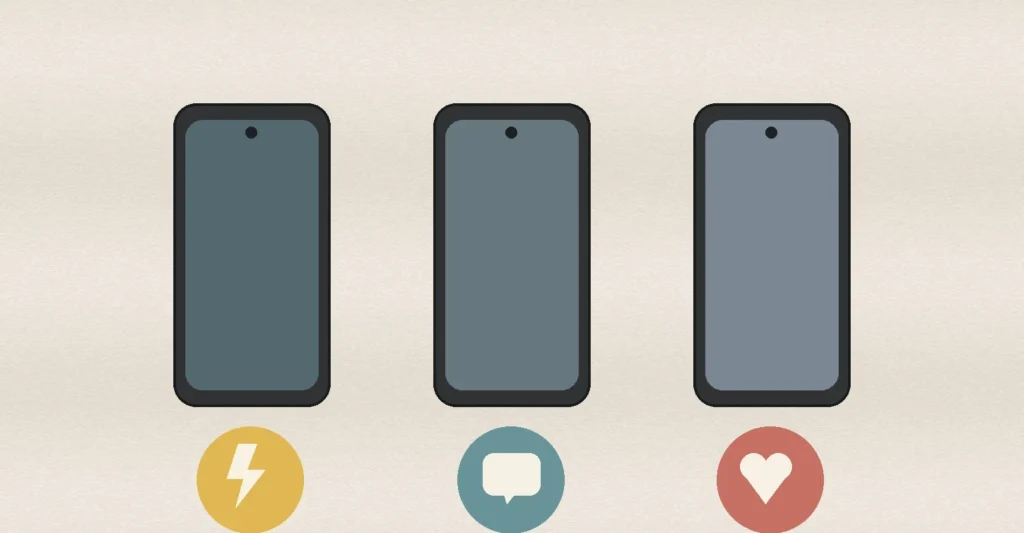
Here is where the Tinder vs Bumble vs Hinge comparison becomes more useful.
If you hate writing profiles
Tinder will probably feel easiest.
You still need a decent profile, but the product does not make prompts the center of every interaction.
If you hate opening messages
Hinge gives you something specific to respond to.
Bumble can also reduce opener pressure through Opening Moves in supported markets.
If you want fast discovery
Tinder is the strongest fit.
If you want more conversation structure
Bumble makes sense.
If you want more profile context
Hinge wins.
If you already know exactly who you like
None of those strengths are the main issue.
That becomes a privacy problem, not a discovery problem.
Best Dating Apps Comparison by Scenario
A scenario-based dating apps comparison is more useful than ranking every platform from first to last.
The easiest way to choose is to stop asking “which dating app is best?” and ask “best for what?”
You are newly single and overwhelmed
Start with Hinge or Bumble.
Both give you more structure than rapid-fire browsing.
You can still use Tinder, but if you feel rusty, a profile with more conversation hooks can make the first few matches less awkward.
You want casual discovery
Tinder is the obvious starting point.
Not because every Tinder user wants something casual—they do not—but because the app is built for broad, fast exploration.
You want to screen for personality earlier
Try Hinge.
Prompts and specific Likes create more information before the match becomes a conversation.
You want to keep your phone number private longer
Bumble’s in-app voice and video tools are useful.
You can get a better read on someone before moving communication elsewhere.
You travel often
Tinder’s paid Passport feature is specifically designed around changing your discovery location.
You are tired of shallow openers
Hinge has the structural advantage because a Like can attach to a specific prompt or photo.
Bumble’s Opening Moves can also help by giving matches a defined question to answer.
You have a crush on someone from real life
This is the scenario where a standard dating apps comparison usually gives the wrong answer.
If you already know the person, you may not need discovery at all.
You need a way to manage the risk of one-sided interest.
More on that later.
Dating App Privacy: What “Private” Actually Means
Privacy is one area where a dating apps comparison can become misleading if every visibility control is treated as the same thing.
Most major dating apps are not private in the sense people often mean when they search for private dating.
They are controlled-discovery platforms.
You create a profile so other eligible users can potentially encounter you.
Apps can add controls around that exposure, but the basic model remains discoverable.
That is not inherently bad.
Discovery is the product. In a privacy-focused dating apps comparison, that architectural difference matters more than a marketing label.
The important thing is understanding what type of privacy you want.
Privacy type 1: Hide specific information
You want to keep your phone number, workplace, home address, or exact routine private.
Every dater should do this.
Privacy type 2: Control who can discover you
Premium incognito or visibility tools can help on some apps.
Tinder, for example, currently lists Incognito Mode as a Plus subscription feature.
Privacy type 3: Avoid public dating discovery entirely
This is a different need.
If you want to express interest only toward one known person and do not want a general dating profile visible to strangers, a mainstream swipe app is solving a problem you do not have.
This distinction is one of the most important conclusions in this dating apps comparison.
Safety Features Matter, But Your Behavior Still Matters More
Safety belongs in any serious dating apps comparison because matching mechanics matter less if you do not feel comfortable moving from the app to real life.
All three major apps provide ways to block, report, or unmatch people.
Those controls matter.
But no safety badge turns a stranger into a known quantity.
Keep first meetings simple.
RAINN’s safer online and in-person dating guidance recommends meeting in a public, populated place, telling someone you trust about your plans, and keeping control of your own transportation.
That advice matters regardless of which app wins your personal dating apps comparison.
The best safety feature is still your ability to leave.
Free vs. Paid: When Premium Dating Apps Are Actually Worth It
The paid-features part of a dating apps comparison should answer whether premium removes a real limitation, not whether the most expensive tier has the longest feature list.
Paid dating features are easiest to evaluate when you separate two questions.
Question 1: Do I like this app?
If the answer is no, do not upgrade.
Premium features make the same product more convenient.
They do not give you a different personality fit.
Question 2: Is a specific limitation bothering me?
Then premium may be worth testing.
Examples:
- You genuinely need more Likes
- You want advanced filters
- You travel and want location flexibility
- You want to see incoming Likes
- You want more visibility control
- You already get value from the app and want less friction
This is why pricing alone is a weak dating app comparison metric.
A $20 feature you use is cheaper than a $10 feature you hate.
And because subscription pricing often varies by market, platform, age, promotion, or testing, I would not build an evergreen article around exact dollar amounts.
Check the current in-app offer before paying. A good dating apps comparison should stay evergreen by comparing what paid tiers do rather than quoting prices that can change.
Which Dating App Is Best for Serious Relationships?
For serious-dating intent, this dating apps comparison favors tools that give you more useful information before the first date.
Hinge is the strongest editorial recommendation in this group if your priority is intentional screening.
That recommendation is about mechanics—not a promise that every Hinge user wants commitment.
The product gives you:
- more profile context
- prompt responses
- Likes on specific content
- optional comments before matching
- advanced preferences on paid tiers
Those tools make it easier to decide whether someone seems interesting beyond the first photo.
But relationship success still depends on:
- who is available in your area
- whether you communicate clearly
- whether your goals match
- whether the person behaves consistently offline
No app can filter for emotional maturity perfectly.
Which Dating App Is Best for Casual Dating?
For casual discovery, the dating apps comparison shifts toward speed, pool size, and low-friction browsing.
Tinder is still the cleanest recommendation for broad, low-friction discovery.
It has a straightforward match model and emphasizes rapid browsing.
But “casual” should not be confused with careless.
Be clear about what you want.
Do not imply commitment to keep someone interested.
And do not assume someone wants casual sex simply because they use Tinder.
The app gives you access.
You still have to communicate.
Which Dating App Is Best for Women?
A gender-based dating apps comparison still has to account for personal preference because not every woman wants the same conversation rules or level of profile detail.
There is no responsible universal answer.
Bumble may appeal to women who prefer more control over how conversations begin, and its structured opening mechanics remain a meaningful product difference.
But some women dislike match timers or prefer Tinder’s simplicity or Hinge’s profile depth.
A better dating apps comparison asks:
- Do I want control over opening mechanics?
- Do I want more profile context?
- Do I want speed?
- How much public discoverability am I comfortable with?
Gender is only one factor.
Which Dating App Is Best for Men?
The same rule applies to men: a dating apps comparison is more useful when it compares mechanics instead of assuming one platform works for an entire gender.
Same answer: it depends on the experience you prefer.
If you like volume, Tinder may feel natural.
If you are good at writing specific comments, Hinge gives you a way to show that before matching.
If you prefer structured conversation flow, Bumble may suit you better.
Do not buy premium simply because you think more exposure will fix a weak profile.
Fix the profile first. No dating apps comparison can make premium visibility more valuable than a profile people actually want to respond to.
Better photos, clearer intentions, and specific conversation hooks usually matter before another paid visibility feature.
The Situation Most Dating App Comparisons Miss: You Already Know the Person
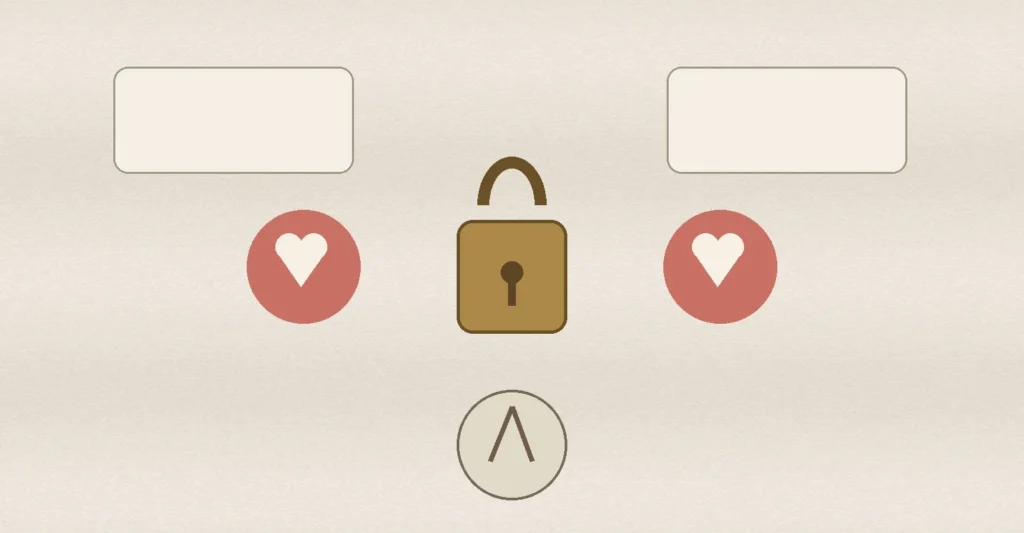
This is where the dating apps comparison changes categories completely, because discovery is no longer the problem.
Suppose the person you like is already in your life.
A classmate.
A friend.
A coworker.
A neighbor.
A friend of a friend.
Now ask what Tinder, Bumble, or Hinge are actually solving.
They are designed to help you discover people.
But you already discovered the person.
Your problem is:
“How do I find out whether the interest is mutual without making our shared social world unnecessarily awkward?”
That is a different category.
A private mutual-interest model makes more sense here.
For example, wadaCrush is built around known-person attraction rather than a public feed of strangers. You privately indicate interest in someone you already know, and your identity stays hidden unless the interest becomes mutual.
That is not “better than Tinder.”
It is solving a different job.
If you want broad discovery, use a mainstream dating app.
If you already know exactly who you like and discretion is the priority, a mutual-only setup may fit better.
If that sounds like your situation, Can You Like Someone Privately? goes deeper into that use case.
How to Choose the Right Dating App in 60 Seconds
If you only use one part of this dating apps comparison, use this decision filter.
Use this filter.
Pick Tinder if:
- you want speed
- you want broad discovery
- you like swipe simplicity
- you travel frequently
- you do not need long profiles before deciding
Pick Bumble if:
- you like structured conversation mechanics
- you want in-app voice/video before sharing a number
- you like Opening Moves where available
- you want a little more control around how the first exchange starts
Pick Hinge if:
- you like prompt-driven profiles
- you want something specific to comment on
- you prefer more information before matching
- you want advanced filtering options on paid plans
Pick a private mutual-interest tool if:
- you already know who you like
- you do not want to publish a dating profile to strangers
- your biggest concern is social awkwardness
- you want interest revealed only if it is mutual
That is the simplest useful dating apps comparison I can give you.
Common Dating-App Mistakes That Matter More Than the App
No dating apps comparison can compensate for a profile, messaging style, or dating habit that is working against you.
People sometimes switch apps when the real problem is their behavior.
Mistake 1: A profile that says nothing
“Love travel, food, and having fun.”
So does half the internet.
Specific beats impressive.
Try:
“Currently trying to find the best dumplings in the city and refusing to accept that 6 a.m. flights are ever worth it.”
Now someone has something to respond to.
Mistake 2: Treating matches as success
A match is not a relationship.
It is permission to start a conversation.
That is all.
Mistake 3: Messaging forever
If the conversation feels good, move toward a real meeting.
Weeks of messaging can create attachment to an idea.
Mistake 4: Ignoring what the app is telling you
If you hate the core interaction after two weeks, stop paying to make it more efficient.
Try a different environment.
That is one of the most useful lessons in any dating apps comparison.
Frequently Asked Questions
This dating apps comparison also answers the practical questions that usually come up after you narrow the list to two or three options.
What is the best dating app overall?
There is no universal best app. Tinder is strongest for broad, fast discovery; Hinge offers more profile context and specific Likes/comments; Bumble offers more structured conversation mechanics. The best choice depends on what kind of dating experience you want, which is why this dating apps comparison avoids naming one permanent winner.
Is Tinder or Bumble better?
Tinder is simpler and more discovery-driven. Bumble adds more rules and features around how conversations begin. In this dating apps comparison, the tradeoff is speed versus structure: if you want speed, Tinder may fit better; if you prefer more structure, Bumble may fit better.
Is Hinge better than Tinder for serious relationships?
Hinge gives users more information to work with before and during matching, which can make intentional screening easier. That does not guarantee serious users or better relationships.
Is Bumble still women-message-first?
That description is incomplete in 2026. Bumble uses Opening Moves in many markets, which can allow a match to respond to a preset opener regardless of whose move it otherwise would be. The exact flow varies by match type and region.
Which app has the best free version?
That depends on which limitation annoys you most. Tinder, Bumble, and Hinge all support core matching without requiring a paid subscription, but paid tiers add different visibility, filtering, Like, or convenience benefits.
Are paid dating apps worth it?
They can be if you already like the core platform and one specific limitation is getting in your way. Premium rarely fixes a bad profile or a poor product fit.
Which dating app has the best privacy?
Mainstream apps provide privacy and visibility controls, but they are still discovery products. If your definition of privacy is “I do not want strangers browsing me at all,” a private known-person mutual-interest model is a different category and may fit better.
Can I use more than one dating app?
Yes, but more apps are not always better. Two apps used intentionally can be useful. Five apps checked compulsively usually creates more admin, not better dating. A dating apps comparison should help you narrow the field, not encourage you to maintain five profiles at once.
Which app is easiest for beginners?
Tinder has the simplest basic mechanic. Hinge may be easier for people who struggle with conversation starters because profile prompts provide built-in material. Bumble may feel comfortable if you prefer structured opening rules.
What should I do before paying for premium?
Use the free version long enough to learn whether you actually like the app. Improve your photos and profile first. Then pay only if a specific premium feature solves a real limitation. That is the practical value of this dating apps comparison: pay for a solved problem, not for hope.
Final Verdict
The point of this dating apps comparison is not to crown a permanent winner; it is to match the product mechanics to the experience you actually want.
The final answer to this dating apps comparison is not:
“Tinder wins.”
Or:
“Hinge wins.”
Or:
“Bumble wins.”
It is:
Choose the mechanics that make it easiest for you to behave like yourself.
Use Tinder when you want reach and speed.
Use Bumble when you want more structure around how conversations begin.
Use Hinge when you want more profile context and better built-in conversation material.
And if the person you like is already in your real life, stop forcing a stranger-discovery tool to solve a privacy problem.
The wrong app can make you feel bad at dating when the real problem is simply that the environment does not fit you.
Choose the environment first.
Then work on the conversation.