Dating apps without discovery sound strange only if you assume dating always starts by browsing strangers.
A lot of attraction does not.
Table of Contents
Sometimes the person is already in your life. A friend. A classmate. A coworker from another team. Someone you see at the gym. A neighbor. A friend of a friend you keep ending up beside at group dinners.
You do not need an algorithm to introduce you.
You already know who you like.
What you do not know is whether saying something will make the next interaction painfully awkward.
That is the problem dating apps without discovery are designed to solve.
Instead of creating a public profile and entering a feed, the experience starts with private intent. You identify someone you already know, signal interest discreetly, and—depending on the product—the identity or connection is revealed only after the interest becomes mutual.
It is not “better dating” for everyone.
It is a different architecture for a different social problem.
Quick Answer
Dating apps without discovery remove or minimize the stranger-browsing layer that defines most mainstream dating apps.
They make the most sense when:
- you already know the person you are interested in
- broad profile visibility feels unnecessary
- you care more about discretion than having hundreds of options
- you want mutual interest confirmed before either person is exposed
- your social circles overlap enough that a direct confession has real consequences
The trade-off is equally simple:
You get less spontaneous discovery in exchange for more intentionality and privacy.
If your goal is meeting lots of new people, a traditional app is still the better tool.
If your question is, “Does this one person I already know like me too?” dating apps without discovery can be a much better fit.
What Are Dating Apps Without Discovery?
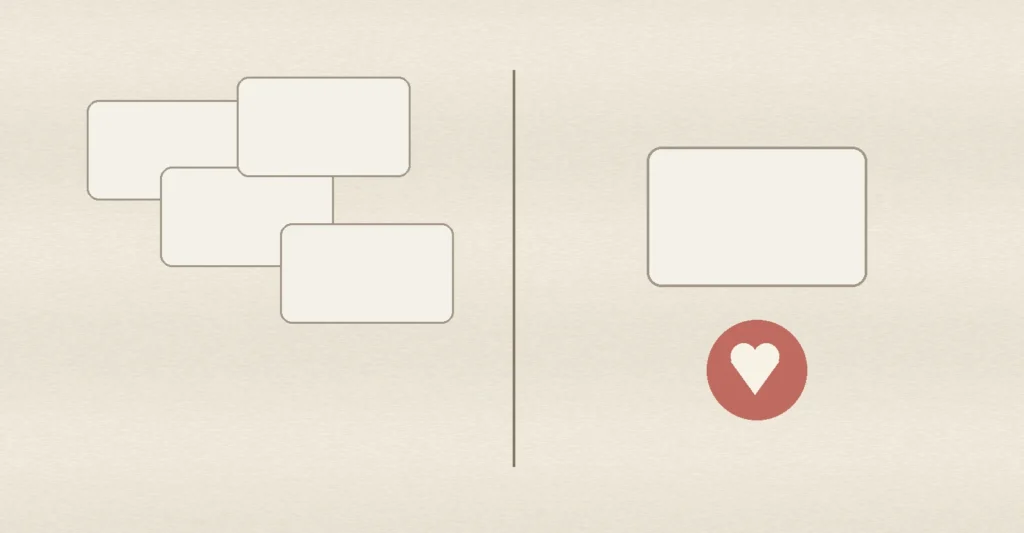
Traditional dating apps usually begin with discovery.
You open an app.
The app shows you people.
You browse.
You like, swipe, comment, or pass.
Only then does the system figure out whether there is mutual interest.
Dating apps without discovery reverse that sequence.
The person already exists in your real-world context.
The app is not trying to answer:
“Who is available nearby?”
It is trying to answer:
“Is the interest I already have mutual?”
That difference is bigger than it sounds. It is also why dating apps without discovery should be evaluated separately from ordinary swipe-based dating.
Discovery-first dating
The product optimizes for:
- reach
- recommendations
- profiles
- filters
- browsing
- engagement
- new-person discovery
Intent-first dating
The product optimizes for:
- known-person interest
- privacy
- mutuality
- limited exposure
- lower social risk
- a clear yes/no signal
A good dating app without swiping is not necessarily anti-dating-app.
It simply removes a step that some people do not need.
Why Dating Apps Without Discovery Feel Different
The emotional cost of rejection changes when you already know the person.
If a stranger on an app does not match with you, you probably never see them again.
If someone from your friend group does not feel the same way, you may see them Saturday.
Then next Saturday.
Then at a birthday dinner.
Then in three group photos you did not ask to be tagged in.
That is why dating apps without discovery are really about social-risk management as much as dating.
The issue is not always fear
People sometimes hear “private crush” and assume shyness.
But privacy can be rational.
You might be thinking:
- I value the friendship and do not want to destabilize it unnecessarily.
- We work in adjacent professional circles.
- Our families know each other.
- We share a tight cultural or community network.
- I am genuinely unsure whether the energy is friendly or romantic.
- I want clarity without turning my feelings into group information.
Those are not irrational concerns.
They are context.
Privacy Means More Than Hiding Your Profile
The phrase “private dating app” can mean several different things.
That is important because not every privacy feature solves the same problem.
Privacy level 1: Protecting personal information
This is basic dating hygiene.
Do not hand strangers unnecessary information about:
- your home
- phone number
- workplace
- exact routine
- travel schedule
- financial details
Every dating product should make this easier.
Privacy level 2: Controlling discoverability
Some mainstream apps offer visibility or incognito-style controls.
That helps when you still want stranger discovery but want greater control over who can see you.
Privacy level 3: No broad discovery at all
This is the model dating apps without discovery occupy.
You are not trying to reduce visibility inside a dating marketplace.
You are trying to avoid entering the marketplace in the first place.
The romantic interest already exists offline.
That is a fundamentally different privacy requirement.
How the Mutual-Interest Model Works
The exact mechanics vary by product, but dating apps without discovery generally follow a flow like this:
- You choose or identify someone you already know.
- You privately indicate romantic interest.
- The other person gets some way to participate or express their own interest.
- Your identity or romantic intent remains protected unless the system confirms a mutual match.
- Once mutuality is established, both people can decide what happens next.
The important word is mutual.
A good mutual interest app should not become an anonymous channel for repeatedly contacting someone who has not opted into romantic interaction.
Privacy should reduce pressure.
It should not hide pressure. The best dating apps without discovery protect the recipient as carefully as they protect the sender.
Why Mutual-Only Reveal Changes the Experience
Imagine you like a friend.
With direct confession, the sequence is:
You reveal → they decide → both people now know.
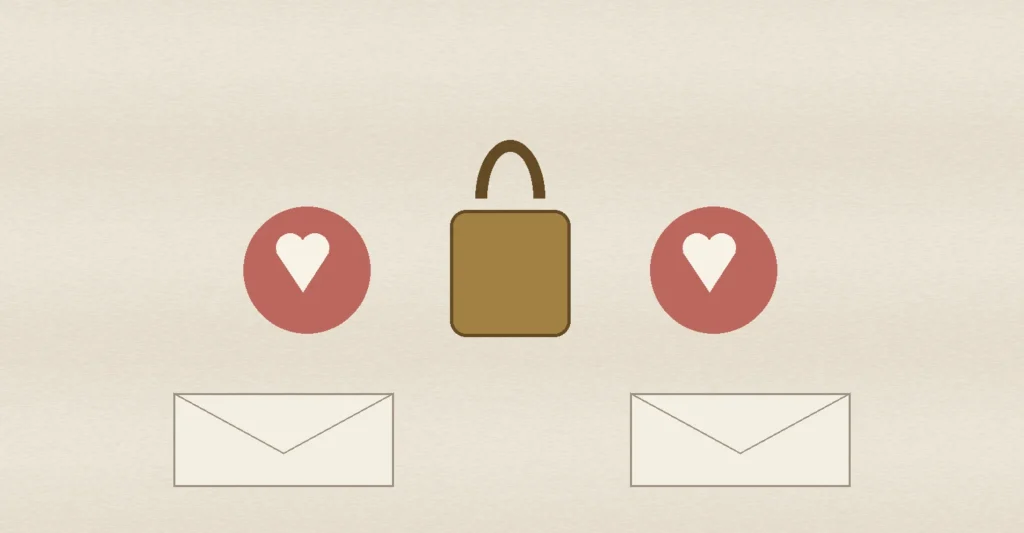
With a mutual-only system, the intended sequence is closer to:
You signal privately → they independently signal → only mutual interest creates the reveal.
That changes the emotional stakes.
If the feeling is mutual, great.
If it is not, the system is designed to avoid unnecessary one-sided exposure.
This is the core reason dating apps without discovery appeal to people whose dating lives are connected to real-world relationships.
Who Dating Apps Without Discovery Are Best For
This model is not trying to replace Tinder, Bumble, Hinge, or any other discovery platform for everyone. Dating apps without discovery are strongest when the user arrives with a specific person already in mind.
It fits a narrower group extremely well.
People with a real-life crush
This is the obvious one.
You already know the person.
You are not searching for alternatives.
You want information about one existing connection.
Dating apps without discovery let the process begin with that reality instead of asking you to create a public profile first.
People in overlapping friend groups
Friend-group attraction has unusually high social consequences.
A clean yes is great.
A clean no is survivable.
What people fear is the ambiguous middle:
“Did they tell everyone?”
“Is dinner going to be weird?”
“Does the whole group know now?”
A private mutual-interest approach reduces the number of people who need to know anything at all.
People with professional overlap
Workplace romance can involve policies, reporting relationships, power dynamics, and reputation concerns.
No app makes an inappropriate workplace relationship appropriate.
But for peers with no power imbalance, discretion may matter more than public discoverability.
The key is still respecting workplace policy and making sure both people are genuinely free to say no.
People from small communities
A small campus.
A close cultural community.
A small town.
A niche professional industry.
A religious community.
In those environments, “public profile” can feel much more public than the app intends.
Dating apps without discovery can make sense when your dating pool and social identity overlap heavily.
People tired of performing for strangers
Dating profiles are a form of self-presentation.
Photos.
Prompts.
Bios.
Hooks.
You are packaging enough of yourself to persuade strangers to stop scrolling.
Some people enjoy that.
Others think:
“I already like someone. Why am I marketing myself to 500 people I do not care about?”
For them, the no-discovery model can feel refreshingly direct.
Who Should Not Use This Model
Dating apps without discovery are a bad fit if your main goal is discovering new people.
Use a discovery app if:
- you recently moved
- your social circle is limited
- you want broad options
- you enjoy meeting strangers
- you do not currently have anyone specific in mind
- you want location, lifestyle, or relationship-intent filters
Privacy-first does not mean universally better.
It means more focused.
If your problem is “I need more people to meet,” removing discovery makes the product less useful, not more.
Dating App Without Swiping vs. Dating App Without Discovery
These ideas overlap, but they are not identical.
A dating app without swiping can still show you a feed of strangers.
Maybe you scroll cards.
Maybe you answer prompts.
Maybe you receive curated profiles.
Discovery still exists.
Dating apps without discovery go further.
The product does not need to continuously recommend new strangers because discovery is not the job.
You bring the interest.
The app helps determine whether it is reciprocal.
That is why “no swipe” is a feature description while “no discovery” is closer to a product philosophy.
Anonymous Crush App vs. Private Mutual-Interest App
The word anonymous can create the wrong impression.
Anonymous messaging often means:
“I can communicate with you while you do not know who I am.”
That can create abuse, harassment, or unwanted contact if there are weak boundaries.
A responsible anonymous crush app should work differently.
The identity is temporarily hidden for the purpose of protecting one-sided interest, not for enabling unlimited secret communication.
The goal should be:
mutual signal → reveal
not:
anonymous pursuit → repeated contact
That distinction matters. Dating apps without discovery work only when anonymity is temporary protection for mutuality, not permission for anonymous pursuit.
Privacy is healthy when it protects both sides.
What Good Privacy-First Design Should Include
If you evaluate dating apps without discovery, look beyond the marketing language.
Mutuality
One person should not get unlimited access simply because they expressed interest.
Clear boundaries
The system should explain what happens if interest is not returned.
Limited exposure
The other person should not automatically receive unnecessary personal information.
Blocking and reporting
Privacy-first does not remove the need for safety tools.
A way to stop contact
The recipient should be able to opt out or disengage.
Clear notification behavior
If the person is not already using the service, understand exactly what they receive.
Do they see your name?
Your phone number?
A generic invitation?
A message?
Do not assume.
Read the product’s current explanation before sending anything.
What Dating Apps Without Discovery Do Not Solve
Privacy does not eliminate romantic uncertainty.
A mutual-interest system cannot tell you:
- whether you are compatible
- whether the relationship will last
- whether they communicate well
- whether you share values
- whether the chemistry works in an actual date
- whether the timing is right
It solves one question:
Is the initial romantic interest mutual?
That is valuable.
It is also limited.
Once mutuality is established, you still have to date like normal humans.
Talk.
Make plans.
Set boundaries.
Notice behavior.
Communicate.
No app gets to skip that part.
The Safety Question Still Matters
A privacy-first model can reduce unwanted public exposure, but it cannot guarantee safety.
If you move from mutual interest to meeting someone you do not know well, use normal safer-dating practices.
RAINN’s safer dating guidance recommends meeting in a public, populated place, telling someone you trust about your plans, and keeping control of your transportation.
Those basics still apply even if the initial connection feels familiar.
A friend of a friend is not automatically a safe person.
A coworker is not automatically trustworthy outside work.
A mutual match is not a background check.
Watch for Romance Scams Too
No-discovery dating reduces some stranger-browsing exposure, but scams are not limited to traditional dating feeds.
Scammers can approach people through social media, messaging, professional networks, and other online spaces.
The Federal Trade Commission’s romance-scam guidance warns that scammers often build trust, make excuses for why they cannot meet, and eventually ask for money or steer people toward hard-to-reverse payments or investments.
The FTC’s simplest rule is useful everywhere:
Never send money or gifts to an online romantic interest you have not met in person.
Private does not mean verified.
Why Traditional Dating Apps Still Make Sense
It is easy to turn a privacy-first article into an attack on mainstream dating apps.
That would be dishonest.
Discovery apps are great at discovery.
That is why they exist.
If you want:
- lots of options
- a fresh dating pool
- location-based discovery
- relationship filters
- stranger matching
- spontaneous connections
traditional dating apps solve that problem better.
Dating apps without discovery make sense only when discovery is the part you do not need.
That is the central distinction.
The Real Cost of Discovery Is Attention
Discovery seems free because the apps show you profiles automatically.
But it costs attention.
You have to:
- evaluate
- compare
- swipe
- read
- message
- remember conversations
- decide whether to meet
- decide whether to continue
Some people enjoy that process.
Some people feel like they accidentally took on a part-time recruiting job.
If you already know who you like, spending hours evaluating alternatives may be pointless.
Dating apps without discovery remove that cognitive layer.
Less choice can be a feature when you did not ask for more choices.
Can This Reduce Swipe Fatigue?
Potentially, because there is nothing to endlessly browse.
But dating apps without discovery should not be marketed as a cure for every negative feeling about online dating.
If you are lonely, anxious, or obsessing over one person, removing a feed does not automatically solve the underlying emotion.
It can simply make the product less noisy.
That is useful.
Just keep the claim proportional.
What If the Other Person Is Not Already on the App?
This depends entirely on the service.
Some products require both people to already have accounts.
Others can invite a non-user into the mutual-interest flow using contact information such as a phone number or email.
This is where product transparency matters enormously.
Before using any private dating app, check:
- what the non-user receives
- whether your identity is visible
- whether your personal message is visible
- what data is stored
- how they can opt out
- what happens if they never respond
Do not rely on assumptions.
A Natural Example: Where wadaCrush Fits
One product built around this known-person model is wadaCrush.
The reason it belongs in this article is not because it should replace every mainstream dating app.
It should not.
Its use case is narrower.
You already have someone in mind. You want to privately express interest without publishing yourself into a stranger-discovery feed. The platform is built around discreet crush signaling and mutual interest rather than broad browsing.
That makes wadaCrush relevant to dating apps without discovery in a way that would not make sense in an article about finding thousands of nearby singles.
If you are comparing that type of private approach, read the product’s current How It Works and privacy information before deciding whether the flow fits your comfort level.
For a broader explanation of the emotional side, Can You Like Someone Privately? covers when discretion is useful and when direct communication makes more sense.
That is enough product promotion for this article.
The rest of the decision should be about fit.
Dating Apps Without Discovery vs. Traditional Apps
Here is the clean comparison.
| Question | Without discovery | Traditional discovery app |
|---|---|---|
| Do you browse strangers? | Usually no | Yes |
| Do you need someone specific in mind? | Usually yes | No |
| Is broad profile visibility necessary? | Usually no | Usually part of the model |
| Is the goal variety? | No | Often |
| Is the goal mutual confirmation with a known person? | Yes | Not primarily |
| Is rejection exposure lower by design? | Often, if reveal is mutual-only | Depends on matching mechanics |
| Is it useful after moving to a new city? | Limited | Much more useful |
| Is it useful for an existing crush? | Strong fit | Indirect fit |
Neither column wins.
They solve different jobs. That is the fairest way to compare dating apps without discovery with traditional dating platforms.
How to Decide Which Model Fits You
Ask yourself five questions.
1. Do I already know who I like?
If yes, discovery may be redundant.
2. Would I enjoy meeting strangers anyway?
If yes, a mainstream app can still make sense even if you have a crush.
You are allowed to keep your options open.
3. How much does public dating visibility bother me?
Be specific.
Do you dislike dating profiles generally?
Or are you mainly worried about coworkers seeing you?
Those are different problems.
4. Am I genuinely interested in this person—or stuck on them?
Privacy should not become a tool for prolonging fixation.
If someone has clearly rejected you, a private app is not a workaround.
A no remains a no.
5. What happens after a mutual match?
Think beyond the reveal.
Would you actually ask them out?
Can you communicate clearly?
Are there power dynamics or boundaries that still make the relationship inappropriate?
Mutual interest is information.
It is not permission to ignore context.
When Direct Communication Is Better
Sometimes you do not need an app.
If you and the person already have clear chemistry and a comfortable relationship, the simplest move may be:
“I’ve really liked spending time with you. Would you want to go on an actual date sometime?”
That is direct without being dramatic.
Dating apps without discovery are most useful when the social cost of one-sided disclosure is genuinely meaningful.
They should not convince you that every ordinary romantic conversation is too dangerous to have.
Privacy is a tool.
Not a personality.
Frequently Asked Questions
Are dating apps without discovery real?
Yes. The category is smaller than mainstream discovery dating, but the model is real: known-person interest, limited or no public browsing, and mutual-interest mechanics rather than an endless stranger feed.
What does “without discovery” mean in dating apps?
It means the service is not primarily designed to show you a stream of new strangers to evaluate. Instead, you begin with someone you already know or have identified outside the app.
Is a dating app without swiping the same thing?
Not necessarily. An app can remove swiping but still show you curated stranger profiles. Dating apps without discovery remove or minimize the stranger-discovery layer itself.
Are dating apps without discovery more private?
They can reduce broad profile exposure, but privacy depends on the exact product. Check what information is visible, how non-users are contacted, what happens after a non-match, and what blocking or opt-out tools exist.
Can I use one for a coworker?
Be careful. A private tool does not override workplace policy or power dynamics. Do not pursue someone you supervise or anyone who may feel professionally unable to decline.
Do dating apps without discovery prevent rejection?
No. They can reduce exposure to one-sided rejection if the system uses mutual-only reveal. They cannot make another person interested.
What happens if the crush does not use the app?
It depends on the product. Some services require both users to join independently; others may invite the person through phone or email. Review the current notification behavior before sending anything.
Is an anonymous crush app safe?
It depends on the design. Look for mutuality, clear opt-outs, blocking/reporting, limited anonymous communication, and transparent privacy rules. Anonymous access without boundaries can create more problems than it solves.
Are private mutual-interest apps better than Tinder or Hinge?
Not universally. Tinder and Hinge are discovery tools. A mutual-interest app is more useful when you already know the person. The better product depends on the job you are trying to do.
Should I use a private app or just tell my crush?
If the relationship is low-risk and communication already feels easy, directness may be simpler. If friend-group, professional, cultural, or social overlap raises the stakes, a mutual-only approach may feel more comfortable.
Final Thoughts
Dating apps without discovery make sense because not every love story starts with discovery.
Sometimes you do not want 300 profiles.
You want an answer about one person.
Sometimes you do not want strangers evaluating your dating profile.
You want to privately test an interest that already exists in real life.
And sometimes you do not want to “shoot your shot” publicly when the person will still be sitting beside you in class, appearing at group dinner, or showing up at the same professional event next month.
That is not anti-dating-app.
It is simply a different requirement.
Use discovery apps when you need discovery.
Use dating apps without discovery when you already know where your interest is pointing and privacy matters more than volume.
And whichever model you choose, keep the same standards:
Mutual interest.
Clear boundaries.
Honest communication.
Respect for a no.
The technology should reduce unnecessary friction.
It should never reduce the other person’s agency.
Private Dating: what matters here
For dating apps without discovery, privacy and product fit belong in the same conversation. Strong dating app without swiping gives users control; sensible private dating keeps that control understandable in real situations.