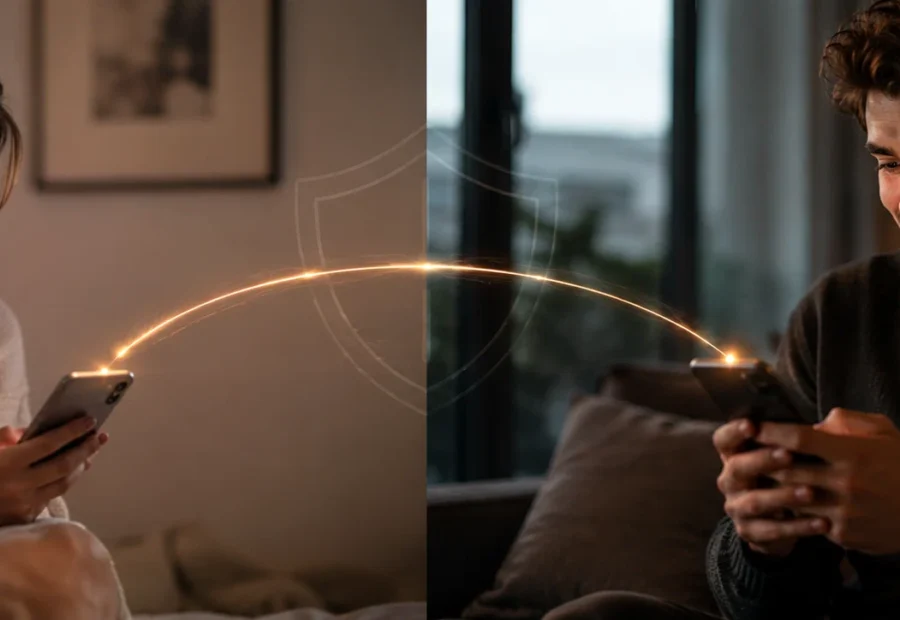

One long look can mean chemistry. It can also mean someone forgot what they were about to say.
Mutual attraction is easier to read when you stop hunting for a single perfect sign and start watching patterns. Does the other person move toward you too? Do they make time, remember details, and create reasons to keep the connection going?
Table of Contents
The strongest mutual attraction signs are usually reciprocal rather than theatrical. They show up in repeated choices. If you want to test the vibe without making a dramatic confession, look for consistency, context, and whether the effort runs in both directions.
These nine signs will not turn attraction into a science. They will help you separate a promising pattern from wishful thinking.
What private attraction testing actually means
Private attraction testing is not mind games. It is not breadcrumbing, vague flirting forever, or collecting attention just because you can. It means creating low-pressure chances for the other person to show interest back without putting either of you on the spot.

That could be a one-on-one chat, a slightly more personal text, a small invitation, or a mutual-only system that reveals interest only if both people choose it. The best approach depends on the setup. A classmate is different from a coworker. A close friend is different from someone you only talk to in group settings.
The trade-off is real. The more private and low-risk your move is, the less direct it may feel. So the trick is not to stay subtle forever. It’s to move from soft signals to actual clarity.
7 ways to test mutual attraction privately
If you want a clean answer to how to test mutual attraction privately, these are the best ways to vibe-check the situation without making it painfully awkward.
1. Shift from group energy to one-on-one energy
Group chemistry can be misleading. Some people are naturally warm, funny, and attentive with everyone. What tells you more is whether they engage differently when it’s just the two of you.
Try a private conversation after class, a direct message after a group hang, or a quick check-in that has no audience. If they lean in, keep the convo going, and seem relaxed about talking one-on-one, that matters.
2. Send a message that is slightly more personal
Not a love paragraph. Just one step warmer than your usual style.
Reference an inside joke. Ask about something they mentioned earlier. Say you thought of them when you saw something specific. This tests whether they return that personal energy or keep things flat and generic.
If they match your tone, ask follow-up questions, or keep the thread alive, that is usually a better sign than a fast reply with no substance.
3. Make a low-pressure invite
Private attraction becomes clearer when someone chooses extra time with you. Keep it casual and specific.
Coffee after class. A walk after work. Checking out a local spot you both mentioned. If they are interested, they usually help make it happen. If they are not, you may get vague maybes, repeated delays, or no effort to reschedule.
It depends on personality, of course. A shy person may still say yes quietly. A busy person may be genuinely busy. That is why patterns matter more than one answer.
4. Notice who starts contact and who sustains it
Mutual attraction is rarely one-sided effort for long. If you always initiate, always revive the chat, and always create the reason to talk, the answer may already be there.
Look for reciprocity. Do they text first sometimes? Do they remember little details? Do they find reasons to stay connected? Attraction often shows up as continued attention, not just polite responses.
5. Use playful flirting, then pause
A light compliment or teasing comment can work as a soft test. The important part is what happens next.
If they smile, flirt back, mirror your tone, or keep the banter going, great. If they dodge it, redirect immediately, or respond like you’re a customer service rep, pull back.
This is where people overread things. One laugh is not a love story. But repeated warm responses usually mean something.
6. Watch for private-only behavior
Some people are expressive in public and distant in private. Others are the opposite. The second pattern can be especially telling.
If someone seeks you out quietly, opens up more in private, or seems more focused when no one else is around, there may be genuine interest there. Private attention often says more than performative public charm.
7. Use a mutual-only tool if the stakes feel high
Sometimes the cleanest answer is also the safest one. If you share a friend group, work together, or really do not want a public miss, a private mutual-intent setup makes sense.
With wadaCrush, you can send a discreet signal to someone you already know using their phone number or email. They do not need to already be on the app, and identities stay hidden unless the feeling is mutual. That means no public profile browsing, no randoms, and no forced reveal if it is not a match.
For a lot of people, that is the most realistic version of how to test mutual attraction privately because it removes the social blast radius.
How to tell real interest from friendliness
This is where people get stuck. They are nice to me, but are they into me?
Friendliness is broad. Attraction is usually more focused. Real interest tends to look like extra attention, repeat effort, personal curiosity, and a willingness to create one-on-one time. It is less about one huge sign and more about a cluster of smaller ones.
A good rule: if the energy only exists when you create it, be careful. If they also move toward you, remember things, extend conversations, and seem happy to make room for you, that is different.
Practical example: what to say without making it weird
Here’s a simple move if you want to test the vibe by text.
You: “You’re unexpectedly fun to talk to. Want to grab coffee this week?”
If they say, “Yeah, that sounds nice”, you can reply: “Cool. Thursday or Saturday?”
If they say, “Maybe, I’m pretty busy”, reply once with: “No pressure. If you want to another time, let me know.”
That last line is underrated. It keeps your cool, protects your pride, and puts the ball in their court. If they are interested, they will usually come back. If they do not, you have your answer without a cringe spiral.
When private testing is not the right move
Not every situation should be pushed.
If there is a clear power imbalance, if the person is already taken, or if they have given consistent signs of disinterest, do not keep escalating under the label of being discreet. Privacy should reduce pressure, not hide disrespect.
And if this is a workplace situation, be extra careful. Some office crushes are real. Some are just proximity and shared deadlines. Make sure your move is appropriate, easy to decline, and not repeated if the answer is unclear.
FAQ
What is the best way to test mutual attraction privately?
The best way is a low-pressure one-on-one signal that gives the other person room to respond honestly. A personal message, a small invite, or a mutual-only reveal system usually works better than a dramatic confession.
How do you know if attraction is mutual or just friendly?
Look for consistency, reciprocity, and focused attention. Mutual attraction usually includes repeated effort from both sides, not just occasional warmth.
Is texting a good way to test attraction privately?
Yes, if the message is clear but not intense. Texting works well for opening the door, but the strongest signals usually come from whether they keep engaging and make time for you.
How can I test interest without getting embarrassed?
Use moves that are easy to answer and easy to recover from. Keep it private, stay respectful, and avoid overinvesting before you see clear effort back.
Is there a private way to confess a crush without full exposure?
Yes. A mutual-only setup can help if you want clarity without revealing yourself unless the interest is returned. Near the end of the day, that is why some people prefer private-by-default tools where there are no public profiles unless someone opts in and no identities revealed unless both people pair.
The best private move is the one that gives you real information while keeping everyone’s dignity intact. You are not trying to be mysterious. You are trying to be honest in a way that does not make real life messier than it needs to be.
Mutual attraction signs are stronger when they are reciprocal
Attraction research does support the idea that reciprocity matters, but not as a magic rule. A speed-dating study indexed by PubMed found some support for reciprocity among several factors involved in initial attraction. Other research has also shown that people often respond positively when they believe another person likes them.
The practical takeaway is simple: do not judge mutual attraction signs only by what the other person does. Notice the interaction between you. Warmth that grows when you both participate tells you more than a single isolated gesture.
Sign #8: they make the next step easier
Interest often appears in logistics. You suggest coffee and they offer a time. You mention an event and they ask when you are going. They cannot make Thursday, so they suggest Saturday instead.
This is one of the clearest ways to test the vibe because it requires voluntary effort. A vague “we should hang out sometime” can be politeness. Helping a plan actually happen is more informative.
Sign #9: the private energy matches the public energy
Some people are naturally charming in groups. Others become more attentive when the room gets quieter. What matters is whether the connection feels consistent across contexts.
If someone flirts publicly but becomes distant one-on-one, do not assume the public performance means more. If they are warm in private, remember what you say, and continue the conversation without an audience, that can be a more useful signal.
How to test the vibe without turning it into an experiment
You are not collecting evidence for a courtroom. The point is to create one small opportunity for clarity.
Try a specific, low-pressure invitation: “I’ve liked talking with you. Want to grab coffee Saturday?” Then stop analyzing and let the answer contain information. If they are interested but busy, they may suggest another time. If they stay vague repeatedly, accept the pattern.
A second option is a light compliment followed by space. “You looked really good tonight” is enough. Do not stack three more lines behind it. See whether the other person receives the energy and returns it.
What people commonly mistake for mutual attraction
Fast replies can be a texting habit. Eye contact can be politeness. Physical proximity can be a crowded room. Remembering your coffee order can be friendship.
None of those are meaningless, but they become stronger when they cluster with other mutual attraction signs: personal curiosity, one-on-one time, initiation, follow-through, and a gradual increase in romantic tone.
The easiest way to fool yourself is to count every friendly act as evidence while explaining away every lack of reciprocity.
When a private signal makes more sense
Sometimes you can test the vibe directly with a coffee invitation. Sometimes the shared context makes that feel disproportionately exposed.
wadaCrush lets you send a discreet crush signal to someone you already know, with identities kept hidden unless the interest becomes mutual. That model can be useful in a friend group, class, or other environment where a one-sided reveal could linger.
It should still be one respectful move, not a way to keep pursuing someone who has not reciprocated. For more on choosing between approaches, read direct confession versus private signaling or the guide to gauging attraction.
Mutual attraction is information, not a guarantee
Even strong mutual attraction does not tell you whether two people want the same relationship, move at the same pace, or fit well outside the spark. Attraction is the opening question, not the entire compatibility test.
Once the vibe is clear, stop testing and start talking. Ask the next normal question. That is how uncertainty turns into an actual connection.
If nothing moves unless you push it, that is information too.
That is how mutual attraction becomes easier to read without turning every interaction into analysis. You are watching the relationship move, not collecting isolated clues.
You can spend hours deciding whether a smile was flirtatious. A better test is to create a normal next step and see whether the other person participates. Invite them somewhere. Let a conversation end and notice whether they restart it later. Share a small piece of yourself and see whether they reciprocate.
The sign that matters most is what happens next
And leave room for uncertainty. People can enjoy you deeply without wanting romance. The purpose of noticing patterns is to decide whether a small, respectful next step makes sense—not to build a case that obligates the other person to feel something.
Compare the behavior with the person’s usual pattern. Do they make extra room for you? Do they continue a conversation after the practical reason for it has ended? Do they suggest another time when they cannot make a plan? Those choices tell you more than a single smile or emoji.
A long conversation at a party can feel significant, but some people naturally give everyone their full attention. A quick reply can feel exciting, but some people simply answer messages quickly. That is why reading attraction requires context rather than a checklist of isolated gestures.
Context can change the meaning of the same behavior
Keep reading
If this topic is close to your situation, continue with ways to gauge attraction or direct confession versus private signaling.
Can body language prove mutual attraction?
No single behavior proves attraction. Look for repeated reciprocity across different contexts.
What is the cleanest way to test the vibe?
Make one low-pressure invitation and see whether the other person helps the plan happen.
Should I keep testing after repeated vague answers?
No. Repeated lack of reciprocity is information. Respect the pattern and stop escalating.
A practical closing thought
Mutual attraction is most useful when it gives you better information without making the other person carry more pressure. Technology can change the order of a conversation, but it cannot replace judgment, context, or respect.
If you remember one thing, make it this: use mutual attraction signs and test the vibe as tools for clarity, not as reasons to keep pushing for certainty when the other person is not moving toward you.
Reciprocity is the strongest signal
The practical version is less dramatic than people expect. The best way to use mutual attraction is to look for patterns, not a single dramatic clue. mutual attraction signs is more convincing when it repeats over time, and test the vibe matters most when the other person is choosing to participate too.
That keeps the advice useful in a friend group, at work, on campus, or anywhere you are likely to see the same person again.
Use one low-pressure test
What matters here is the pattern you can actually observe. With mutual attraction, context keeps you grounded. Treat mutual attraction signs as evidence, not proof, and use test the vibe to decide whether one low-pressure next step makes sense.
If the response is clear, respect it. If it is mixed, give the situation enough space for the other person to contribute without being chased.