

There is a big difference between having a feeling and knowing what to do with it. known person dating app works best when the first move is clear enough to understand and light enough that either answer can be handled normally.
The details around dating people you know and private dating app are where that balance usually lives: privacy where it helps, directness where it matters, and no pressure disguised as persistence.
Table of Contents
What a known person dating app actually is
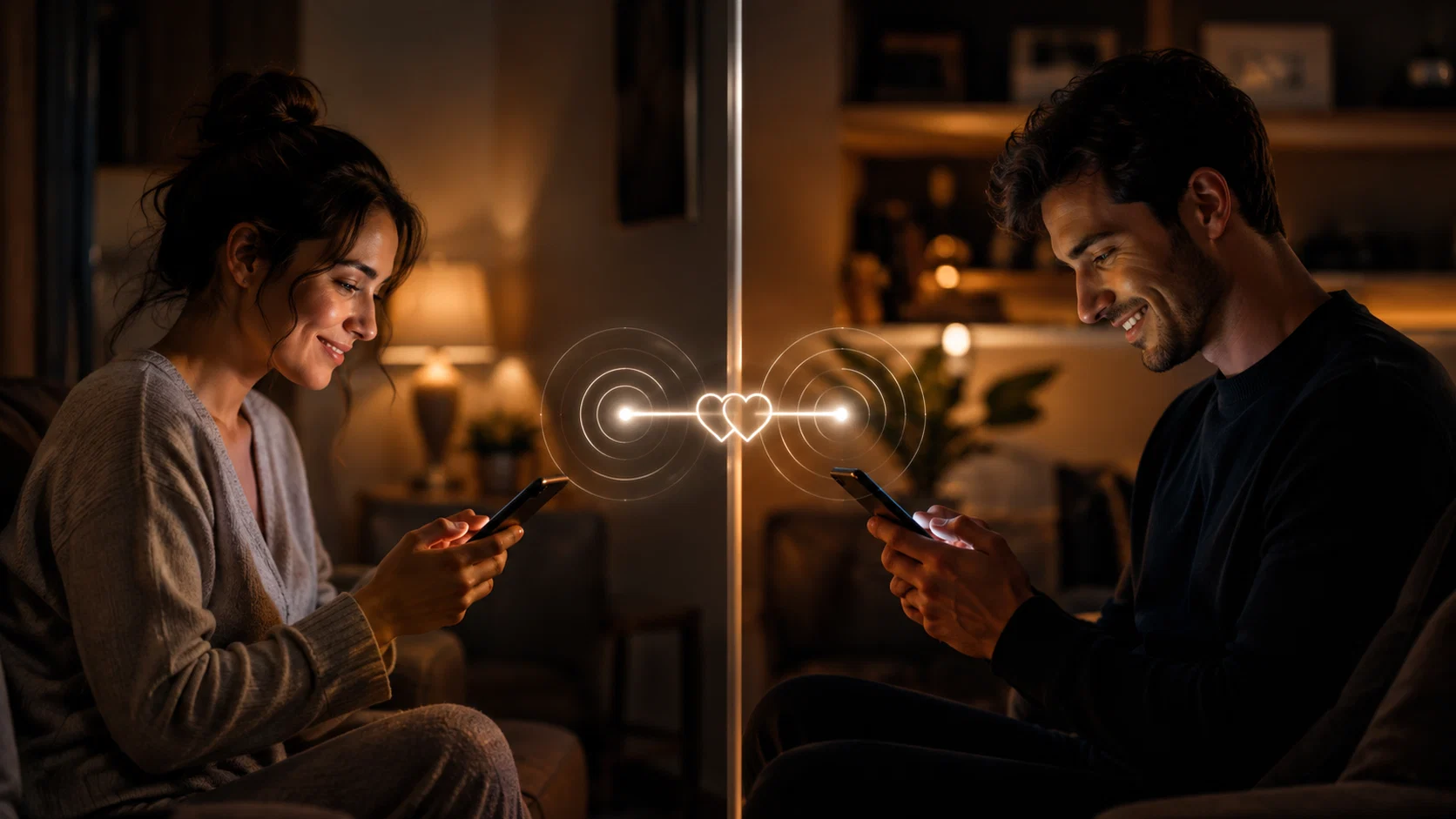
A that first move is not a swipe app with a quirky label. The core idea is simple: you express interest in someone you already know, and the app is supposed to protect both people from unnecessary cringe.
That means no random discovery, no public profile feed, and ideally no searchable directory of everyone nearby. The strongest version of this model keeps profiles private by default and reveals identities only if there’s mutual interest.
That distinction matters more than the branding. Plenty of apps say they care about safety, but if they still push public browsing or half-hidden visibility settings, you’re back in the same old mess – just with better UX.
For this category to make sense, it needs to solve a very specific problem: how do you shoot your shot with someone you already know without turning next week’s group hang into a stress event?
Who this type of app works for
This setup is great for people who don’t want randoms. If your crush is a friend, friend-of-friend, classmate, teammate, coworker, or someone you see in a familiar social setting, a the process makes more sense than a traditional dating app.
It’s especially useful when social risk is the real blocker. Maybe you don’t want to get friend-zoned in public. Maybe workplace dynamics make direct flirting a bad move. Maybe you’re just not trying to send a vulnerable text and stare at three dots for six business days.
It’s less useful if your main goal is discovery. If you want volume, browsing, and lots of new people, this category will probably feel limited by design. That’s not a flaw. It’s the whole point.
One example in this space is wadaCrush, which leans hard into the privacy-first angle. It lets users send a discreet signal using a phone number or email, even if the other person isn’t on the app yet, and identities stay masked until there’s a mutual match. That’s a strong setup because it cuts the public-risk part out of the equation.
this approach review: the real pros
The biggest upside is emotional accuracy. Stranger apps ask you to make fast decisions with very little context. Known-person apps flip that. You already know whether this person is funny, kind, emotionally available-ish, or at least capable of texting back like a normal human.
There’s also less performance. You’re not building a profile for mass appeal. You’re dealing with a real person in a real-world context, which can lead to more intentional matches.
Privacy is another major win – if the app is built correctly. A good this approach review has to care about whether identities are hidden until both people opt in. Without that, the whole concept starts to feel like digital hovering.
Then there’s the simple truth that this model reduces rejection theater. Not rejection itself, because hey, feelings are still feelings. But the public version of rejection? The weirdness? The “now we both have to pretend this never happened at brunch” energy? That can be minimized.
Where these apps can go wrong
This category is not automatically good just because it sounds safer.
The first issue is consent design. If an app makes it too easy to repeatedly signal the same person, or if notifications feel pushy, it can cross from discreet into uncomfortable fast. Mutual-only should also mean respectful-only.
The second issue is false privacy. Some apps claim to be discreet while still exposing names, photos, or searchable profiles too early. That’s not a small product choice. That changes the emotional stakes entirely.
The third issue is limited utility. A this situation only works when both people are open to the format. If someone hates downloading apps, ignores unknown SMS prompts, or finds the whole thing confusing, the experience can stall before it starts.
So yes, this model can be smart. But it depends heavily on product guardrails.
The privacy test that matters most
If you’re comparing options, here’s the easiest test: ask what happens before a match.
If your identity is visible before mutual interest, that’s a different product category, no matter what the marketing says. If there are public profiles by default, same issue. If strangers can browse or search you, that’s not really a known-person app. That’s a dating app wearing glasses.
The strongest setup looks more like this:
- You send a private signal to someone you already know.
- They can respond privately.
- Only a mutual yes reveals identities and opens conversation.
That flow is clean because it protects both sides. It gives you a way to shoot your shot without handing social control over to the worst-case scenario.
A practical example of how it should feel
Let’s say you have a crush on someone from your extended friend group. You don’t want to confess directly because if the vibe is off, everyone somehow knows by Saturday.
A good known-person app lets you send interest quietly and wait for a mutual response. No group chat fallout. No accidental oversharing. No dramatic read receipt spiral.
If it turns out they’re interested too, great – now there’s a reason to talk. If not, nothing public changes.
Mini convo example after a mutual reveal:
If they say: “Okay wait, I had a feeling it might be you.”
You can reply: “Good, because I was aiming for cute and subtle, not chaos.”
That’s the sweet spot. Low pressure, real context, and no forced game-playing.
Is it better than traditional dating apps?
Sometimes yes, sometimes absolutely not.
A the idea is better if you care about emotional safety, privacy, and real-life context. It’s also better if your actual dating pool already exists around you and the problem is not meeting people – it’s figuring out whether interest is mutual.
Traditional apps are better if you want reach. They give you access to more people, faster discovery, and more obvious dating intent from the start. The trade-off is noise. More randoms, more profile theater, more ghosting, and usually more exposure than you asked for.
So the right question isn’t “Which is better?” It’s “What problem am I trying to solve?”
If your problem is, “I like someone I know, but I don’t want to make life weird,” then a privacy-first known-person app is honestly one of the few formats built for that exact moment. There’s no real substitute for mutual-only reveal if your goal is discretion.
Final take
This known person dating app review comes down to one thing: the category works when it protects people from unnecessary social damage.
That means private by default, no random browsing, no identity reveal unless both people are in, and clear boundaries around how contact happens. If an app gets those basics right, it can solve a very real problem that swipe apps barely touch.
wadaCrush is a strong example of the model because it stays focused on known-person mutual interest instead of trying to become another stranger marketplace. You can send a discreet crush even if the other person isn’t on the app yet, identities stay hidden until you pair, and there are no public profiles unless visibility is explicitly opted into. That’s the kind of design choice that makes the whole thing feel calm instead of messy.
If you’re tired of apps built around random discovery, a known-person setup might be the first one that actually fits real life. Sometimes the smartest move isn’t shooting your shot louder. It’s making the risk smaller so you can finally take it.
this situation: what matters in real life
A good decision about known person dating app starts with context. How well do you know the person? Will you keep seeing each other if the answer is no? Is there any power imbalance, professional rule, or existing relationship that changes what a respectful move looks like? Those questions are more useful than trying to decode one emoji or one unusually warm conversation.
The healthiest version of known person dating app leaves space for a genuine yes and an uncomplicated no. Privacy can reduce unnecessary exposure, but it should never be used to keep pushing after the other person has shown disinterest.
dating people you know: the practical standard
that signal should make the situation easier to understand, not harder. If a method depends on guessing, repeated nudges, or making the other person investigate who is behind a message, it is creating more tension than clarity.
A better rule is simple: use dating people you know to create one clear opening, then watch what the other person chooses to do with it. Reciprocity matters more than clever tactics. When interest comes back voluntarily, you have useful information. When it does not, give the situation room.
private dating app: how to keep the pressure low
private dating app works best when the other person never feels cornered into an immediate answer. That can mean choosing a private format, asking a specific but easy-to-decline question, or simply making one invitation and letting them decide whether to continue.
The point of private dating app is not to eliminate vulnerability. Dating still involves uncertainty. The point is to remove avoidable social pressure so the answer reflects interest rather than discomfort.
Separate privacy from secrecy
Privacy protects a moment that does not need an audience. Secrecy is different: it can become a way to avoid accountability. With known person dating app, the useful middle ground is discreet at first and normal once interest is mutual.
If two people are interested, the next step should eventually become an ordinary conversation. If the feeling is not mutual, the private approach should make it easier to move on without exposing anyone or turning the situation into gossip.
A realistic way to read the response
Imagine you make one low-pressure move connected to known person dating app. A positive response usually creates forward motion: they answer the actual question, suggest a time, continue the conversation, or make their own effort. A vague response is different. It may simply mean uncertainty, busyness, or lack of interest.
You do not need to interrogate the ambiguity. Give it space. If the other person wants to keep the connection moving, they can participate. That approach protects both people and keeps known person dating app from turning into a one-sided project.
Three mistakes worth avoiding
1. Treating one signal like a guarantee
Warmth, eye contact, fast replies, or a good conversation can be encouraging, but none of them creates an obligation. Use them as context, not proof.
2. Repeating the move until you get the answer you want
One respectful attempt is information. Repeated attempts after a weak or negative response create pressure. dating people you know should reduce that pressure, not disguise it.
3. Making privacy the entire relationship
If mutual interest becomes clear, move toward accountable communication. private dating app is a bridge to clarity, not a permanent substitute for talking.
How to decide whether this approach fits you
known person dating app is most useful when you already have a real person and a real social context in mind. It is less useful when what you actually want is broad discovery, constant novelty, or a way to contact someone who has never invited interaction.
Ask yourself what problem you are solving. If the problem is “I like someone I know and I want a lower-pressure way to find out whether the feeling might be mutual,” then known person dating app can be a sensible framework. If the problem is simply meeting more strangers, a different tool may fit better.
What to do after the answer
If the answer is positive, keep the next step ordinary. Suggest coffee, a walk, or another simple plan that lets the two of you talk without suddenly acting as though one signal settled the entire relationship.
If the answer is negative or nothing develops, the cleanest response is to accept it. No detective work, no public postmortem, and no attempt to turn known person dating app into a second chance mechanism. Handling the answer well is part of making the first move well.
Keep online dating safety separate from chemistry
Good chemistry does not remove ordinary safety judgment. If a connection moves online, keep financial information private and be cautious about anyone who creates urgency around money or investment requests.
The Federal Trade Commission’s romance scam guidance describes common patterns used to build trust before asking for money. That is broader safety advice rather than a comment on known person dating app, but it belongs in the same practical checklist.
the idea: the bottom line
The strongest version of known person dating app is not the one that guarantees a yes. It is the one that gives you a clear, respectful way to learn something real without creating unnecessary pressure for either person.
Use dating people you know to keep the first move intentional, use private dating app to protect the other person’s freedom to choose, and let reciprocity determine what happens next. That standard works whether the answer becomes a date, a friendship, or simply useful clarity.
FAQ
What is the simplest way to think about this kind of connection?
Think of known person dating app as one respectful way to reduce uncertainty. Make one clear move, protect privacy where it is useful, and let the other person’s response—not your hopes—set the pace.
Does that approach guarantee that someone is interested?
No. dating people you know can create a cleaner situation, but it cannot manufacture attraction. Look for voluntary reciprocity and avoid treating one signal as proof.
When should I stop?
Stop when the answer is no, when the response repeatedly stays vague without any effort to continue, or when the context makes an approach inappropriate. Respecting that boundary is part of using private dating app well.
What happens if the feeling is mutual?
Move toward a normal conversation. Privacy can make the first moment easier, but mutual interest works best when both people can communicate openly about what they want next.
Keep reading
- Contact Based Dating App Review: Worth It?
- Known Person Dating vs Strangers: What Works?
- Privacy First Dating App Review That Actually Matters
One more useful test for known person dating app is whether the approach still feels respectful after the excitement wears off. If you would be comfortable with the same behavior being described plainly to a friend, that is a good sign. If the plan depends on hiding persistence, creating urgency, or making the other person feel responsible for your emotions, simplify it.
It also helps to separate attraction from compatibility. dating people you know can tell you something about interest, but it cannot answer every question about timing, values, or whether two people actually work well together. Treat the first signal as the beginning of information, not the end of the decision.
Safety controls are product features
A useful way to think about this is to make the next decision smaller. When evaluating known person dating app, look past the marketing screen and check the actual defaults. dating people you know should reduce unnecessary exposure, while private dating app should make it clear what happens before, during, and after a match.
That keeps the advice useful in a friend group, at work, on campus, or anywhere you are likely to see the same person again.
Compare the matching model
This is where real-life context matters more than a perfect script. A useful way to judge known person dating app is to follow the whole user journey. Ask what another person can see, what gets stored, and how dating people you know and private dating app affect a non-match as well as a successful one.
You should be able to explain the choice plainly without needing a complicated theory about what the other person secretly meant.
What happens after mutual interest
A strong approach gives both people more clarity, not more pressure. For known person dating app, privacy and product fit belong in the same conversation. Strong dating people you know gives users control; sensible private dating app keeps that control understandable in real situations.
When in doubt, prefer the option that is easy to reverse and easy for the other person to decline.