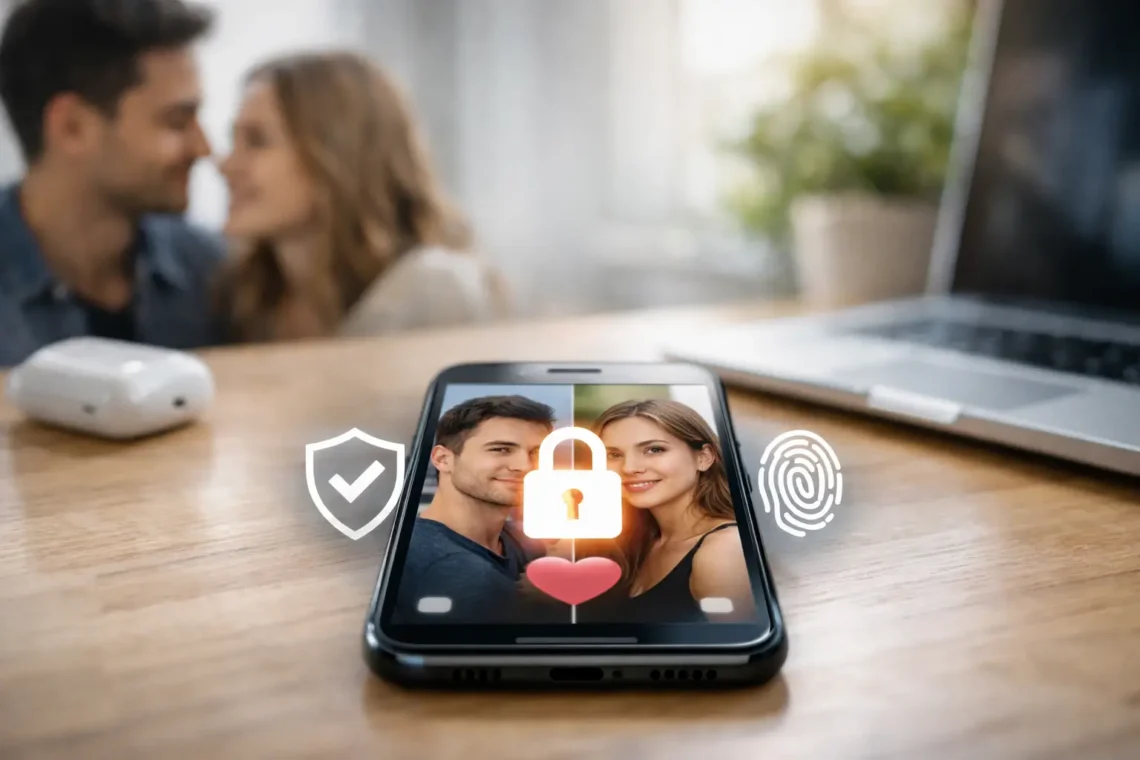
A mutual crush app lives or dies on one thing: whether it protects you before, during, and after you shoot your shot. If the privacy setup is sloppy, the whole point falls apart. That’s why mutual crush app privacy features matter more here than they do on most social or dating products.
With a privacy-first app like wadaCrush, the promise is simple: test the waters with someone you already know, keep identities masked until interest is mutual, and skip the public cringe. That sounds easy. The hard part is building the guardrails correctly.
What people really want from mutual crush app privacy features
Most users are not asking for mystery. They’re asking for emotional safety.
If you like a friend, classmate, coworker, or someone in your social circle, the risk is rarely physical distance. It’s social fallout. You don’t want your feelings exposed to the wrong person, the wrong group chat, or the wrong moment. Good mutual crush app privacy features are supposed to lower that risk without turning the app into a loophole for unwanted attention.
That balance matters. Too much exposure, and the app becomes awkward. Too much anonymity without limits, and it can feel sketchy. The best systems protect both people at once.
The 7 mutual crush app privacy features that actually matter
If you’re comparing options, these are the features worth caring about first.
1. Identities stay masked until there’s a mutual match
This is the big one. In a true mutual-intent setup, your name is not shown when you send interest. It only becomes visible if the other person also chooses you.
That one rule removes most of the fear. No public rejection. No weird half-confession hanging in the air. No “wait, was that about me?” drama.
It also creates a cleaner boundary than traditional anonymous messaging. The goal is not one-sided lurking. The goal is mutual reveal only.
2. Private-by-default profiles
A lot of apps talk about privacy, then quietly make people searchable, browsable, or visible in feeds. That’s not the same thing.
Private-by-default means there is no public profile browsing, no random discovery, and no global search for strangers unless a user clearly opts in to some future limited visibility setting. For people who want no randoms, this is a huge difference.
If an app is built for known-person connections, its privacy model should reflect that from the start.
3. No swiping strangers
This sounds less like a privacy feature and more like a product choice, but it’s both. Stranger discovery expands exposure by default. It increases who can view you, interact with you, or infer your dating activity.
A mutual crush app that focuses only on people you already know in real life cuts that surface area way down. Fewer random eyes. Fewer odd messages. Less noise.
That trade-off is intentional. You lose broad discovery, but you gain control. For a lot of people, that’s the whole vibe-check.
4. Contact-based matching with consent boundaries
When a crush is sent using a phone number or email, the privacy question becomes obvious: who gets contacted, and how much is revealed?
The safest version is narrow and specific. The sender can express interest through a verified identifier, but the recipient doesn’t see the sender’s identity unless the feeling is mutual. If the recipient is not already on the app, they can still get a discreet notification that invites them into the flow without exposing the sender.
That setup matters because it avoids public profiles while still making the match possible. It’s a very different system from swipe apps, and there’s really no alternative to this setup if the goal is low-pressure known-person matching.
5. Verified aliases across email and phone
Real life is messy. People know you by your work email, school email, personal number, or some mix of all three.
One underrated privacy feature is the ability to add multiple verified aliases so you can receive a crush sent to the right identifier without forcing everything into one public-facing account. It improves match accuracy and reduces the chance that sensitive signals get lost or sent through the wrong channel.
It also helps with discretion. You can keep your setup organized without putting all your identity details on display.
6. Clear notification controls
Privacy is not only about who can see your profile. It’s also about what pops up on your lock screen.
If an app sends loud, obvious notifications, that can create instant awkwardness around roommates, partners, friends, or coworkers standing nearby. Good mutual crush app privacy features include neutral notification wording, channel controls, and the ability to manage what appears on-screen.
This is one of those small details that becomes very big in real life.
7. Optional features must stay truly optional
Proximity suggestions, compatibility scoring, or time-limited visibility windows can be fun. They can also create extra data sensitivity.
The rule here is simple: if a feature uses location, Bluetooth, timing patterns, or personal traits, it should be opt-in, not quietly on by default. Consent needs to be active, specific, and easy to reverse.
That doesn’t make those features bad. It just means the privacy trade-off should be obvious. Some people will want a little extra serendipity. Others will want maximum hush mode. Both choices should be valid.
What makes this different from a regular dating app
Most dating apps are built around exposure first. You create a profile, get shown around, browse other people, and hope the algorithm does something useful.
A mutual crush app flips that. It assumes the interesting person may already be in your life. The problem is not discovery. The problem is social risk.
That’s why the strongest mutual crush app privacy features focus less on profile polish and more on controlled reveal, limited visibility, and mutual consent. It’s less “perform for strangers” and more “quietly check the vibe with someone real.”
The privacy trade-offs are real
Privacy-first design is great, but it does come with limits.
If there’s no public search and no random discovery, you won’t use the app to meet strangers. If identities are masked until both sides match, you also can’t force a conversation that only one person wants. That is exactly the point, but it does narrow what the app can do.
For users who want intentional, low-drama connection, those limits are features. For users who want maximum reach, they may feel restrictive. It depends on what problem you’re trying to solve.
A quick example of how this feels in real life
Say you like a coworker from another team. You’re not trying to make the office weird, and walking up cold feels risky.
With a privacy-first mutual setup, you send a private signal tied to their email or phone. Your identity stays hidden. If they’re not interested, nothing gets publicly exposed and there’s 0% awkwardness in the hallway. If they are interested and respond through the same mutual flow, then both identities unlock.
That changes the emotional math completely.
How to tell if an app is actually privacy-first
Marketing language can be cute. Guardrails are what count.
Ask these questions: Are profiles private by default? Are identities masked until a mutual match? Can strangers browse or search users? Are notification previews discreet? Are contact methods verified? Are location-based features opt-in? Is the app designed for mutual intent, or can one-sided anonymous behavior slip through?
If the answers are fuzzy, the privacy probably is too.
Near the end of the day, the best privacy design is the one that protects your feelings and your information at the same time. wadaCrush stands out because it keeps the experience built around known people, allows a crush even if they’re not on the app yet, and only reveals identities when interest goes both ways.
Shoot your shot, sure. But pick a system that knows how to keep it calm if the vibe isn’t mutual.
A good app should make room for honesty without making a mess of your real life.