Search intent
Intent type: Review / explainer
This keyword signals someone who wants a real assessment, not hype. So here’s the straight answer: a review privacy first crush messaging app only makes sense if you like someone you already know and want to shoot your shot without turning your social life into a cringe side quest.
Excerpt
If dating apps feel too public, too random, or too awkward, a privacy-first crush messenger offers a very different setup. This review looks at what it gets right, where it has limits, and who should actually use it.
Review Privacy-First Crush Messaging App
You like someone from real life. Maybe a friend, coworker, classmate, or that person who keeps passing the vibe-check in your group chat. The problem is not attraction. The problem is risk.
That’s exactly where a privacy-first crush messaging app enters the chat. Instead of swiping strangers or broadcasting interest through public profiles, it lets someone send a discreet signal to a known person and keeps identities hidden unless the interest is mutual. For people who want 0% unnecessary awkwardness, that setup is not just different. It’s the whole point.
TL;DR
- Best for people with a real-life crush who want privacy, not random discovery.
- The biggest strength is mutual-only reveal – no public rejection, no profile browsing, no randoms.
- The trade-off is simple: this is not a swipe app, so it only works if you already know who you like.
Table of Contents
- What makes this kind of app different
- How the private crush flow works
- What it gets right on privacy
- The trade-offs you should know
- Who should use it and who shouldn’t
- A quick real-life example
- Final take
What makes this kind of app different
A standard dating app is built for discovery. You browse. You swipe. You match with strangers. That works for some people, but it also creates a lot of noise, low-intent chatting, and social fatigue.
A privacy-first crush messaging app flips that model. It is not trying to introduce you to the whole city. It is built for one specific use case: you already know the person, and you want to test the waters privately.
That difference matters more than it sounds.
With a traditional dating app, visibility is often part of the product. With a private crush app, visibility is the risk being reduced. Private by default is not a bonus feature here. It’s the product logic.
One example in this category is wadaCrush, which focuses on discreet mutual-intent messaging for known people rather than stranger matching. That means no public profile browsing, no global search, and identities masked until both people are interested.
How the private crush flow works
The cleanest way to understand it is this:
1. You pick a known person
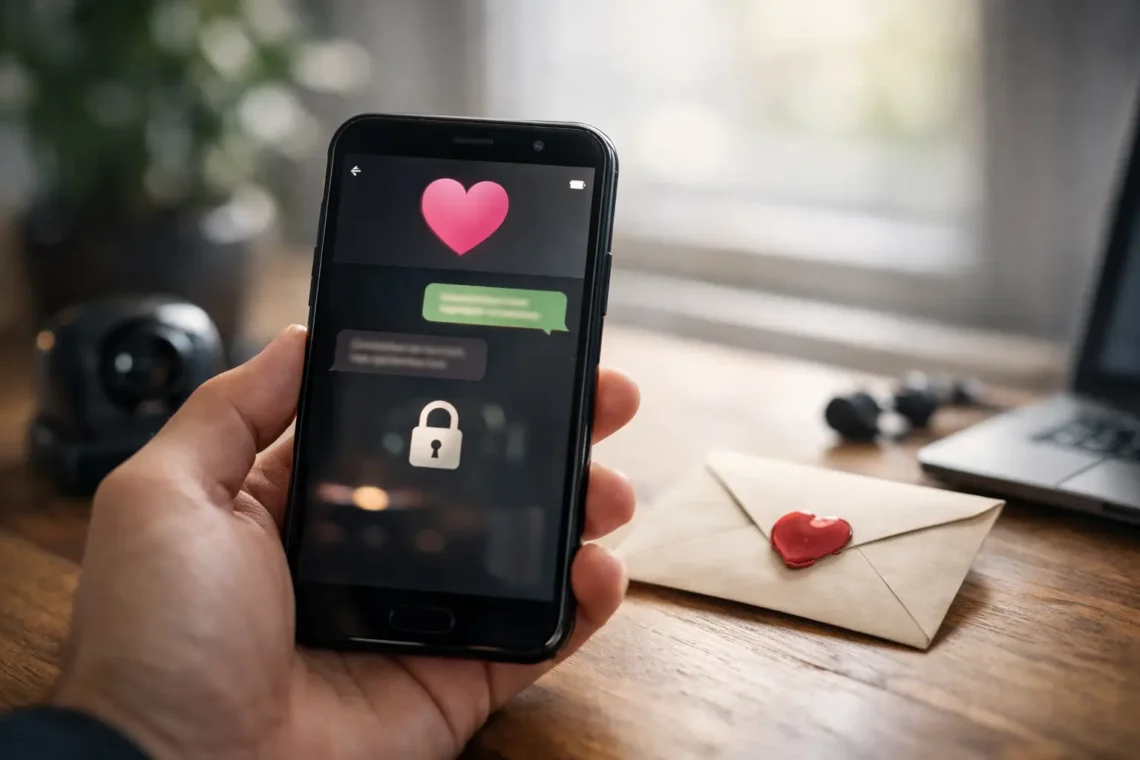
Instead of searching a public feed, you send a crush signal using a phone number or email tied to someone you already know in real life.
2. Your identity stays hidden
This is the core emotional safety feature. The other person does not see who sent the crush unless they also express interest through the same flow.
3. Only mutual interest opens the door
If they’re into you too, identities are revealed and a conversation can start. If not, the social damage stays at zero. No public flop. No weird lunch break aftershock.
That mutual-only structure is the strongest argument for this model. It removes the worst part of confessing feelings: the asymmetry.
What this review of a privacy-first crush messaging app likes most
The first big win is obvious – discretion. A lot of people are not afraid of romance itself. They’re afraid of making real life weird. Shared friend groups, work dynamics, classes, cultural expectations, and simple fear of embarrassment can stop things before they start.
This setup lowers that barrier in a way standard apps usually don’t.
The second win is intent quality. Because this kind of app is designed around known-person mutual interest, it attracts a different mindset. Less browsing. Less ego swiping. More “I actually want to know if this person likes me back.”
The third win is privacy by design. When profiles are private by default and people are not publicly searchable, the app feels more protective than performative. For users who hate the idea of being viewed, judged, or screenshotted in a public dating pool, that matters a lot.
There is also a practical upside: in some cases, the person you like does not need to already be on the app to receive a discreet notification and enter the mutual flow. That removes a major adoption problem and makes the concept more usable in real life.
The trade-offs you should know
A fair review privacy first crush messaging app can’t pretend this model is perfect for everyone.
The biggest limitation is that it is not for discovery. If you want to meet brand-new people, browse options, or casually explore, this is probably the wrong category. No randoms means exactly that.
Another trade-off is emotional timing. These apps work best when there is already some existing context – you know the person, you have interacted, and there is at least a plausible spark. If your crush is basically a stranger you saw twice at a coffee shop, the model starts to break.
There’s also a narrower social loop. Because the app is built around known people, the number of meaningful targets is smaller than on a standard dating platform. That is a feature if you care about quality and realism. It’s a drawback if you want endless choice.
And yes, privacy-first products always walk a line between discretion and clarity. If the system is too hidden, people may need a minute to understand how matching works. Good product design can solve that, but the learning curve is still real.
Who should use it and who shouldn’t
This model makes the most sense for someone who has a crush on a friend, coworker, classmate, acquaintance, or person in their social circle and wants to shoot their shot without public consequences.
It also fits people who are tired of swipe culture, want emotional safety, and prefer intentional connection over random discovery. If public profiles make you feel exposed, a private crush messenger will feel way more natural.
It does not fit people looking for volume, novelty, or casual stranger matching. If your favorite part of dating apps is endless browsing, this setup will feel too focused.
Quick example: how the awkwardness gets removed
Say you like someone from your gym friend group. Normally, your options are pretty bad. You flirt harder and hope they notice. You ask a mutual friend and start drama by accident. Or you confess directly and risk making every future hangout weird.
With a private crush app, the flow is cleaner.
You: send a discreet crush signal.
Them, if interested: send one back or respond inside the mutual flow.
Result: identities reveal only after a match.
If they’re not interested, there is no public rejection scene to replay at 2 a.m. That’s the whole value prop in one moment.
What good privacy looks like here
Not every app that says “private” means the same thing. In this category, a stronger setup usually includes a few basics:
- Private by default profiles
- No public browsing or global search
- Identity masking until mutual interest
- Clear notification rules and verified contact methods
- Optional features only with consent
That last point matters. If there are add-ons like proximity suggestions or compatibility layers, they should be opt-in, not quietly active in the background.
For readers comparing options, our related reads on anonymous crush apps, how mutual matching works, and dating apps vs known-person matching are useful starting points. You can also browse the main relationship-tech hub for more breakdowns.
So, is a privacy-first crush messaging app worth it?
If your goal is to ask out strangers, probably not.
If your goal is to vibe-check someone you already know without detonating your social comfort, yes – this model solves a real problem that traditional dating apps mostly ignore.
That’s why this category feels less like a dating app replacement and more like a social risk filter. It is built for the stage before dating, when feelings are real but uncertainty is louder.
Used well, a product like wadaCrush gives people a low-pressure way to act before the moment passes: discreet, mutual-only, and usable even when the other person is not already on the app. That’s a pretty strong answer to a very old problem.
A good app can’t create chemistry where none exists. But it can make honesty feel safer, and sometimes that’s all a real love story needed.