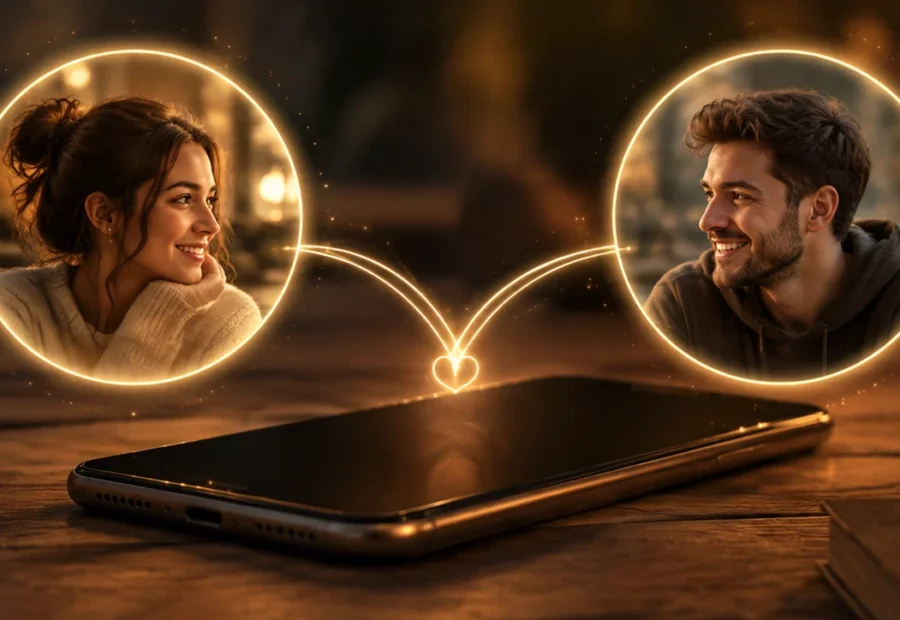

The awkward part of privacy first crush messaging app is rarely the idea itself. It is the real person on the other side and the fact that whatever you do has to feel normal the next time you see each other.
That is why crush messaging and private crush app matter. The strongest approach creates clarity without turning a crush, friendship, class, workplace, or social circle into a performance.
Table of Contents
Table of Contents
What makes this kind of app different

A standard dating app is built for discovery. You browse. You swipe. You match with strangers. That works for some people, but it also creates a lot of noise, low-intent chatting, and social fatigue.
A privacy-first that option app flips that model. It is not trying to introduce you to the whole city. It is built for one specific use case: you already know the person, and you want to test the waters privately.
That difference matters more than it sounds.
With a traditional dating app, visibility is often part of the product. With a that option, visibility is the risk being reduced. Private by default is not a bonus feature here. It’s the product logic.
One example in this category is wadaCrush, which focuses on discreet mutual-intent messaging for known people rather than stranger matching. That means no public profile browsing, no global search, and identities masked until both people are interested.
How the private crush flow works
The cleanest way to understand it is this:
1. You pick a known person
Instead of searching a public feed, you send a crush signal using a phone number or email tied to someone you already know in real life.
2. Your identity stays hidden
This is the core emotional safety feature. The other person does not see who sent the crush unless they also express interest through the same flow.
3. Only mutual interest opens the door
If they’re into you too, identities are revealed and a conversation can start. If not, the social damage stays at zero. No public flop. No weird lunch break aftershock.
That mutual-only structure is the strongest argument for this model. It removes the worst part of confessing feelings: the asymmetry.
What this review of a privacy-first crush messaging app likes most
The first big win is obvious – discretion. A lot of people are not afraid of romance itself. They’re afraid of making real life weird. Shared friend groups, work dynamics, classes, cultural expectations, and simple fear of embarrassment can stop things before they start.
This setup lowers that barrier in a way standard apps usually don’t.
The second win is intent quality. Because this kind of app is designed around known-person mutual interest, it attracts a different mindset. Less browsing. Less ego swiping. More “I actually want to know if this person likes me back.”
The third win is privacy by design. When profiles are private by default and people are not publicly searchable, the app feels more protective than performative. For users who hate the idea of being viewed, judged, or screenshotted in a public dating pool, that matters a lot.
There is also a practical upside: in some cases, the person you like does not need to already be on the app to receive a discreet notification and enter the mutual flow. That removes a major adoption problem and makes the concept more usable in real life.
The trade-offs you should know
A fair review privacy first that approach app can’t pretend this model is perfect for everyone.
The biggest limitation is that it is not for discovery. If you want to meet brand-new people, browse options, or casually explore, this is probably the wrong category. No randoms means exactly that.
Another trade-off is emotional timing. These apps work best when there is already some existing context – you know the person, you have interacted, and there is at least a plausible spark. If your crush is basically a stranger you saw twice at a coffee shop, the model starts to break.
There’s also a narrower social loop. Because the app is built around known people, the number of meaningful targets is smaller than on a standard dating platform. That is a feature if you care about quality and realism. It’s a drawback if you want endless choice.
And yes, privacy-first products always walk a line between discretion and clarity. If the system is too hidden, people may need a minute to understand how matching works. Good product design can solve that, but the learning curve is still real.
Who should use it and who shouldn’t
This model makes the most sense for someone who has a crush on a friend, coworker, classmate, acquaintance, or person in their social circle and wants to shoot their shot without public consequences.
It also fits people who are tired of swipe culture, want emotional safety, and prefer intentional connection over random discovery. If public profiles make you feel exposed, a private crush messenger will feel way more natural.
It does not fit people looking for volume, novelty, or casual stranger matching. If your favorite part of dating apps is endless browsing, this setup will feel too focused.
Quick example: how the awkwardness gets removed
Say you like someone from your gym friend group. Normally, your options are pretty bad. You flirt harder and hope they notice. You ask a mutual friend and start drama by accident. Or you confess directly and risk making every future hangout weird.
With a this context, the flow is cleaner.
You: send a discreet crush signal.
Them, if interested: send one back or respond inside the mutual flow.
Result: identities reveal only after a match.
If they’re not interested, there is no public rejection scene to replay at 2 a.m. That’s the whole value prop in one moment.
What good privacy looks like here
Not every app that says “private” means the same thing. In this category, a stronger setup usually includes a few basics:
- Private by default profiles
- No public browsing or global search
- Identity masking until mutual interest
- Clear notification rules and verified contact methods
- Optional features only with consent
That last point matters. If there are add-ons like proximity suggestions or compatibility layers, they should be opt-in, not quietly active in the background.
For readers comparing options, our related reads on anonymous crush apps, how mutual matching works, and dating apps vs known-person matching are useful starting points. You can also browse the main relationship-tech hub for more breakdowns.
So, is a privacy-first that approach app worth it?
If your goal is to ask out strangers, probably not.
If your goal is to vibe-check someone you already know without detonating your social comfort, yes – this model solves a real problem that traditional dating apps mostly ignore.
That’s why this category feels less like a dating app replacement and more like a social risk filter. It is built for the stage before dating, when feelings are real but uncertainty is louder.
Used well, a product like wadaCrush gives people a low-pressure way to act before the moment passes: discreet, mutual-only, and usable even when the other person is not already on the app. That’s a pretty strong answer to a very old problem.
A good app can’t create chemistry where none exists. But it can make honesty feel safer, and sometimes that’s all a real love story needed.
privacy first that signal app: what matters in real life
A good decision about privacy first that signal app starts with context. How well do you know the person? Will you keep seeing each other if the answer is no? Is there any power imbalance, professional rule, or existing relationship that changes what a respectful move looks like? Those questions are more useful than trying to decode one emoji or one unusually warm conversation.
The healthiest version of privacy first this pattern app leaves space for a genuine yes and an uncomplicated no. Privacy can reduce unnecessary exposure, but it should never be used to keep pushing after the other person has shown disinterest.
this pattern: the practical standard
the situation should make the situation easier to understand, not harder. If a method depends on guessing, repeated nudges, or making the other person investigate who is behind a message, it is creating more tension than clarity.
A better rule is simple: use that option to create one clear opening, then watch what the other person chooses to do with it. Reciprocity matters more than clever tactics. When interest comes back voluntarily, you have useful information. When it does not, give the situation room.
private crush app: how to keep the pressure low
the next step works best when the other person never feels cornered into an immediate answer. That can mean choosing a private format, asking a specific but easy-to-decline question, or simply making one invitation and letting them decide whether to continue.
The point of private crush app is not to eliminate vulnerability. Dating still involves uncertainty. The point is to remove avoidable social pressure so the answer reflects interest rather than discomfort.
Separate privacy from secrecy
Privacy protects a moment that does not need an audience. Secrecy is different: it can become a way to avoid accountability. With privacy first that approach app, the useful middle ground is discreet at first and normal once interest is mutual.
If two people are interested, the next step should eventually become an ordinary conversation. If the feeling is not mutual, the private approach should make it easier to move on without exposing anyone or turning the situation into gossip.
A realistic way to read the response
Imagine you make one low-pressure move connected to privacy first that signal app. A positive response usually creates forward motion: they answer the actual question, suggest a time, continue the conversation, or make their own effort. A vague response is different. It may simply mean uncertainty, busyness, or lack of interest.
You do not need to interrogate the ambiguity. Give it space. If the other person wants to keep the connection moving, they can participate. That approach protects both people and keeps privacy first this pattern app from turning into a one-sided project.
Three mistakes worth avoiding
1. Treating one signal like a guarantee
Warmth, eye contact, fast replies, or a good conversation can be encouraging, but none of them creates an obligation. Use them as context, not proof.
2. Repeating the move until you get the answer you want
One respectful attempt is information. Repeated attempts after a weak or negative response create pressure. the situation should reduce that pressure, not disguise it.
3. Making privacy the entire relationship
If mutual interest becomes clear, move toward accountable communication. private crush app is a bridge to clarity, not a permanent substitute for talking.
How to decide whether this approach fits you
privacy first that option app is most useful when you already have a real person and a real social context in mind. It is less useful when what you actually want is broad discovery, constant novelty, or a way to contact someone who has never invited interaction.
Ask yourself what problem you are solving. If the problem is “I like someone I know and I want a lower-pressure way to find out whether the feeling might be mutual,” then privacy first that approach app can be a sensible framework. If the problem is simply meeting more strangers, a different tool may fit better.
What to do after the answer
If the answer is positive, keep the next step ordinary. Suggest coffee, a walk, or another simple plan that lets the two of you talk without suddenly acting as though one signal settled the entire relationship.
If the answer is negative or nothing develops, the cleanest response is to accept it. No detective work, no public postmortem, and no attempt to turn privacy first that signal app into a second chance mechanism. Handling the answer well is part of making the first move well.
Privacy questions worth asking before you trust a tool
For any product connected to privacy first this pattern app, look for plain-language answers about what other users can see, when identity is revealed, how contact information is handled, and how someone can block or report unwanted activity. A privacy label is not useful if the interaction itself still exposes more than you expected.
The Federal Trade Commission publishes broader consumer guidance on online privacy and security. That guidance is not a review of any one dating product, but it is a useful reminder to treat personal information as something worth protecting.
this approach: the bottom line
The strongest version of privacy first the situation app is not the one that guarantees a yes. It is the one that gives you a clear, respectful way to learn something real without creating unnecessary pressure for either person.
Use that option to keep the first move intentional, use private crush app to protect the other person’s freedom to choose, and let reciprocity determine what happens next. That standard works whether the answer becomes a date, a friendship, or simply useful clarity.
FAQ
What is the simplest way to think about this situation?
Think of privacy first that approach app as one respectful way to reduce uncertainty. Make one clear move, protect privacy where it is useful, and let the other person’s response—not your hopes—set the pace.
Does the situation guarantee that someone is interested?
No. that signal can create a cleaner situation, but it cannot manufacture attraction. Look for voluntary reciprocity and avoid treating one signal as proof.
When should I stop?
Stop when the answer is no, when the response repeatedly stays vague without any effort to continue, or when the context makes an approach inappropriate. Respecting that boundary is part of using private crush app well.
What happens if the feeling is mutual?
Move toward a normal conversation. Privacy can make the first moment easier, but mutual interest works best when both people can communicate openly about what they want next.
Keep reading
- Privacy First Dating App Review That Actually Matters
- Is Encrypted Crush Messaging Really Private?
- Does Your Crush Like You? Spot It Quietly
One more useful test for privacy first crush messaging app is whether the approach still feels respectful after the excitement wears off. If you would be comfortable with the same behavior being described plainly to a friend, that is a good sign. If the plan depends on hiding persistence, creating urgency, or making the other person feel responsible for your emotions, simplify it.
It also helps to separate attraction from compatibility. crush messaging can tell you something about interest, but it cannot answer every question about timing, values, or whether two people actually work well together. Treat the first signal as the beginning of information, not the end of the decision.
When you are unsure, choose the option with less social pressure. private crush app should leave the other person more freedom, not less. A clean invitation, a private signal, or a little extra time can all be better than forcing a high-stakes conversation before either person is ready.
For privacy first crush messaging app, the practical standard stays the same: one clear move, room for an honest answer, and no pressure after that. crush messaging helps when it keeps the interaction intentional, while private crush app matters most when it protects the other person’s ability to choose freely.
Handled well, privacy first crush messaging app is less about tactics and more about tone. Use crush messaging to lower unnecessary exposure and private crush app to keep the next step understandable. If the response is not mutual, clarity is still a useful outcome.
The biggest advantage of privacy first crush messaging app is not avoiding every uncomfortable feeling. It is creating a cleaner situation. Good crush messaging removes guesswork, and good private crush app keeps the interaction from becoming a public or high-pressure event.
privacy first crush messaging app: a practical check
With privacy first crush messaging app, clarity matters more than cleverness. Keep the next step specific, respectful, and easy for the other person to accept or decline.
Follow the non-match experience
A useful way to think about this is to make the next decision smaller. When evaluating privacy first crush messaging app, look past the marketing screen and check the actual defaults. crush messaging should reduce unnecessary exposure, while private crush app should make it clear what happens before, during, and after a match.
That keeps the advice useful in a friend group, at work, on campus, or anywhere you are likely to see the same person again.
Separate discovery from known-person matching
This is where real-life context matters more than a perfect script. A useful way to judge privacy first crush messaging app is to follow the whole user journey. Ask what another person can see, what gets stored, and how crush messaging and private crush app affect a non-match as well as a successful one.
If the response is clear, respect it. If it is mixed, give the situation enough space for the other person to contribute without being chased.
Read permissions before tapping Allow
A strong approach gives both people more clarity, not more pressure. For privacy first crush messaging app, privacy and product fit belong in the same conversation. Strong crush messaging gives users control; sensible private crush app keeps that control understandable in real situations.
If the response is clear, respect it. If it is mixed, give the situation enough space for the other person to contribute without being chased.