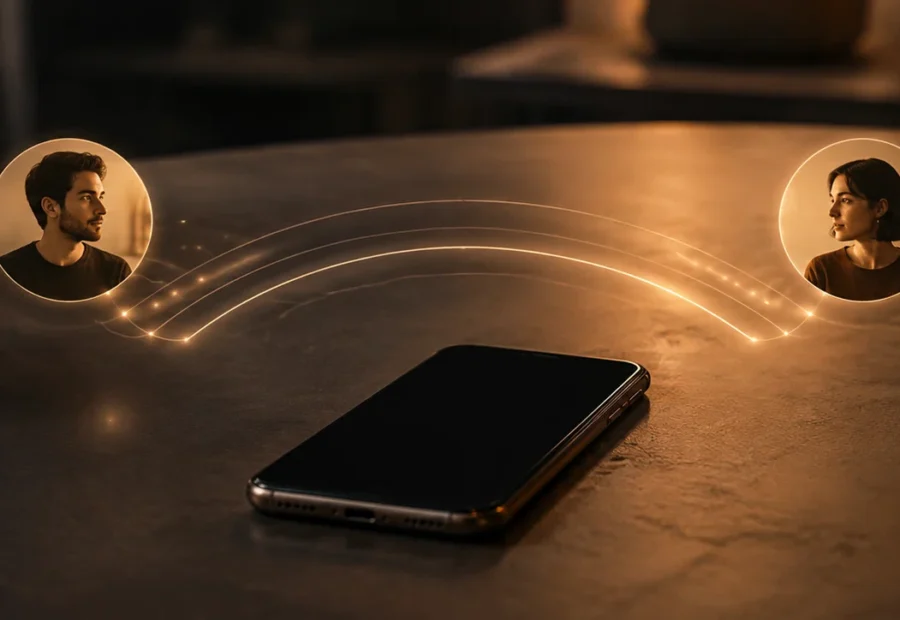
On wadaCrush, your identity is revealed only when both people choose each other. Until then, the recipient is not shown your identity. Other apps may follow different rules.
Most modern crush apps are designed to keep your identity completely hidden unless the other person also expresses interest. This means you can “shoot your shot” without risking awkwardness or rejection.
Table of Contents
However, there are a few important details most users don’t realize – and understanding them can help you use these apps safely.
That difference matters a lot. Some apps are basically social discovery tools with romantic branding. Others are actually designed to protect your name, your signal, and your dignity until there’s a mutual vibe-check.
Wondering whether a crush app exposes you? Here’s the real answer: it depends on how the app handles anonymity, notifications, and mutual matching.
Does a Crush App Reveal Your Identity?
You send the signal. Your heart rate jumps a little. Then the big question lands:
does a crush app reveal your identity
the second you tap send? Usually, no. But not all apps mean the same thing when they say “anonymous.” Some hide your name fully. Some only hide it at first. Some reveal enough details that the other person can still figure it out. So the smarter question is not just whether a crush app reveals your identity, but
when, how, and under what rules.
Quick take
- A privacy-first crush app should keep your identity masked until there’s mutual interest.
- Notifications do not always mean identity reveal – they can simply invite the other person to respond.
- If an app has public profiles, searchable users, or one-sided messaging, the privacy trade-off is bigger.
- What “anonymous” actually means in a crush app
- Does a crush app reveal your identity right away?
- The 4 moments identity might be exposed
- How private crush apps reduce awkwardness
- What to check before using any crush app
- A quick real-life example
- FAQ
What “anonymous” actually means in a crush app
“Anonymous” is one of those words apps love because it sounds comforting. But in practice, it can mean a few different things. At the strong end, anonymous means your name, profile, and message stay hidden unless the other person also picks you. That’s the cleanest setup because it removes the social risk. No public rejection, no weird screenshot situation, no instant cringe. At the weaker end, anonymous may only mean the app doesn’t show your full name immediately. But if it shows your school, your workplace, mutual circle, rough location, or a limited pool of admirers, your identity may still be pretty easy to guess. So if you’re wondering
does a crush app reveal your identity
, don’t stop at the label. Look at the mechanism.
Does a Crush App Reveal Your Identity Right Away?
In a well-designed private crush app, no – not right away. The usual flow is simple: you send a crush signal, the other person gets a discreet notification, and your identity stays masked unless they return the interest. That is the whole point of a mutual-only system. It lets people shoot their shot without turning their social life into a stress test. That’s also what makes a tool like
different from random dating apps. It’s private by default, built for people who already know each other in real life, and identities stay hidden until both sides opt in. No randoms, no public profile browsing, no one-sided reveal just because you were brave for five seconds.
The 4 moments identity might be exposed
Here’s the practical version. If you want a snippet answer to
does a crush app reveal your identity
, these are the four moments to check.
- At send
A privacy-first app should not reveal your identity when you send the crush.
- At notification
The recipient may get an SMS, email, or app alert saying someone likes them. That does not have to include your name.
- At mutual match
This is the usual reveal point. If they like you back, both identities unlock.
- After weak privacy design
If the app has searchable profiles, public discovery, visible admirer pools, or clues tied to your account, your identity may be inferred before any official reveal. That last one is where people get burned. The app may technically say it kept you anonymous, while the setup quietly made you obvious.
How private crush apps reduce awkwardness
The real value here is not mystery for mystery’s sake. It’s emotional safety. A lot of crushes live inside messy real-life setups – friend groups, classes, office circles, ex-adjacent situations, people you see every week. In those cases, direct rejection can feel way bigger than “just ask them out.” It can shift a whole social dynamic. That’s why mutual-only reveal works. It creates a low-pressure lane where interest is confirmed before identities are exposed. If the feeling isn’t mutual, nobody has to carry the awkward aftermath. The best systems also avoid public profiles and random browsing. Once an app lets strangers scroll through people, the experience stops being a discreet crush messenger and starts acting more like standard dating infrastructure.
What to check before using any crush app
If the question is
does a crush app reveal your identity
, these are the details that actually answer it.
1. Does it reveal only after a mutual match?
This is the big one. If the app says identities are masked until both people express interest, that’s a strong privacy guardrail.
2. Are profiles public or searchable?
If users can browse profiles or search names freely, anonymity gets shaky fast. Even if your crush signal is technically hidden, your presence on the platform may not be.
3. What does the notification say?
Some apps notify the other person without naming you. Others may include enough info to narrow it down. Read the wording if it’s available.
4. Can someone send one-sided messages?
If the app allows direct anonymous messages before mutual interest, that’s a different category. It may feel exciting, but it also raises the chance of discomfort and guessing games.
5. Does the other person need to already have the app?
This one is more subtle. Some platforms only work if both people are already users. Others can notify someone through their phone number or email and bring them into the mutual flow without revealing the sender first. That setup tends to feel more practical and less performative.
A quick real-life example
Say you like someone from your grad program. You talk sometimes, there’s maybe a vibe, but you also share a lab and would prefer 0% awkwardness if you misread it. You send a discreet crush. They get notified that someone they know is interested. Your identity stays hidden. If they’re curious but not sure, they can check the app without your name staring back at them. If they like you too, the app reveals both sides and opens the door to talk. If not, nothing gets socially detonated. That is very different from:
You:
“Hey, random question, would you ever date someone from the lab?”
Them:
“Uh. why?” Respectfully, no one needs that kind of Thursday.
Why “it depends” is the honest answer
Some users want full anonymity until a mutual match. Others are okay with partial visibility if it increases response rates. Neither preference is crazy, but they lead to very different app designs. So yes,
does a crush app reveal your identity
has an honest answer:
it depends on the privacy model
. If the platform is built around known people, mutual-only reveals, and private-by-default profiles, your identity is typically protected well. If it leans into social discovery, public visibility, or broad search, your identity may be easier to uncover than the branding suggests. That trade-off matters more than any cute UI copy about “secret admirers.”
FAQ
Does a crush app reveal your identity if they don’t like you back?
In a true mutual-match system, no. Your identity should stay hidden if the interest isn’t returned.
Can someone figure out it was me anyway?
Sometimes, yes – but usually because of context, not an official reveal. If the app exposes profile clues, shared circles, or a tiny admirer pool, guessing gets easier.
Do notifications reveal my phone number or email?
They shouldn’t in a privacy-first setup. A notification can let someone know there’s interest without exposing your contact details.
What if the other person isn’t on the app yet?
Some crush apps can still notify them through SMS or email and let them respond privately. The better versions keep your identity masked during that process too.
Is a crush app safer than DMing someone directly?
For many people, yes – especially in friend groups, school, or work-adjacent situations. A mutual-only reveal cuts down on social risk in a way direct messaging doesn’t.
So, should you trust one?
You should trust the system only if the rules are clear. Look for private-by-default design, mutual pairing before identity reveal, and no public profiles unless someone explicitly opts in. If an app can notify your crush even when they’re not already on it, while still keeping your name hidden until they respond, that’s a pretty strong privacy setup. wadaCrush is built around exactly that logic, which is why the experience feels less like public dating and more like a discreet test-the-waters tool. The best crush app is not the one that creates the most drama. It’s the one that gives real feelings a fair shot without making you pay for courage with awkwardness.
When dating app privacy matters
A useful way to judge does a crush app reveal your identity is to follow the whole user journey. Ask what another person can see, what gets stored, and how dating app privacy and online dating safety affect a non-match as well as a successful one.
Online Dating Safety: what matters here
For does a crush app reveal your identity, privacy and product fit belong in the same conversation. Strong dating app privacy gives users control; sensible online dating safety keeps that control understandable in real situations.
For broader context, see Pew Research Center on online dating.