What are the biggest dating apps privacy trends in 2026?
Privacy trends include reduced data sharing, anonymous matching, AI-driven safety tools, and growing user demand for control over personal information.
You can tell a lot about a dating product by one simple question: who gets to see you, and when? That’s the real story behind today’s
dating apps privacy trends
Table of Contents
. People are getting less impressed by endless profile exposure and more interested in control – who can find them, what data gets stored, whether location is too precise, and if a match has to be mutual before anything gets awkward. For people who like someone they already know, this shift matters even more. Not everyone wants to throw their face into a public swipe pile just to vibe-check one person from class, work, or their wider social circle. That’s part of why privacy-first models, including apps like wadaCrush, are getting attention.
Quick take:
- Privacy is moving from a settings page to a core product feature.
- The biggest trends are smaller visibility, tighter identity control, and less passive data collection.
- The safest dating experiences usually trade broad discovery for more intentional matching.
- Why privacy is now a dating feature, not a bonus
- 7 dating apps privacy trends that actually matter
- What these trends mean for people dating someone they already know
- How to judge a dating app’s privacy without reading a novel of legal text
- FAQ
Why privacy is now a dating feature, not a bonus
A few years ago, many apps treated privacy like boring backend stuff. Now it’s part of the pitch because users are asking sharper questions. They want to know if their profile is searchable. They want to know whether the app tracks exact location. They want to know if their photos are visible before there’s real interest. And they definitely want to know whether “anonymous” actually means anonymous, or just lightly hidden until the wrong person screenshots it. That shift is changing product design. The strongest
dating app privacy
ideas don’t just add more toggles. They reduce exposure from the start.
7 dating apps privacy trends that actually matter
1. Private by default is replacing public by default
This is the biggest one. Older dating patterns assumed visibility was the product. You make a profile, strangers browse it, and the app optimizes for more eyes on you. But one of the clearest
dating apps privacy trends
is the move toward smaller exposure surfaces. Private by default means your identity, photos, or profile details are limited unless there’s a reason to reveal them. That can look different across products, but the principle is the same: less random access, more intentional access. For users, the trade-off is obvious. You usually get more privacy, but less broad discovery. If your goal is meeting lots of strangers, that may feel restrictive. If your goal is avoiding cringe and keeping your dating life out of the group chat, it’s a win.
2. Mutual-first systems are beating one-sided outreach
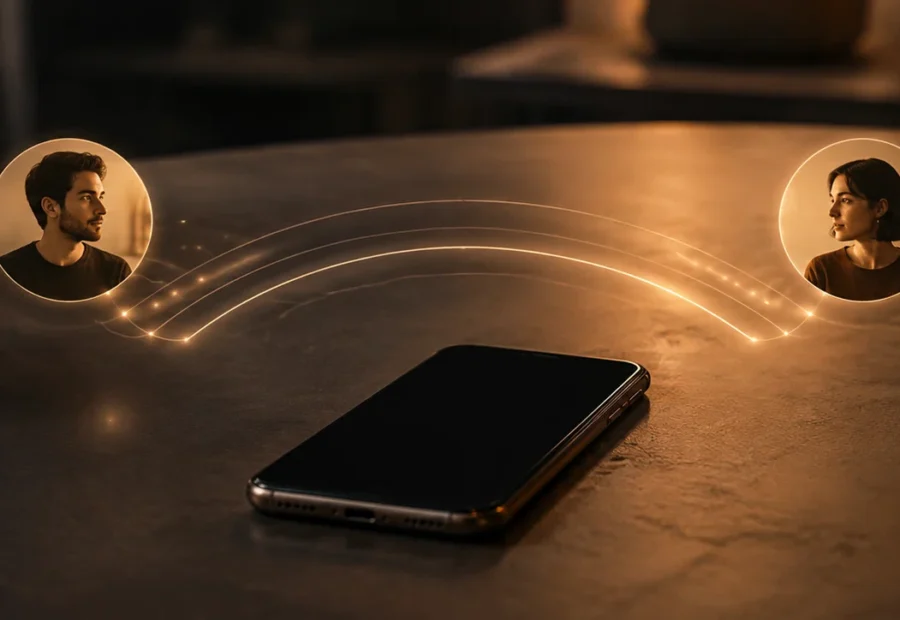
A lot of people don’t fear rejection itself. They fear social fallout. That’s why mutual-first matching is growing. Instead of letting one person openly contact or view another, the app waits until both sides show interest. This creates stronger
identity protection
and cuts down the weirdness of one-sided pursuit. In practice, this trend matters most in situations where people already know each other. A private crush signal with identities masked until both people opt in creates 0% unnecessary awkwardness. That setup is especially useful for classmates, coworkers, friends-of-friends, or anyone trying to shoot their shot without detonating the vibe.
3. Searchability is shrinking
Not every user wants to be discoverable by name, workplace, school, or phone number. One of the quieter but more meaningful
dating apps privacy trends
is reduced profile visibility. Some platforms are moving away from open search and global browsing. Others are adding more limited discoverability so people can control whether they appear at all. This matters because searchable profiles create social risk. You’re not just visible to potential matches. You may be visible to acquaintances, exes, coworkers, or randoms you never wanted in the room. Less searchability can make an app feel smaller, but also safer. That’s a pretty fair trade for a lot of users.
4. Location privacy is getting more precise – by being less precise
Dating apps have always loved location because it powers relevance. But exact location can expose more than people realize. A major trend now is giving users more control over
location privacy
. That includes fuzzed distances, broader radius displays, approximate location instead of exact coordinates, or opt-in proximity features rather than constant tracking. This is one of those areas where “more features” is not always better. Real-time precision can help you find someone nearby, but it can also reveal patterns about where you live, work, or hang out. Better products are starting to treat location like sensitive data, not just matching fuel.
5. Anonymous doesn’t mean invisible – and users are learning the difference
The rise of the
anonymous dating app
concept says a lot about user demand. People want lower-pressure ways to express interest. But they’re also getting smarter about what anonymity really means. Some apps use anonymous as a soft marketing word while still exposing profile clues, repeated appearance, or enough metadata to make guessing easy. Real anonymity is narrower and more specific. It means your identity stays masked until a clear condition is met, usually a mutual action. That distinction matters. Pseudo-anonymous products can still create social discomfort, especially in tight communities. Better systems set a clean rule: no reveal without reciprocity.
6. Data minimization is becoming a trust signal
Users are getting tired of apps collecting every possible detail just because they can. Another one of the strongest
dating apps privacy trends
is data minimization. That means asking for less, storing less, and not turning every user action into a permanent behavioral profile. Less extra data means less to leak, less to misuse, and less to overthink. This doesn’t mean features disappear. It means apps are being pushed to justify what they collect. If a platform wants access to contacts, precise location, multiple identifiers, or background activity, users increasingly expect a clear reason. That’s healthy. Privacy gets better when data collection has to earn its place.
7. Users want control that feels simple, not legalistic
Nobody wants to read 14 screens of settings just to stop being visible to random people. The best
private dating apps
are trending toward simpler controls that still do serious work. Think visible or hidden. Mutual-only or open. Approximate or exact location. Opt in or stay out. That sounds basic, but it’s actually a design flex. Clear privacy choices reduce mistakes. They also lower the chance that someone accidentally shares more than they meant to.
What these trends mean for people dating someone they already know
This is where the privacy conversation gets real. If you’re interested in someone from real life, normal swipe apps often feel like the wrong tool. They’re built for stranger discovery, which means public profiles, broad browsing, and too many chances for social overlap to get messy. For known-person matching, the most useful trends are
mutual matching
, tight
profile visibility
, and identity masking until both sides opt in. That combo reduces emotional risk without turning the whole thing into a secret chase. A quick example: If your internal monologue is, “I like them, but if they’re not into me I need my life to continue normally,” then privacy-first matching makes sense. If they say yes, great. If they don’t, nothing spills into the friend group, work Slack, or campus coffee line. That’s why products built around discretion are carving out a lane that traditional dating apps never really solved.
is one example of that model – no public profile browsing, no randoms, and identities masked until there’s a mutual pair. It can even notify someone who isn’t on the app yet, which is a very different setup from standard swipe logic.
How to judge a dating app’s privacy without reading a novel of legal text
You do not need a law degree for a basic vibe-check. Start with these questions:
- Are profiles public by default or private by default?
- Can strangers search or browse me without my input?
- Does the app require mutual interest before identities are revealed?
- How precise is location sharing?
- What data is truly necessary for the product to work?
If the answers are vague, that tells you something. A useful shortcut is to watch for product logic, not just promises. If an app says it values privacy but still depends on broad exposure, constant discoverability, and one-sided outreach, privacy probably isn’t the core design. It’s just copy.
FAQ
What is the biggest trend in dating app privacy right now?
Private-by-default design. More apps are reducing visibility until there’s a reason to reveal identity or profile details.
Are anonymous dating apps actually safer?
Sometimes. It depends on whether identity is truly masked or just partially obscured. Mutual-only reveal systems are usually safer than soft anonymity.
Why does location privacy matter so much on dating apps?
Because exact distance can reveal where you live, work, or spend time. Approximate location lowers that risk while still allowing matching.
Are private dating apps less effective?
Not necessarily. They’re usually less effective for browsing lots of strangers and more effective for intentional matching with lower social risk.
What should I avoid in a dating app if privacy matters to me?
Avoid apps with public profiles, open search, exact location exposure, and unclear rules around who can contact you or see your identity. The interesting thing about
dating apps privacy trends
is that they’re not just about security anymore. They’re about emotional safety too. And honestly, that makes sense. Dating is already vulnerable enough without adding extra exposure you never asked for. If the next generation of dating apps gets one thing right, it should be this: people deserve a way to express interest without turning their whole social life into collateral damage. Near the end of the day, the best privacy feature is simple – only the right person should know, and only when the feeling is mutual.
Compare the matching model
A useful way to think about this is to make the next decision smaller. When evaluating dating apps privacy trends, look past the marketing screen and check the actual defaults. dating app privacy should reduce unnecessary exposure, while private dating apps should make it clear what happens before, during, and after a match.
That keeps the advice useful in a friend group, at work, on campus, or anywhere you are likely to see the same person again.
A practical check before the next step
When evaluating dating apps privacy trends, look past the marketing screen and check the actual defaults. dating app privacy should reduce unnecessary exposure, while private dating apps should make it clear what happens before, during, and after a match. Use the idea as a decision aid, not as proof. A good next step should create information while still protecting privacy, comfort, and boundaries.
For broader context, see Pew Research Center on online dating.