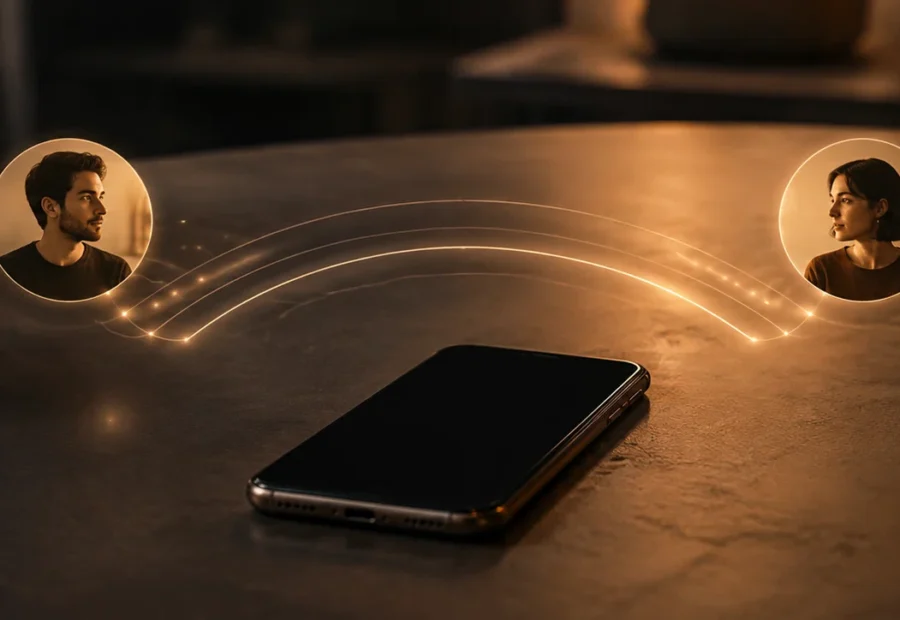

Romantic signaling apps sound niche until you realize how many almost-relationships died from one painfully simple problem: nobody wanted to go first. If you like someone you already know – a friend, coworker, classmate, or familiar face in your circle – these apps are built for that exact moment. Not for random swiping, not for public thirst traps, and definitely not for maximum chaos. Romantic signaling apps are changing how people express interest; but do they really work, or are they just another trend? Let’s break down how they work and whether they’re worth trying.
romantic signaling apps
You know the setup. There is a person. There is a vibe. There is also a very real chance of making things weird. That is why romantic signaling apps are getting attention. They give people a way to shoot their shot without turning one private feeling into a public event. And for anyone tired of stranger-based dating apps, that shift feels overdue.
Table of Contents
Quick take
- Romantic signaling apps are for checking mutual interest with someone you already know.
- The best version is private by default, with identities masked until you pair.
- They work best when they reduce awkwardness without encouraging one-sided lurking.
- What romantic signaling apps actually are
- Why they appeal to people who hate traditional dating apps
- What makes a good romantic signaling app
- Where these apps can go wrong
- A real-life example of how the flow works
- Who should use them and who should skip them
What are romantic signaling apps?
Here is the clean definition.
Romantic signaling apps
are apps that let someone express interest in a person they already know, usually in a discreet or low-pressure way, with the goal of finding out whether the interest is mutual. That matters because this category is not the same as online dating. Traditional dating apps are built around discovery. You browse strangers, compare profiles, and decide based on photos, prompts, and timing. Romantic signaling apps flip that model. The person already exists in your real life. The question is not “Who is out there?” It is “Is this thing between us real, or am I reading too much into eye contact and shared playlists?” That difference changes everything – from privacy expectations to product design. One example is
, which treats the whole experience more like a private crush messenger than a dating marketplace. You can signal interest using a phone number or email, even if the other person is not on the app yet, and identities stay hidden unless the interest is mutual. That setup is unusually good at reducing social risk because there are no public profiles and no randoms in the mix.
Why romantic signaling apps hit differently
The appeal is not hard to understand. Most people are not afraid of love. They are afraid of fallout. If you like a friend, a classmate, someone from work, or a person in your wider social circle, the risk is rarely just rejection. It is awkward group dynamics. It is seeing them again tomorrow. It is wondering whether you made them uncomfortable. That is why a lot of people stall until the moment passes. Romantic signaling apps work because they solve the exact emotional math people hate most. They lower the cost of honesty. That makes them especially appealing to people who:
- like someone they already know
- want a mutual interest app instead of a swipe app
- care about privacy in dating
- do not want public profile browsing
- want to avoid friend-zone or workplace cringe
There is also a trust factor here. A private crush app feels more intentional than a standard dating app because the interest is directed, not broadcast. You are not tossing yourself into the algorithm and hoping for decent odds. You are vibe-checking one actual person.
What makes a good romantic signaling app?
Not every app in this space gets the details right. If the app is going to handle something as emotionally loaded as a secret crush, the product choices matter a lot.
1. Mutual-only reveals
This is the big one. A strong romantic signaling app should reveal identities only when both people express interest. That is what keeps the experience low-pressure instead of turning it into anonymous confession theater. If one person can send signals endlessly without a real mutual gate, the app starts drifting into uncomfortable territory. Good design protects both sides.
2. Private by default
A lot of apps claim to be discreet, but then build in searchable profiles, visibility feeds, or social features that quietly defeat the point. If someone is using a known-person dating app, they usually do not want to be publicly discoverable. Private by default means no browsing strangers, no open profile marketplace, and no accidental exposure unless the user explicitly opts into something more visible.
3. Real-life context, not random discovery
The best romantic signaling apps are built around real-world relationships. Friends. Coworkers. Acquaintances. People you have actually met. That is a feature, not a limitation. It cuts out the noise and makes the app useful for a very specific, very common problem: saying what you feel before the window closes.
4. Clear boundaries
A low-pressure dating app should not become a loophole for repeated one-sided contact. There needs to be a real stop point if interest is not mutual. That protects users from turning curiosity into persistence. This is where product guardrails matter more than marketing language.
Where romantic signaling apps can go wrong
This category has real upside, but it is not magic. First, context still matters. If the other person is your direct manager, in a complicated relationship, or someone you barely know, an app does not erase the social reality. It only changes how the signal is delivered. Second, some people will use the idea of discretion as cover for avoiding adult communication forever. A mutual interest app is useful when you need a safer first move. It is less useful if you want to stay emotionally hidden indefinitely. Third, privacy claims need to be real. If an app says it protects you, the experience should back that up with strict visibility rules and limited exposure. Otherwise, “discreet” becomes branding, not behavior.
How romantic signaling apps work in real life
Most people do not need a grand strategy. They need a simple flow. Here is the clean version:
- You send a private signal to someone you already know.
- They get a discreet notification.
- If they feel the same, you pair. If not, your identity stays masked.
That is why the model works. It gives you a shot without forcing a public landing. A practical example helps. Say you like someone from your grad program. You have a real rapport, but you cannot tell whether it is chemistry or just shared survival energy from deadlines. A romantic signaling app lets you test that without making the next seminar weird. Mini convo if you do match:
If they say:
“Okay wait, I kind of hoped this was you.”
You can reply:
“Good, because I was not trying to win an award for mysterious suffering.” Light, honest, and no overexplaining. The app handled the scary part. You just handle the human part.
Romantic signaling apps vs dating apps
This is where people get confused, so let’s keep it plain. A traditional dating app is for meeting new people. A crush signal app is for clarifying feelings with people already in your orbit. One is built for discovery. The other is built for confirmation. Neither is automatically better. It depends on what you need. If you want to meet strangers, a known-person dating app will feel too narrow. If you already have someone in mind and want 0% awkwardness unless it is mutual, romantic signaling apps are a better fit by design.
| Traditional dating app | Romantic signaling app |
|---|---|
| Helps discover strangers | Helps test interest with someone you may already know |
| Profiles are usually visible | Interest can remain private |
| One person can initiate openly | Reveal can depend on mutual interest |
| Optimized for browsing/swiping | Optimized for signaling/confirmation |
| Rejection can be explicit | Non-mutual interest can remain private |
Who should use romantic signaling apps?
They make the most sense for people who are tired of overthinking a real-life connection and want a low-risk way to act on it. They are especially useful if you:
- have a crush on someone you know in real life
- want emotional safety and privacy in dating
- do not want to swipe through strangers
- care about mutual consent and clear boundaries
- prefer intentional connection over public flirting
They are a weak fit if you are looking for random discovery, casual volume, or broad social browsing. That is just a different category. Near the end of the day, the smartest version of this model is the one that stays calm, private, and mutual-only. wadaCrush fits that lane well because it keeps identities masked until both people opt in, avoids public profiles unless visibility is deliberately expanded, and can still notify someone who is not already on the app. That is not a small detail. It is the whole point.
When romantic signaling makes sense
- friend
- classmate
- coworker where appropriate
- someone in your social circle
- someone you already interact with
- situations where both people may hesitate to make the first move
When it does not make sense
- trying to anonymously contact strangers
- bypassing someone’s boundaries
- repeatedly contacting someone who has shown no interest
- using privacy as a substitute for consent
FAQ
Are romantic signaling apps only for shy people?
No. They are for people who understand that timing, context, and social fallout are real. Being careful is not the same as being timid.
Are these apps anonymous?
Usually they are discreet, not permanently anonymous. The strongest setup masks identity unless interest is mutual.
Can romantic signaling apps replace honest conversation?
Not really. They are best used as the bridge to a real conversation, not a substitute for one.
Are romantic signaling apps safe for workplace crushes?
It depends on the workplace dynamic. If there is a power imbalance or policy issue, skip it. An app cannot fix bad context.
Do they work if the other person is not on the app?
Some do, some do not. That feature makes a big difference because it removes the need for both people to already be
. Romantic signaling apps are not trying to manufacture chemistry. They are just making room for honesty where fear usually wins. If you already know the person and the feeling keeps hanging around, a quiet, mutual-first signal can be the difference between “that could have been something” and an actual start.
When romantic signaling apps review matters
A healthy read on romantic signaling apps leaves room for uncertainty. Combine romantic signaling with observable behavior, then let romantic signaling apps review show up through voluntary effort rather than guesswork.
For broader context, see American Psychological Association.
Related wadaCrush guides
- Too Scared to Make the First Move? Try This Private Romantic Signaling Guide
- Hidden Identity Matching: 9 Powerful Privacy Rules That Matter
- Not Sure If They Like You? 5 Smart Ways to Test Romantic Interest