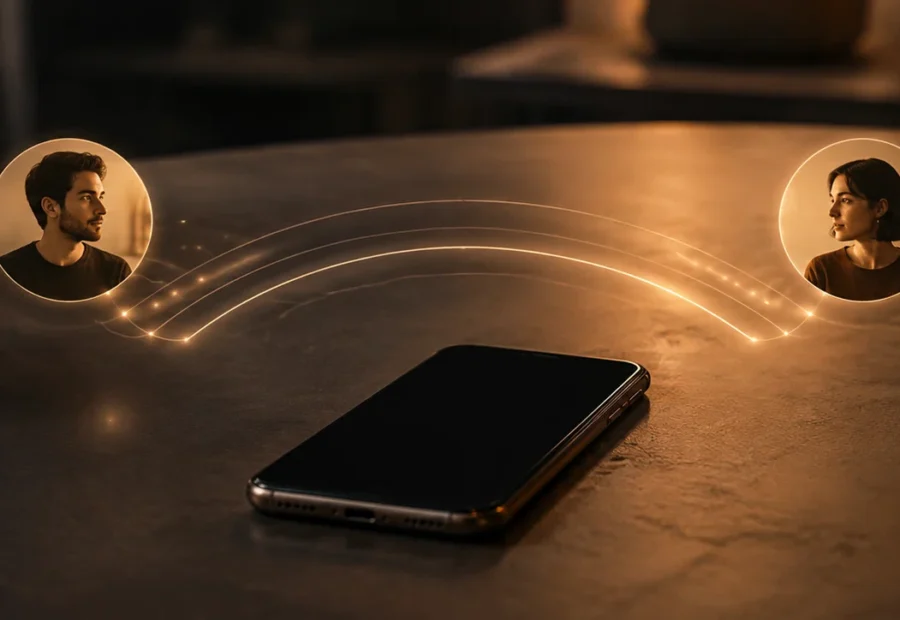

You already have their number. The harder part is deciding what to do with the feeling.
If you want to send crush signal without turning a familiar relationship into an uncomfortable scene, the method matters. A phone number can be a delivery route for a discreet signal, but it should never become permission to chase, expose, or repeatedly contact someone.
Table of Contents
That distinction is especially important when the person is already part of your life: a friend, classmate, coworker, neighbor, or someone you see through the same social circle. The point of a crush signal by phone number is not to make the move more mysterious. It is to make the first vulnerable moment less public.
wadaCrush is built around that known-person use case. Its official How It Works page says the recipient can receive a discreet signal through a phone number or email, while the sender’s identity stays hidden unless the interest becomes mutual. The platform’s terms also describe crush notifications as pre-composed rather than open-ended anonymous messages.
What it means to send a crush signal by phone number
To send crush signal using phone number means using someone’s number as a private contact point to express interest without forcing a big, exposed confession.

That matters more than it sounds. A lot of crushes never go anywhere because the setup is socially messy. Maybe you share friends. Maybe you work together. Maybe you see each other every week and don’t want things to get weird if the feeling isn’t mutual.
A phone number is useful because it connects to a real person you already know. It’s not swipe culture. It’s not stranger dating. It’s more like, “I know you, I like you, and I want to test the waters without turning this into a dramatic event.”
One privacy-first option built for this exact scenario is wadaCrush. It lets you send a discreet crush signal using a phone number or email, keeps identities masked until both people are interested, and can notify the other person even if they are not already on the app.
Why people prefer phone-number-based crush signals
The biggest reason is simple: less social fallout.
Texting your crush directly can work, sure. But direct texts can also feel abrupt, easy to misread, or too intense if the relationship is still in the maybe zone. Asking friends to investigate is worse. That’s how gossip starts.
When you send a private crush signal by phone number, the appeal is control. You’re not making a public move. You’re not putting the other person on the spot in real time. You’re also not opening yourself up to a painfully obvious one-sided rejection.
There’s another trade-off here, though. Privacy only works if the system is designed well. If identities are exposed too early, or if there are searchable public profiles, the whole point kind of disappears. That’s why the setup matters more than the gesture.
How to send a crush signal using a phone number
If your goal is emotional safety and less unnecessary awkwardness, the process should be simple.
1. Start with the right person
This works best when you already know them in real life. Think friend, mutual, classmate, coworker, neighbor, or someone you’ve actually interacted with before.
If they are a total stranger and you only have their number from some random situation, pause. A discreet crush signal is for testing mutual interest with someone already in your orbit, not for cold outreach.
2. Use their phone number as the identifier
Instead of searching public profiles or hoping they show up in some feed, you enter the phone number connected to that person.
This is cleaner for a few reasons. First, it avoids confusion about identity. Second, it respects the fact that some people do not want to be discoverable online. Third, it keeps the interaction intentional.
3. Choose a mutual-only setup
This is the part that really matters.
If you want to send crush signal using phone number without making your life complicated, use a system where your identity stays hidden unless they also choose you. That mutual-only reveal is the difference between a low-pressure vibe-check and a very avoidable awkward moment.
4. Let the signal do its job
Once sent, do not double-text, panic, or spiral because they haven’t responded in 14 minutes.
A private crush signal is supposed to reduce pressure for both people. They get space to respond on their own time. You get space from instant rejection energy. Everybody wins.
What happens after you send it
There are usually two outcomes.
If the interest is mutual, identities can be revealed and the conversation opens. That’s the best-case scenario because now you both know the vibe is real, and no one had to do a dramatic confession scene.
If it isn’t mutual, your identity should stay hidden. No public embarrassment. No weird lunch-table energy. No “soooo I heard you like me” chaos.
That’s the whole point of using a private crush messenger instead of a traditional dating app. Traditional apps are built for discovery. This kind of setup is built for discretion.
When this works well and when it doesn’t
This approach works really well when the social risk is high.
Maybe it’s a friend you don’t want to lose. Maybe it’s someone in your extended friend group. Maybe it’s a coworker and you want to be extra careful. Maybe you’re just tired of guessing whether someone is flirting or merely being nice.
It works less well if you are using it to avoid basic communication forever. A crush signal is not a substitute for maturity. It’s a first move, not the entire relationship strategy.
It also depends on context. If workplace rules are strict, be thoughtful. If there’s a power imbalance, don’t do it. If the person has clearly shown disinterest, respect that and move on. Privacy should protect people, not create loopholes for pressure.
A quick example of the right tone
Let’s say you get a mutual match and the conversation opens.
A good first message is light and normal.
If they say: “Okay wait, was this you?” You can reply: “Yeah, guilty. I figured a low-pressure vibe-check was smarter than making it weird in person.”
That works because it’s honest, relaxed, and doesn’t act like they now owe you a huge emotional response.
You do not need a giant speech. You just need enough confidence to keep it real.
Privacy details that actually matter
If you’re comparing ways to send a discreet crush by phone number, look for a few specific guardrails.
The system should be private by default. Identities should be masked until you pair. There should be no public profiles floating around unless someone explicitly opts into visibility features. And ideally, the other person can still get notified even if they were not already using the platform.
That last part is underrated. If they have to already be signed up, you lose a lot of real-world usefulness. A better setup meets people where they already are.
If you want that kind of structure, wadaCrush is built around exactly this loop: known people only, crush by phone number or email, discreet notification, and reveal only if the feeling is mutual.
For more on privacy-first dating behavior and real-life crush dynamics, these reads may help:
- https://blog.wadacrush.com
- How private crush apps work
- How to tell if your coworker likes you
- Signs a friend might like you back
FAQ
Can I send a crush signal using only a phone number?
Yes, if the platform supports phone-number-based matching or notification. That’s one of the cleanest ways to signal interest with someone you already know.
Will they know it was me right away?
Not in a mutual-only setup. The safer version keeps your identity hidden unless they also express interest.
What if they are not on the app yet?
Some systems can notify them by SMS or email and invite them into the mutual flow. That makes the experience much more practical.
Is this better than texting them directly?
It depends. If you already have clear flirting and low social risk, direct texting may be fine. If the situation is messy, shared, or awkward-sensitive, a private signal is usually the smarter move.
Is this for strangers?
No. This works best for people you already know in real life. That’s where the privacy piece has the most value.
Liking someone should not require a public stunt, a messy friend investigation, or a reckless late-night text. If all you want is a quiet way to check the vibe, using a phone number is one of the simplest moves available – as long as the setup protects both people, not just your courage in the moment.
What makes a private crush signal respectful?
A private crush signal is useful only when it lowers pressure for both people. That means one signal, a clear choice, and no punishment for silence. If the other person does nothing, that is not an invitation to send three more signals or to ask mutual friends to investigate.
Think of the signal as a doorbell, not a battering ram. You ring once. The other person decides whether to answer. That is a healthier standard than treating privacy as a loophole around someone else’s boundaries.
The same rule applies to the phone number itself. Use an identifier you already have for a legitimate reason. Do not hunt for a personal number, scrape it from somewhere else, or assume that possessing a contact means you are entitled to romantic access.
Why a crush signal by phone number changes the social risk
A direct text puts both the message and your identity on the table immediately. Sometimes that is exactly the right move. If you already flirt openly and the social stakes are low, a simple invitation can be more natural than any app.
A crush signal by phone number serves a different situation: you know the person, the possibility feels real, but a one-sided reveal could affect a friendship, class, workplace, or shared group. Mutual-only reveal changes the order of events. Interest is tested first; identity is revealed only if both people independently choose each other.
That does not make rejection disappear. It changes what becomes public. If the feeling is not mutual, the sender does not need to become the subject of a face-to-face rejection or a group-chat story simply for having asked.
When sending a direct text is actually better
Privacy is not automatically better than directness. If you have already been on one-on-one outings, the flirting is obvious, and you would be comfortable hearing either answer, a direct message can be warmer and simpler.
For example: “I’ve really liked spending time with you. Want to grab dinner this weekend as an actual date?” That is clear, specific, and easy to answer. There is no need to hide behind a signal when both people already have enough context for a normal conversation.
Use a private route when the social cost of being wrong is the real problem—not when you are trying to avoid communication forever.
Phone-number privacy is not the same as online safety
A phone number can make an interaction feel more real, but it is not proof that someone is trustworthy. The Federal Trade Commission’s romance-scam guidance warns that scammers often build frequent emotional contact before asking for money or pushing investment schemes.
That warning matters even if this article is about known-person crushes. Never use romantic interest as a reason to send money, gift cards, cryptocurrency, banking credentials, or verification codes. A legitimate crush does not need a financial test.
What to do after a mutual match
Once interest is mutual, stop treating the situation like a puzzle. The signal did its job. Now you can have an ordinary conversation.
Keep the first step small. “Glad that was mutual. Want to grab coffee this week?” is enough. You do not need to explain every moment you have ever liked them or ask where the relationship is going before the first date.
If the match happens with a coworker or someone in another structured environment, check the context before escalating. Workplace policies, reporting lines, and power differences matter. Mutual interest does not erase professional boundaries.
Three mistakes that turn discretion into pressure
Repeating the signal because you did not get the answer you wanted
One send crush signal action is enough. A second or third attempt can make a privacy feature feel like persistent anonymous contact.
Using friends as a back channel
Do not ask a friend to “casually” find out what happened. That defeats the purpose of a private crush signal and brings the social audience back into the moment.
Treating mutual interest as automatic consent to everything else
A mutual match means both people expressed romantic interest. It does not pre-decide physical affection, exclusivity, or the pace of the relationship. Those conversations still happen normally.
For a broader look at privacy-first matching, see why mutual matching works differently from public discovery, or use wadaCrush’s discreet crush flow when you already have someone in mind.
After a mutual match, the cleanest move is ordinary: ask them out. If the interest is not mutual, leave the shared environment alone. That is what makes the original signal genuinely low pressure.
The bottom line
A phone number can be a useful private identifier when you already know the person and the service is designed around mutual choice. The goal is not to create anonymous pressure. It is to make one respectful first move, keep one-sided interest private, and let the other person choose without being chased.
Related wadaCrush guides
Continue with these related guides: