
Who has a crush on me? It sounds like a playful question until there is an actual person, friendship, class, workplace, or social circle attached to the answer. Then it becomes less about curiosity and more about risk. You want to know whether someone is interested, but you may not want to make a direct confession, create gossip, or turn a perfectly normal relationship awkward if you guessed wrong.
That is the gap most dating apps still handle badly. They are built to help you discover strangers, not understand interest that may already exist around you. Public profiles, likes, swipes, and visible activity can create more exposure than the situation deserves. Real-life attraction often needs something quieter: useful signals, mutual participation, and enough privacy that a non-match can simply stay private.
This guide is for that in-between moment. It explains how to read interest without overinterpreting every emoji, how to test the vibe respectfully, and how privacy-first tools can answer part of the who has a crush on me question without revealing someone before they are ready.
Quick answer: You usually cannot know for certain who likes you from body language, texts, or social media alone. Look for repeated voluntary effort, reciprocity, and consistent one-on-one interest. If you want more certainty without a public confession, use a mutual-interest approach that protects identities until both people choose each other. The goal is not to uncover a secret admirer at any cost. It is to create enough clarity for a respectful next step.
Why “Who Has a Crush on Me?” Is Harder Than It Sounds
The internet is full of lists promising to tell you exactly how to know if someone has a crush on you. Some signs are useful. None are perfect.
Someone may text you often because they like you. They may also text everyone often. Someone may remember tiny details because they are interested—or because they are simply thoughtful. A coworker may seek you out because there is chemistry, or because you are the person they trust most on the team.
The problem is not that attraction has no signals. The problem is that most signals have more than one explanation.
That is why the best answer to who has a crush on me is rarely one dramatic clue. It is a pattern:
- They choose interaction when they do not have to.
- They make it easier, not harder, to keep the conversation going.
- They remember details and return to them later.
- They create opportunities for one-on-one time.
- They reciprocate when you gently increase warmth or flirtation.
Even then, think of the pattern as evidence—not proof. Certainty comes from mutual participation, not detective work.
Before You Search for a Secret Admirer, Decide What You Actually Want to Know
People who type who has a crush on me into Google are not always asking the same question.
You might mean:
- “Is anyone interested in me at all?”
- “Does the person I already like feel the same?”
- “Is my friend flirting with me or just being friendly?”
- “Could someone in my class or workplace secretly like me?”
- “Can I find out without creating a dating profile?”
Those goals require different approaches. If you simply want reassurance that you are noticed, obsessing over one person’s behavior can make you spiral. If you already have one person in mind, browsing hundreds of strangers on a dating app solves the wrong problem.
This distinction matters because the digital dating market tends to treat all romantic curiosity as a discovery problem. But sometimes you do not need discovery. You need a discreet way to test whether an existing connection has mutual potential.
9 Private Ways to Find Out Who Has a Crush on You
1. Look for repeated voluntary effort
The strongest everyday sign is not eye contact. It is effort someone chooses to make.
Do they start conversations when there is no practical reason? Do they send you something because it reminded them of you? Do they check back on a story you told them days ago? Do they find low-key reasons to spend time with you?
One action can be random. Repeated voluntary effort is more meaningful because it costs attention.
If you keep asking who has a crush on me, start here. Notice who repeatedly chooses proximity, conversation, or connection without needing to be pulled into it.
2. Compare how they treat you with how they treat everyone else
Context is the difference between useful observation and wishful thinking.
If someone is playful with you, ask whether they are playful with everyone. If they reply quickly, notice whether that is simply how they use their phone. If they compliment you, consider whether they are naturally generous with compliments.
A potential crush signal becomes more interesting when there is a consistent difference in how they interact with you.
This is especially helpful with friends and coworkers, where normal warmth can easily be mistaken for romantic interest. Our guide to private crush signals goes deeper into reading patterns without treating every friendly behavior as proof.
3. Give them a small chance to reciprocate
Instead of trying to decode them forever, create a tiny opening.
You might make a slightly warmer compliment, start a conversation outside your usual context, or suggest a casual coffee. Then watch what they do with the opening.
The key is reciprocity. Do they add energy? Do they move the interaction forward? Do they suggest another time if they are unavailable? Do they become a little more personal too?
A low-pressure test is more informative than weeks of analyzing likes and story views because it gives the other person a real choice.
4. Notice whether one-on-one connection keeps appearing
Group chemistry is easy to misread. One-on-one interest gives you cleaner information.
If someone consistently tries to continue the conversation after everyone else leaves, walks with you, messages you separately after a group event, or turns group plans into opportunities to talk directly, that may be meaningful.
Again, the important word is consistently. One moment is a moment. A pattern tells you more.
5. Ask for context, not gossip
A trusted friend can sometimes help you reality-check a situation, but there is a right and wrong way to do it.
Good:
“Am I reading this as flirting, or are they just naturally like that?”
Not so good:
“Go ask everyone whether they like me and report back.”
Once a crush becomes group intelligence, privacy disappears quickly. If your goal is to learn who has a crush on me without creating social fallout, keep the audience very small.
6. Use a mutual-interest tool instead of trying to expose a person
This is where technology can be more helpful than another “signs they like you” checklist.
A well-designed secret admirer app or private mutual-interest tool should not reveal a sender simply because you are curious. It should protect both sides until there is genuine reciprocity.
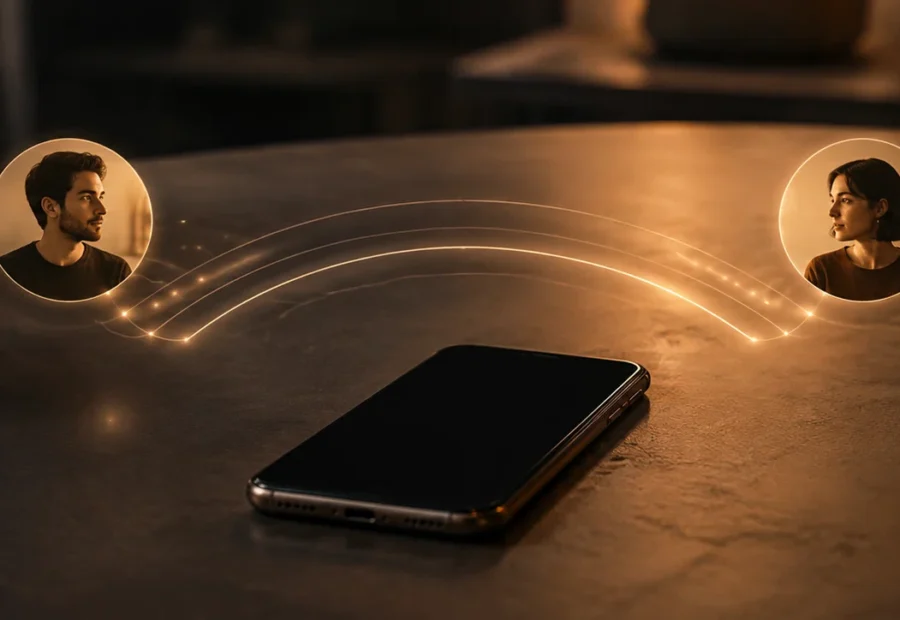
wadaCrush takes that approach: people can send a discreet crush notification—called a Vibe—to someone they already know, while the sender’s identity remains hidden unless the two people pair. That means the technology helps answer a consent-based question: do we choose each other? It does not turn private attraction into a searchable directory.
That difference is important. A privacy-first system should give you useful information without letting you reverse-engineer someone else’s private choice.
A count can be useful without revealing the person
For example, wadaCrush’s CrushCount lets you check an identity you control—such as your phone number, email address, or Snapchat ID—to see counts associated with it. The page can show how many Vibes are currently active, how many have expired, and how many of your known connections are already registered discreetly on the platform.
The important privacy line is what it does not show: CrushCount gives you counts, not sender identities.
That makes it useful for the who has a crush on me curiosity without turning the tool into a way to expose a secret admirer. If you see a count, you can decide whether you want to do anything next. You are not forced to sign up, and you are not given a name to chase.
7. If you do not want to sign up, use notification-only options carefully
This is another gap most apps overlook. What if you are curious about private interest but do not want another account, profile, password, or subscription?
wadaCrush has a feature called JoinTheQueue that is deliberately separate from full signup. You can subscribe to receive notifications if someone you know sends you a discreet Vibe, without first creating a wadaCrush account.
You provide and validate the contact identities you want used for those notifications. That can be:
- an email address;
- a phone number;
- email plus Snapchat ID;
- phone number plus Snapchat ID; or
- email, phone number, and Snapchat ID together.
Snapchat ID is not used as a standalone subscription identity; it needs to be paired with a validated email address, phone number, or both. By validating and submitting those identities, you consent to receive a notification there if someone you know sends you a Vibe.
What happens after that is still your choice. You can ignore the notification. You can stay on the notification list. Or, if you have someone in mind and want to see whether the feeling is mutual, you can choose to create an account and send your own Vibe. If your crush happens to be the original sender, you can pair. If not, nothing needs to happen.
There is no charge to subscribe to JoinTheQueue. The point is not to trap curiosity behind a signup wall. It is to let someone receive a discreet signal first and decide later whether they want to participate.
If that no-account approach interests you, also read our guide on how to browse a dating site without registering. It explains where no-signup browsing genuinely helps, where it becomes misleading, and why privacy is not the same thing as invisibility.
8. Treat non-response as information too
Privacy-first tools only stay respectful if people accept that no response is also a response.
If someone does not reciprocate, does not join, does not continue the interaction, or consistently gives low-energy replies, do not turn the mystery into a mission.
There is a difference between wanting to know who has a crush on me and believing you are entitled to identify everyone who may have private feelings. You are not.
Healthy curiosity leaves room for people to keep their feelings private.
9. When the evidence is strong enough, make a clear but low-pressure move
Eventually, more clues stop helping.
If the interaction is consistently warm, reciprocal, and voluntary, clarity may be kinder than continued guessing. You do not need a dramatic confession. You can simply ask for a coffee, suggest a one-on-one plan, or say that you enjoy talking and would like to spend time together outside the usual context.
A good next step has two qualities: it is clear enough to understand and easy enough to decline.
That is healthier than trying to “catch” a crush through endless tests.
Why Anonymous Crush Apps Need a Privacy Boundary
The idea of an anonymous crush app is appealing because it lowers the fear of rejection. But anonymity without rules can easily become pressure, spam, or curiosity at someone else’s expense.
A better design has boundaries:
- No public directory of who likes whom.
- No sender identity simply because the receiver asks.
- No repeated escalation when interest is not returned.
- Clear consent for notifications.
- Identity validation where contact channels are used.
- Mutual reveal only when both people independently choose each other.
This is why a count-only feature can be more privacy-preserving than a “reveal my admirer” feature. The useful information is that interest may exist. The private information—who expressed it—stays protected until the system has a legitimate mutual reason to reveal it.
That is a healthier answer to who has a crush on me than a tool that encourages people to identify, expose, or investigate someone who never consented to being revealed.
Can You Find Out Without Registering for a Dating App?
Sometimes—but you need to separate three very different things.
1. Browsing public dating profiles without an account
Some sites expose public previews, search-engine snippets, or landing pages. That can help you evaluate a platform, but it rarely tells you whether a specific person likes you.
2. Checking whether private interest exists
A count-based tool such as CrushCount can give you limited information without exposing a sender. That is fundamentally different from browsing people.
3. Subscribing only for future notifications
A notification-list model such as JoinTheQueue lets you opt in to be notified without creating a full profile first. Again, that is not browsing. It is simply choosing to receive a private signal if one arrives.
These distinctions matter because “without registering” can mean very different things. Sometimes people want access. Sometimes they want privacy. Sometimes they simply do not want to create an account until there is a reason.
If you are in that third group, a notification-first model is much closer to the actual need.
What “Who Has a Crush on Me?” Tools Cannot Tell You
Even the smartest app cannot tell you everything.
A Vibe count does not tell you which person sent it. A mutual-interest system cannot tell you whether a relationship will work. A notification cannot tell you whether someone is emotionally available, compatible with you, or interested in the same kind of relationship.
And behavioral signs are even less precise.
That is why the healthiest use of these tools is as a bridge to clarity, not a substitute for reality.
Use them to reduce unnecessary exposure. Use them to understand whether mutual interest is possible. Then let real communication do the rest.
A Privacy Checklist Before You Try to Find a Secret Admirer
Before using any crush or dating tool, ask:
- Does it reveal identities before mutual interest? If yes, understand exactly how and when.
- Can strangers browse me? Public discovery may be fine if you want it, but it should be a conscious choice.
- What contact information am I providing? Only use identities you control.
- Am I consenting to notifications? Make sure you know which channels will be used.
- Can I opt out? A privacy-first experience should let you leave or stop notifications.
- Does the tool give me information I am actually entitled to know? A count is different from exposing a person.
- Would I be comfortable if the roles were reversed? That is one of the best privacy tests available.
Broader research from Pew Research Center shows how mainstream online dating has become, but widespread use does not remove the need for privacy, judgment, and boundaries. The technology still needs to fit the situation.
When to Stop Asking “Who Has a Crush on Me?”
There is a point where the question stops being useful.
If you are constantly checking signals, refreshing counts, replaying interactions, or trying to identify someone who clearly wants to remain private, the tool is no longer giving you clarity. It is feeding uncertainty.
The healthiest endpoint is not knowing every person who has ever liked you.
It is being able to recognize meaningful reciprocity and take one respectful next step when it matters.
That might mean asking someone out. It might mean sending one discreet signal. It might mean subscribing to notifications and leaving the rest alone. It might mean realizing there is no clear reciprocal interest and moving on.
The answer to who has a crush on me matters less than what you do with the information—and whether you protect everyone’s comfort while finding out.
Frequently Asked Questions
How can I know who has a crush on me?
You usually cannot know with certainty from signs alone. Look for repeated voluntary effort, one-on-one interest, reciprocity, and consistent warmth. A privacy-first mutual-interest tool can provide additional clarity without exposing someone before interest is mutual.
Is there an app that tells you who has a crush on you?
Some secret admirer apps notify users about private interest, but the privacy model matters. A safer design does not reveal the sender unless both people independently choose each other. Be cautious with any service that promises to expose someone’s private interest without mutual consent.
Can I find out how many people have a crush on me without seeing their names?
Count-based tools can do this without revealing individual identities. wadaCrush’s CrushCount, for example, can show counts for active and expired Vibes associated with an identity you control, along with a count of known connections already registered discreetly. It does not reveal who sent the Vibes.
Do I need to sign up for wadaCrush to receive a crush notification?
No. JoinTheQueue is a free notification subscription rather than a full account signup. After validating the email address or phone number you want to use—and, if desired, pairing a Snapchat ID with email, phone, or both—you can consent to receive notifications if someone you know sends a Vibe.
Does JoinTheQueue reveal who sent the Vibe?
No. The purpose is to notify you that a discreet Vibe was sent while preserving the sender’s identity. You can later choose whether to create an account and send a Vibe to the person on your mind. Identities are revealed only if the choices become mutual and you pair.
Does CrushCount reveal my secret admirer?
No. CrushCount shows counts, not sender information. Seeing that a Vibe exists does not give you the identity of the person behind it.
Can Snapchat ID be used by itself for JoinTheQueue?
No. For JoinTheQueue, a Snapchat ID needs to be paired with a validated email address, phone number, or both. Email or phone can be used without Snapchat.
Is JoinTheQueue free?
Yes. Subscribing to JoinTheQueue is free. You are not required to create a full wadaCrush account or pay simply to remain on the notification list.
What if I get a notification but do not want to sign up?
You do not have to. You can choose not to act. The notification does not create an obligation to join, respond, or identify the sender.
Related wadaCrush Guides
- Browse Dating Site Without Registering: 9 Safer Ways to Preview First
- Private Crush Signals: 9 Best Signs That Matter
- How to Send an Anonymous Crush Message
- Private Mutual Crush App: 7 Best Checks That Matter
Editorial note: wadaCrush is designed for adults and for discreet connections between people who already know one another. Privacy features should be used to reduce pressure and unnecessary exposure—not to investigate, harass, or identify someone who has chosen to remain private.